
RFID Solution

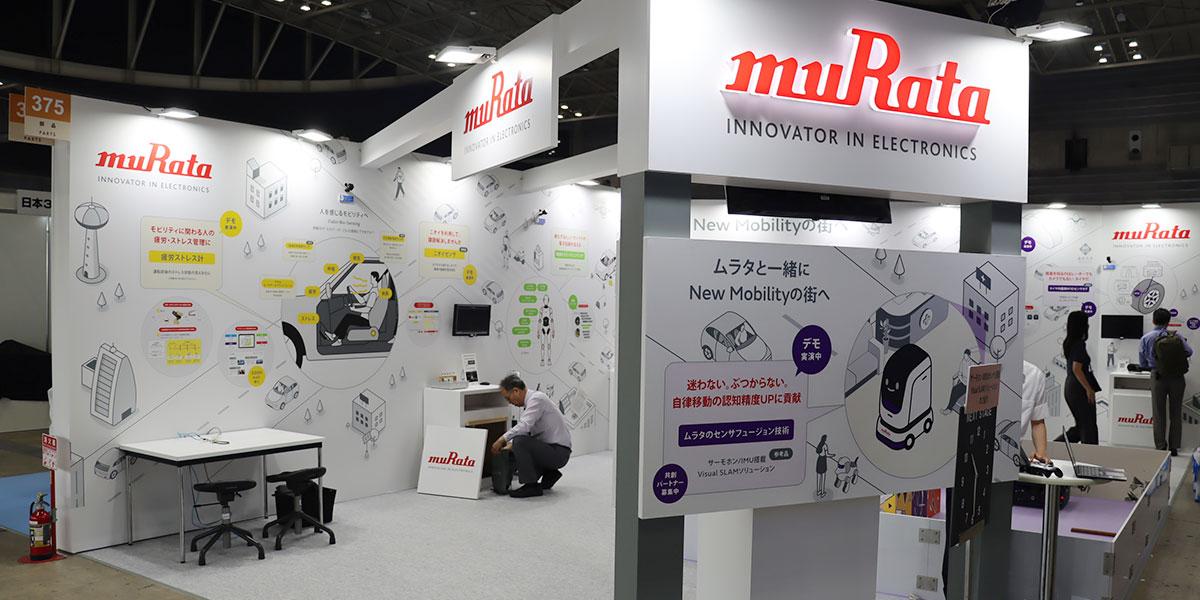
Murata Manufacturing (hereinafter "Murata") exhibited at the Automotive Engineering Exposition 2026. This is the largest automotive technology exhibition in Japan. Murata envisions a society in which various new mobility solutions, including not only the autonomous driving of vehicles, but also drones, delivery robots, and humanoid robots, coexist with humans.
At Automotive Engineering Exposition 2026, we showcased a demo of autonomous driving utilizing an ultrasonic wave-generating device capable of short-range detection that cannot be measured with conventional ultrasonic sensors. In addition, we proposed sensor tags that can be embedded in tires to obtain data on road surface conditions and thereby help improve driving performance. Through these new technologies, Murata will support the evolution of a safer and more comfortable mobility society for the future. In this article, we report on the events of the opening day of the exhibition.
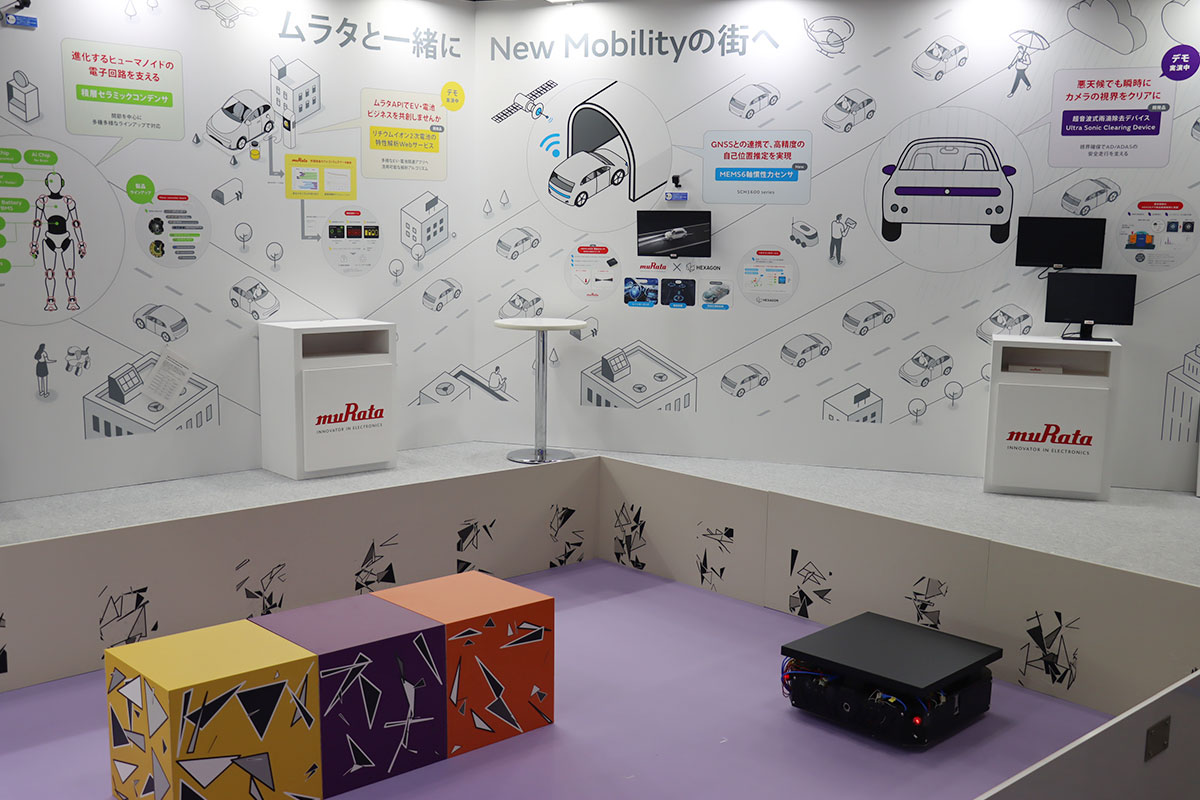
An autonomous mobile robot (AMR) approaches a wall with smooth movements. Just as it seems it is on the verge of crashing into the wall ahead, it begins moving sideways along the wall to narrowly avoid colliding with it. The distance between the AMR and the wall is approximately 3 cm. Supporting this demo showcased at the Murata booth at the Automotive Engineering Exposition 2026 is a device called a "thermophone" mounted on the AMR.
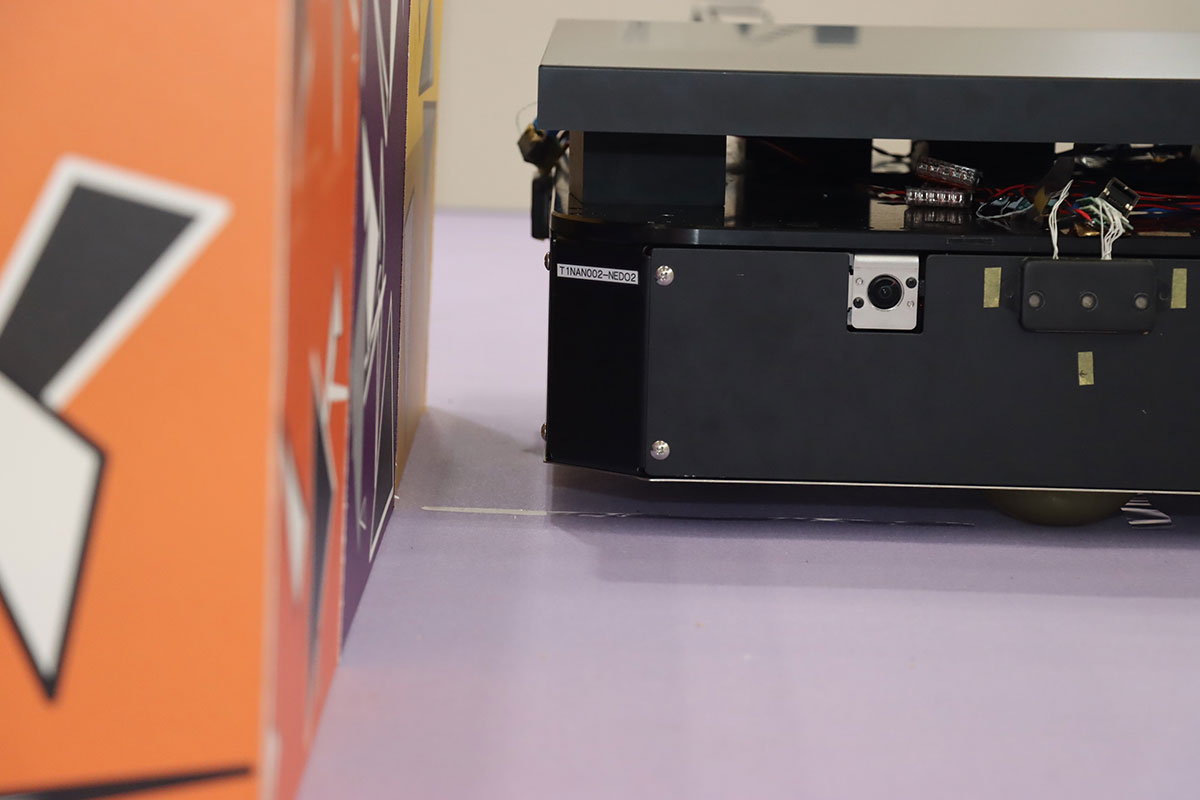
"Equipped with an ultrasonic wave-generating device that produces no reverberations, this system can measure distances as short as 1 cm. It can also accurately detect transparent objects and similar. This is something that LiDAR, often installed in autonomous driving solutions, finds difficult to do," a Murata representative emphasizes.
The technology installed in this system is a non-vibrating broadband ultrasonic wave-generating device called a "thermophone." This device won the runner-up prize in the open category at CEATEC AWARD 2020.
Ultrasonic sensors are used in automobiles as rear sonar systems to alert drivers to obstacles when they are parking. However, "short-range measurement is limited to about 15 cm." (Murata representative)
Typical ultrasonic sensors generate ultrasonic waves by vibrating themselves. They measure the distance to an object by measuring the time it takes for the generated ultrasonic waves to reflect off the object and return. However, these sensors have a weakness. If the distance to the object is too close, they become unable to distinguish between the reflected waves and the ultrasonic waves they themselves have emitted due to reverberations. This results in inaccurate measurements.
Murata's thermophone generates ultrasonic waves by converting electricity into thermal energy to cause the air around the device to expand and contract. The device itself does not vibrate. Therefore, it does not produce any reverberations. This has enabled detection at a short range of 1 cm.
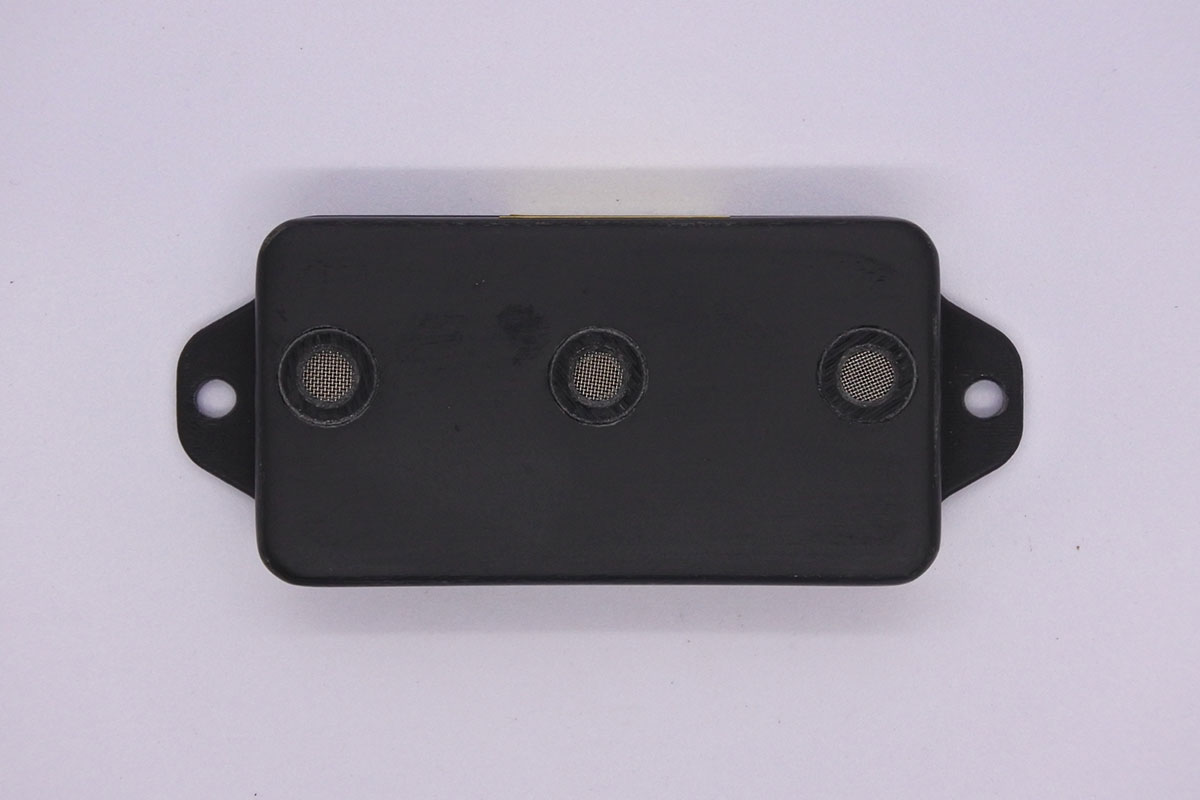
Autonomous driving solutions are sometimes equipped with LiDAR. However, LiDAR uses laser light. Therefore, it struggles to detect transparent objects like glass that allow light to pass through them, metals that scatter light, and dark objects that absorb light. On the other hand, Murata's thermophone uses ultrasonic waves. This allows it to accurately detect even those types of objects. "Thermophones are also less expensive than LiDAR. Using them in combination with cameras enables them to support collision avoidance." (Murata representative)
We envision utilization in a society in which humans, mobility solutions, and robots coexist. The Murata representative states, "For example, this technology could be used in situations that require precise local information and other settings, such as when autonomous driving vehicles pass through narrow roads or when robots load cargo."
At the Automotive Engineering Exposition 2026, we want to gather feedback from those involved in the development of automated guided vehicles (AGVs), autonomous mobile robots (AMRs), micro-mobility solutions, robots, and similar while also focusing on finding partners for collaboration in the future.
We are also proposing the realization of intelligent tires by embedding sensor tags in them. This initiative utilizes radio frequency identification (RFID) modules that can be embedded in tires. The total length of these modules is about 40 to 60 mm. Installed in the center of them is an IC capable of measuring temperature and strain. They can be embedded in tires during the tire manufacturing process. Therefore, it is possible to accurately obtain data such as the internal tire temperature and strain.
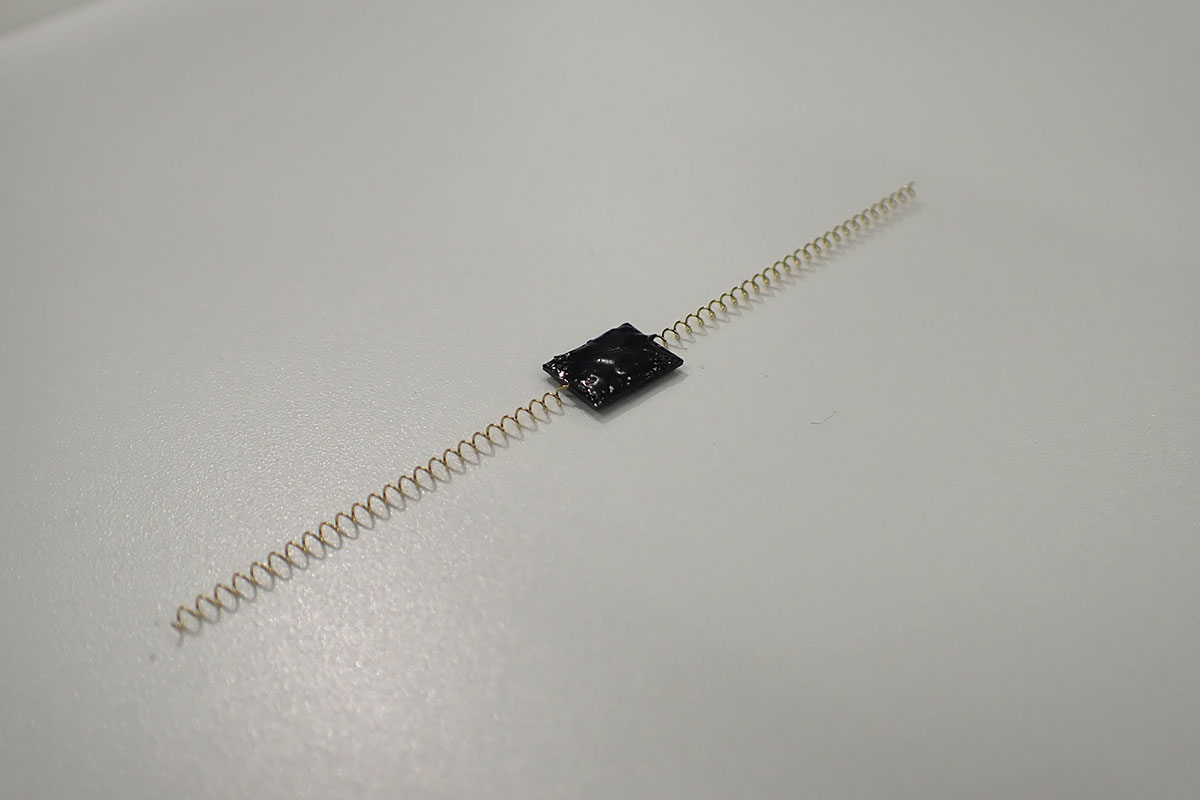
The tire temperature, strain, and other data are important parameters to detect tire failures. Therefore, such data is regarded as important in the research and development of tires. However, until now, this data has mainly been estimated by using simulations and similar methods. A Murata representative says, "Using sensor tags that utilize RFID allows us to understand even more realistic temperature changes inside the rubber and other data."
We conducted a demo at the Automotive Engineering Exposition 2026 in which we actually equipped a tire with a sensor tag. This made it possible to see the collection of data on strain when the tire was pressed and data on the rise in temperature when the sensor tag was touched due to the temperature being transmitted from the finger of the participant.
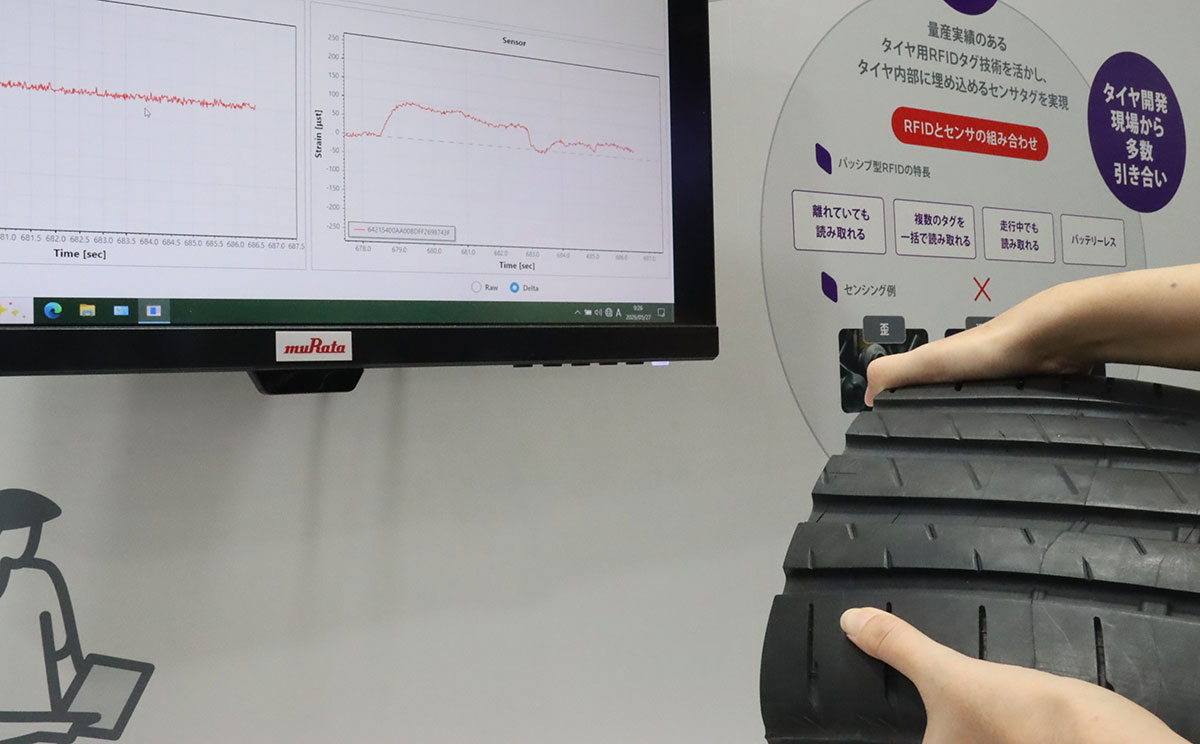
Currently, we assume this technology will be used in the research and development of racing tires and tires for passenger vehicles. Nevertheless, we see great significance in obtaining data from "tires that serve as the only point of contact between a vehicle and the ground."
We believe it is also possible to calculate the coefficient of friction between the tire and ground from the measured strain data. We would like to take advantage of this to improve the safety of autonomous driving. It is extremely important in autonomous driving to be able to grasp subtle changes in the road surface. A Murata representative explains, "For instance, consider a situation in which the weather changes from rain to snow. If data is continuously obtained from tires, we can perceive the situation with a high degree of sensitivity through changes in the coefficient of friction. The braking distance increases on snowy surfaces. Therefore, we can utilize this data for automotive control, such as reducing the speed."
At the Automotive Engineering Exposition 2026, Murata is aiming to build relationships not only with tire manufacturers and automobile manufacturers, but also with IT firms that develop systems for automobiles and other companies.