
SCH16T Series Combined Gyro Sensor and Accelerometer
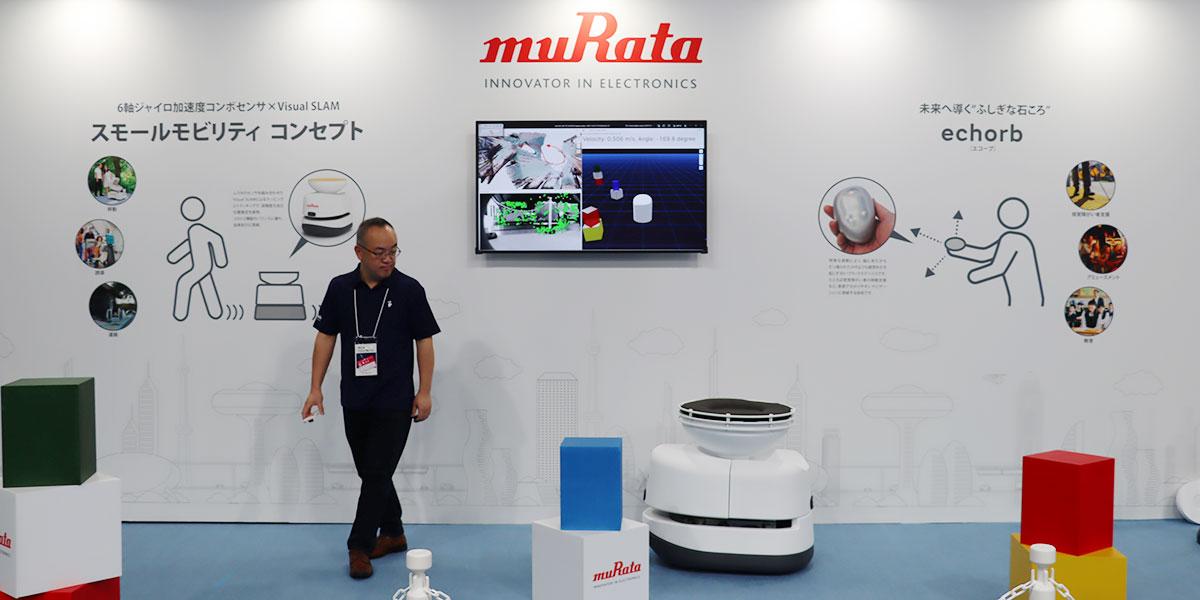
Murata Manufacturing ("Murata") exhibited at the Japan Mobility Show 2025, a show that introduces the latest technologies, etc., in the mobility industry. The company showcased autonomous mobility solutions enabled by high-precision sensors. The goal was to depict the future society in 2035, centered around the key concept of "drawing closer to people." We spoke with the Murata manager in charge about the thoughts behind this exhibit.
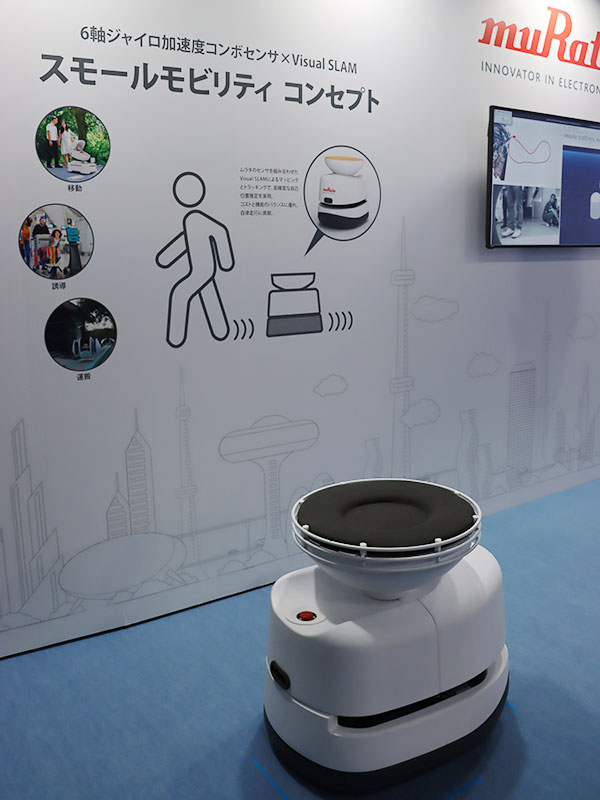
With the opening of the Japan Mobility Show set for October 30th, a press event was held on the 29th. The Murata booth showcased a demonstration of a robot with a printed "muRata" logo following a person. The robot would stop when the person walking ahead stopped and turn to follow when the person turned, like a good companion. These behaviors attracted significant attention.
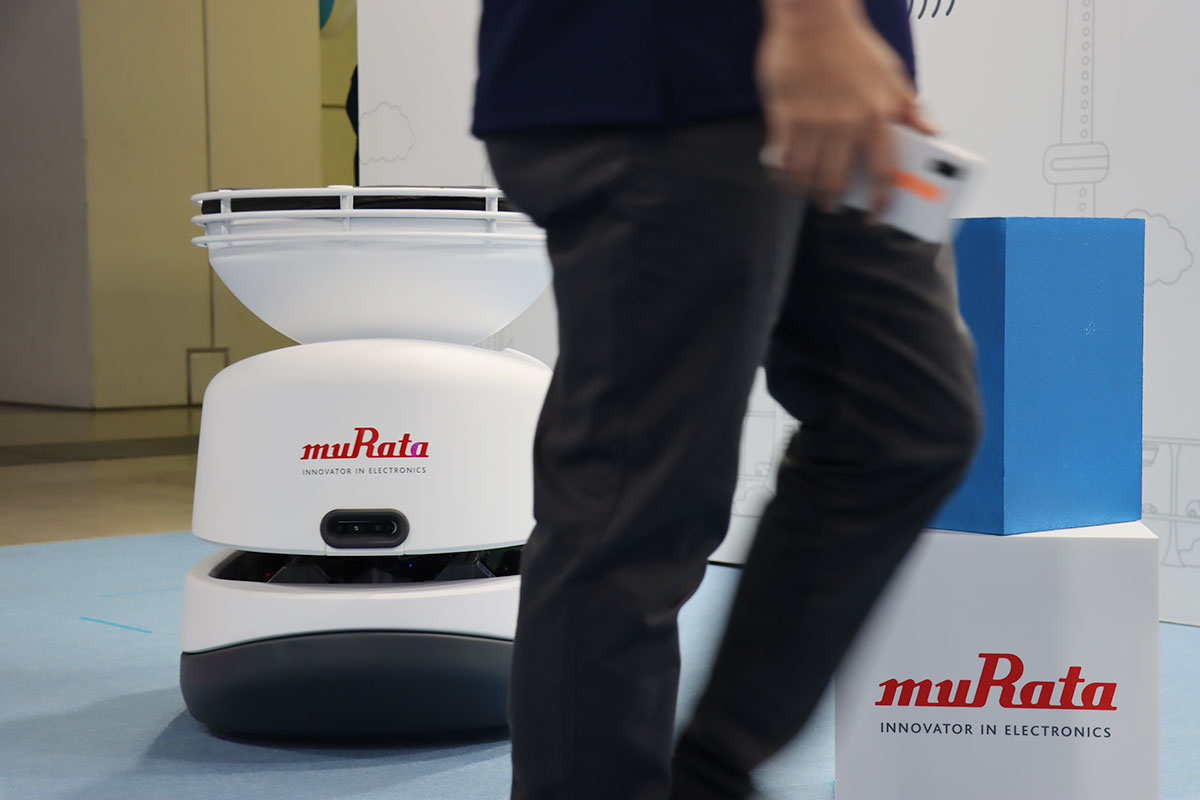
"Cars and other forms of mobility that drive around town will evolve from vehicles into close, lifelong partners." Ryoji Tokashiki from the In-Vehicle Equipment Sales Department looks ahead to the society of the future and discusses the changes in mobility as follows.
At the recent Japan Mobility Show 2025, Murata participated in a project called "Tokyo Future Tour 2035." Tokyo Future Tour 2035 is a special program within the Japan Mobility Show that enables visitors to experience the society of the future. Centered around the theme of what society might look like 10 years in the future, the program showcases advancements in mobility and changes in road infrastructure, etc. As a part of this program, Murata depicted a "future society in which mobility and robots converge to draw closer to people." According to Tokashiki, this vision of the future emerged from the company's desire to "solve various problems currently faced by mobility solutions."
How can Murata contribute to society in 2035?
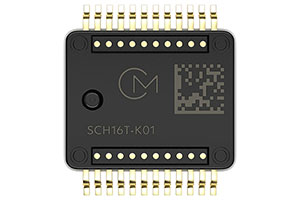
One proposed measure is the demo unit mentioned above, which utilizes a "6-DOF Combined Gyro Sensor and Accelerometer with Visual SLAM software technology."
SLAM is an abbreviation of "Simultaneous Localization and Mapping" and refers to a technology that estimates its own position while assessing the surrounding environment and creating a map. When such information processing uses images captured with a camera, it is called "Visual SLAM." This technology is used in the autonomous running of AGVs (Automated Guided Vehicle) in warehouses, and the autonomous flight of drones, etc.
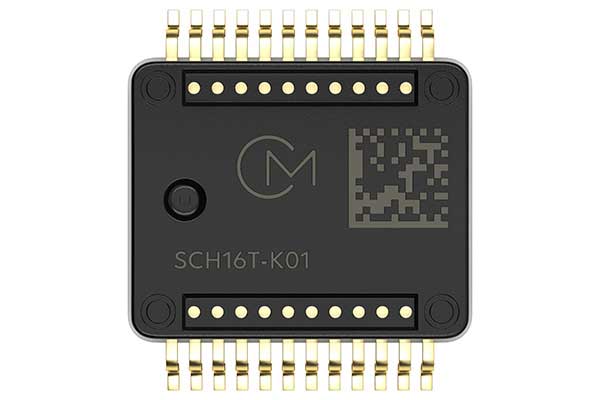
The demo unit showcased above is equipped with the Visual SLAM technology and also adopts the "6-DOF Combined Gyro Sensor and Accelerometer" from Murata.
This "6-DOF Combined Gyro Sensor and Accelerometer" functions in a similar way to the semicircular canals of the human inner ear.
Combining an accelerometer with a gyro sensor that detects the angular velocity enhances the camera-based self-positioning estimation and enables more precise position recognition. Using its proprietary 3D-MEMS technology*1, Murata offers such combined gyro sensors and accelerometers for automobiles and was able to clear the high-quality standards required for the mobility industry.
*1 3D MEMS (3D Micro Electro Mechanical System) technology: a technology that simultaneously achieves high sensor accuracy, miniaturization, and low power consumption by microfabricating silicon into a three-dimensional structure and then encapsulating and assembling it with high precision.
So why will such Murata technology become necessary going forward? According to Akiyoshi Okawa of the New Business Development Department, although mobility and robots were considered as separate categories until now with "mobility for movement" and "robots for work," he expects that a new type of machine will emerge that combines mobility and robots into something that "performs some sort of task while moving" to make people's lives more convenient and comfortable.
He adds, "It is also conceivable that people, mobility, and robots may work together at closer distances in some cases. In such a future, components that enable self-positioning estimation with high precision are essential to operate safely while flexibly adapting to changing environments and work details."
Murata believes that the manufacturing strengths which enabled it to achieve high quality for mobility applications can also be applied to the mobility and robot society of the future.
The demo unit showcased at the Japan Mobility Show 2025 could be used in applications such as a stroller or a luggage-carrying robot. However, Tokashiki adds, "Considering only standard use cases is not interesting. We want to fantasize about the future with a sense of excitement."
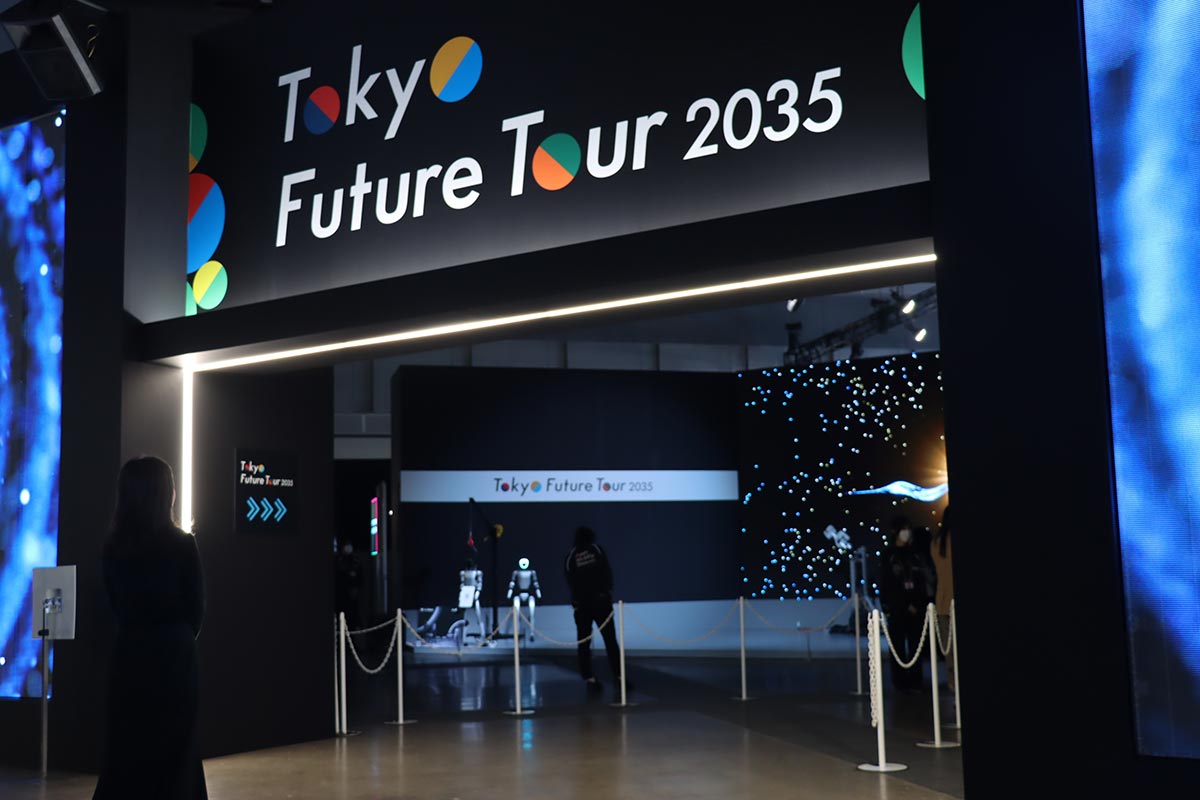
At the Japan Mobility Show 2025, the company put great importance on the feedback received from general visitors, and planned to search for new partner companies. Tokashiki stressed, "Working on our own will narrow Murata's perspective. As we imagine and create the future, we hope to cherish our encounters with partner companies."