

Electromagnetic Interference from Industrial Equipment: Effects on Wireless Communication and Modern Mitigation Strategies
Introduction: Emerging EMC Challenges in the Era of Smart Factories
In recent years, smart factories powered by cutting-edge technologies such as IoT, AI, robotics, and 5G have rapidly gained traction across the manufacturing industry. These innovations are driving automation, reducing labor dependency, and significantly improving production efficiency.
However, as wireless control systems increasingly replace traditional wired setups, ensuring stable wireless communication within factory environments has become a critical challenge. One major concern is electromagnetic noise generated by industrial robots and control devices, which can interfere with wireless signals like Wi-Fi, LTE, and 5G.
Such interference can lead to serious operational issues, including:
- Malfunctions in production equipment
- Communication errors that halt production lines
As smart factories evolve, addressing these EMC (Electromagnetic Compatibility) risks is essential to maintaining reliable and efficient operations.
*Electromagnetic Compatibility (EMC) refers to the ability of electrical and electronic devices to operate properly without causing electromagnetic interference to other equipment, and without being affected by external electromagnetic disturbances themselves.

Electromagnetic Noise in Smart Factories: A Hidden Threat to Wireless Communication
In today's manufacturing environments, a wide variety of industrial robots, motors, and control devices operate simultaneously, generating broadband electromagnetic noise ranging from low frequencies to the GHz spectrum (see Figures 1, 2, and 3).
Measurement data clearly shows that these noise bands overlap with wireless communication frequencies such as Wi-Fi (2.4 GHz/5 GHz), LTE, and 5G (Figure 3: Electromagnetic Noise Measurement in Production Lines).
As a result, smart factories are increasingly exposed to environments where wireless devices suffer from reduced receiver sensitivity and frequent communication errors—posing a serious risk to stable and efficient operations.


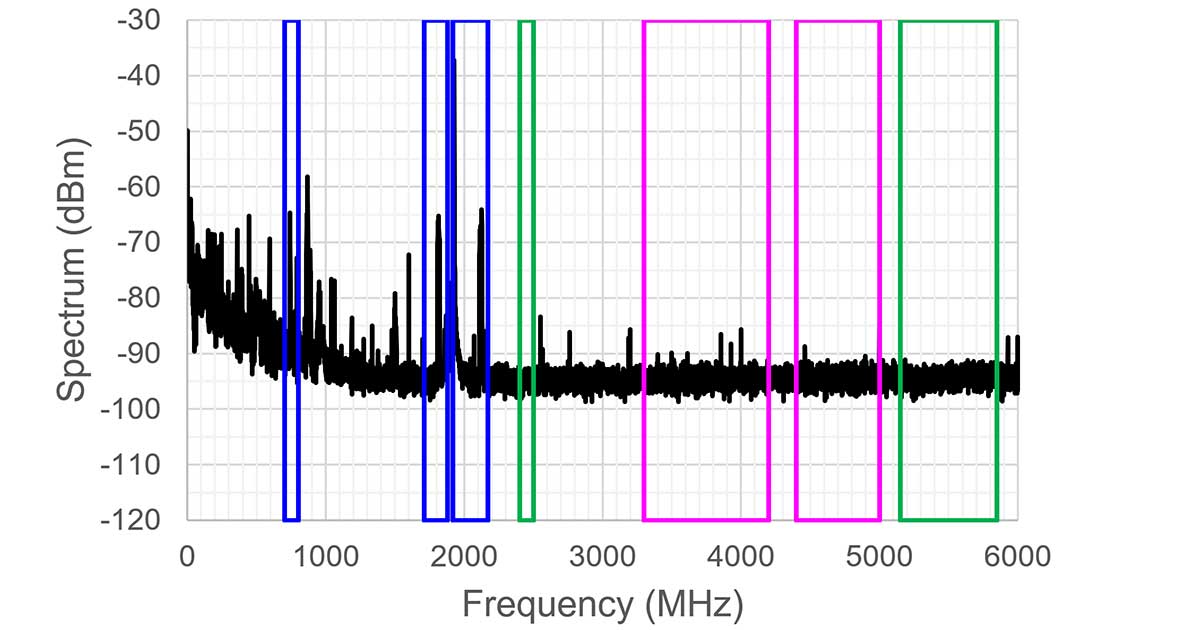
| Frequency Bands | |
|---|---|
| Wi-Fi | 2.4 GHz Band (2400-2500 MHz) |
| 5 GHz Band (5150-5850 MHz) | |
| 5G | n77 (3300-4200 MHz) |
| n79 (4400-5000 MHz) | |
| LTE | Band1 (1920-2170 MHz) |
| Band3 (1710-1880 MHz) | |
| Band28 (703-803 MHz) |
Hidden EMC Risks in Smart Factories: External Noise and Self-Interference
Electromagnetic noise poses two major risks in smart manufacturing environments: external interference and self-interference.
1. External Electromagnetic Noise and Malfunction Risk
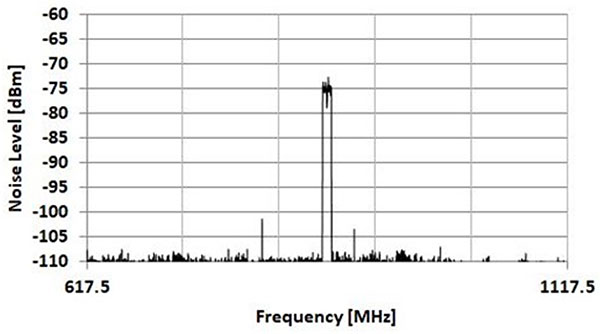
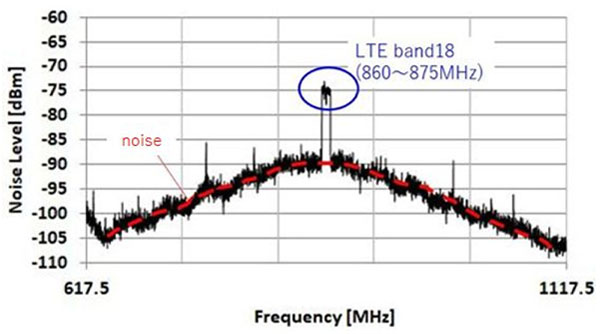
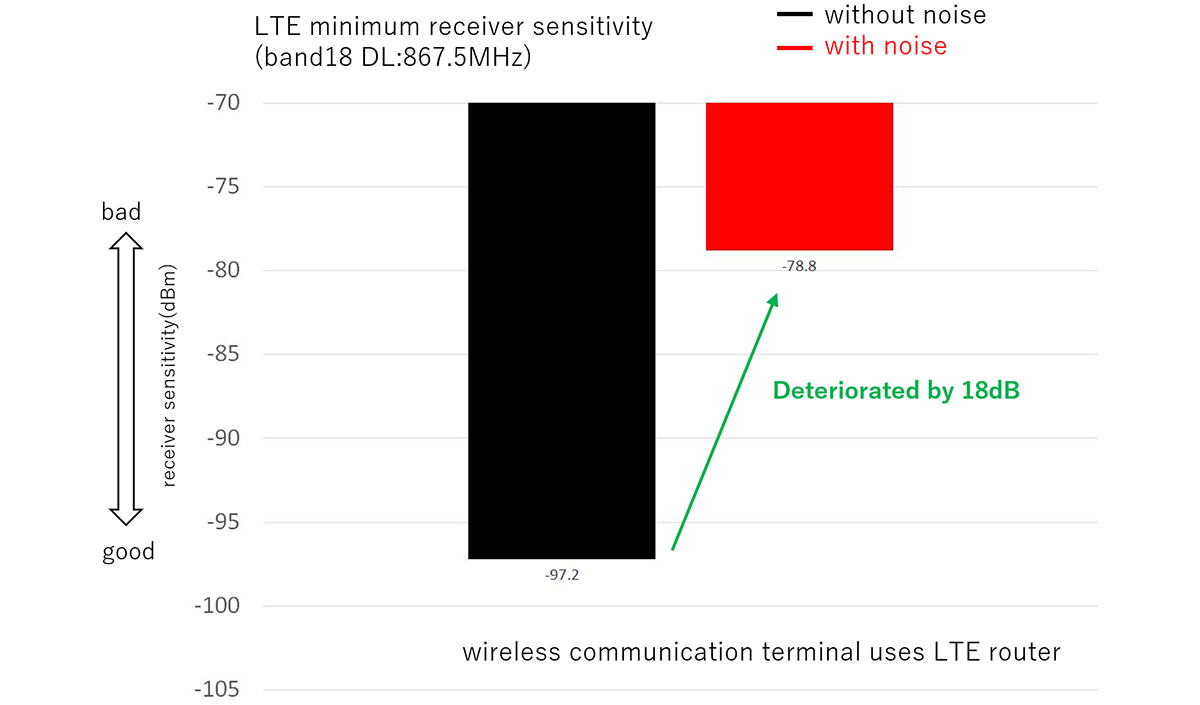
Experimental tests conducted in factory settings revealed that in noise-free environments, only LTE signals were detected. However, under actual factory conditions, the electromagnetic noise levels overlapped with the signal levels, resulting in up to an 18 dB reduction in receiver sensitivity (Figures 5–7).
2. Self-Interference from Industrial Equipment
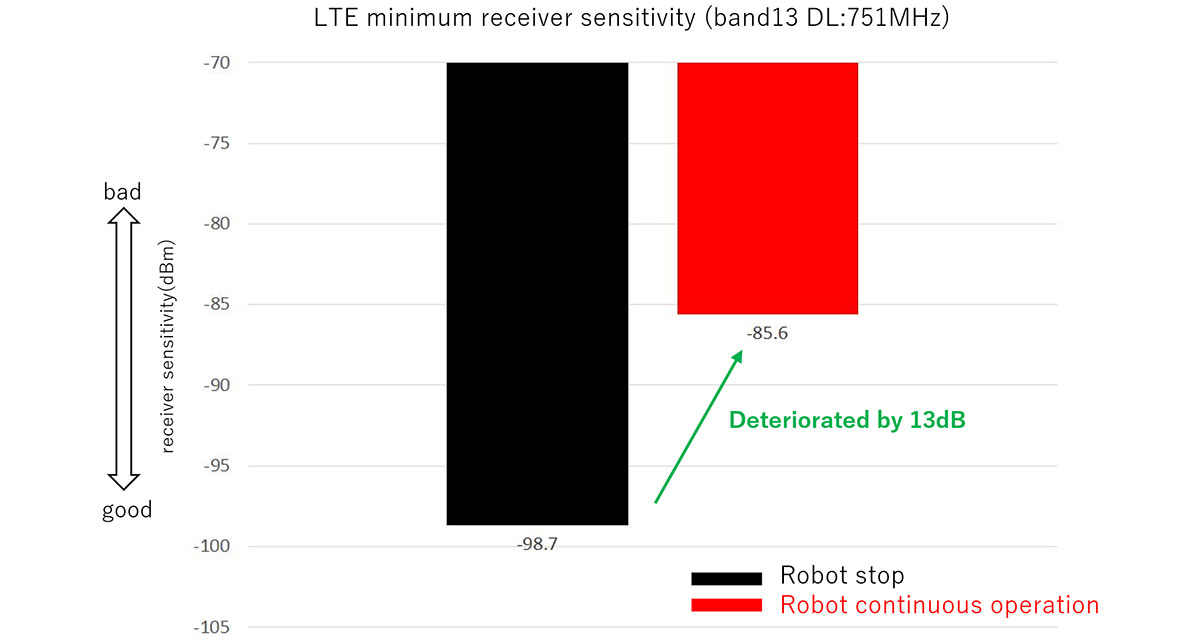
Industrial robots and control devices can interfere with their own operation through the electromagnetic noise they generate. For example, DC-DC converters—used to convert one DC voltage to another—can act as noise sources, while cables and metal enclosures may function as unintended antennas. In such environments, a receiver sensitivity drop of up to 13 dB was observed (Figure 8).
These findings highlight the importance of EMC countermeasures to ensure stable wireless communication and reliable equipment performance in smart factories.
*Self-interference refers to a phenomenon where a device's own electromagnetic emissions interfere with its own operation. This can lead to performance degradation or unexpected behavior, especially in complex systems like industrial robots or control units.
Understanding Electromagnetic Noise in Industrial Robots: Mechanisms and Countermeasures
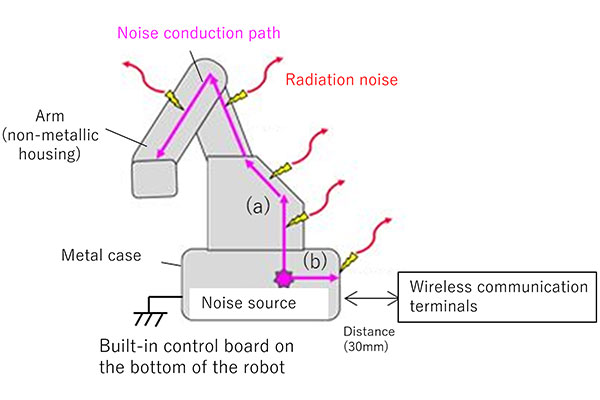
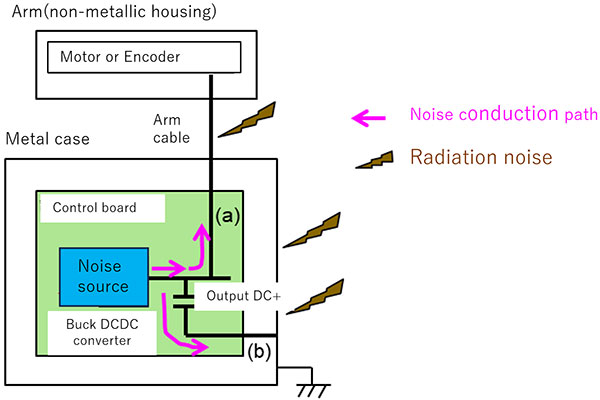
Industrial robots typically consist of three main components: the drive unit (e.g., robotic arms), the control unit (including circuit boards and DC-DC converters housed in metal enclosures), and the cables connecting them.
Investigations into the sources of electromagnetic noise have revealed that DC-DC converters are the primary emitters. Furthermore, cables and metal enclosures act as unintended antennas, radiating the noise into the surrounding environment (see Figures 9 and 10).
Therefore, effective EMC countermeasures should focus on two key areas:
- Suppressing electromagnetic emissions from DC-DC converters
- Preventing the propagation of noise through cables and enclosures
These strategies are essential for maintaining wireless communication quality and ensuring stable operation in smart factory environments.
Improving Wireless Receiver Sensitivity: A Practical Case Study from the Factory Floor
In a real-world application, inserting a noise filter (choke coil) into the DC output line of a DC-DC converter led to a significant improvement in wireless communication performance. Specifically, the minimum LTE receiver sensitivity during robot operation improved by approximately 11 dB (see Figures 11, 12, and 13).
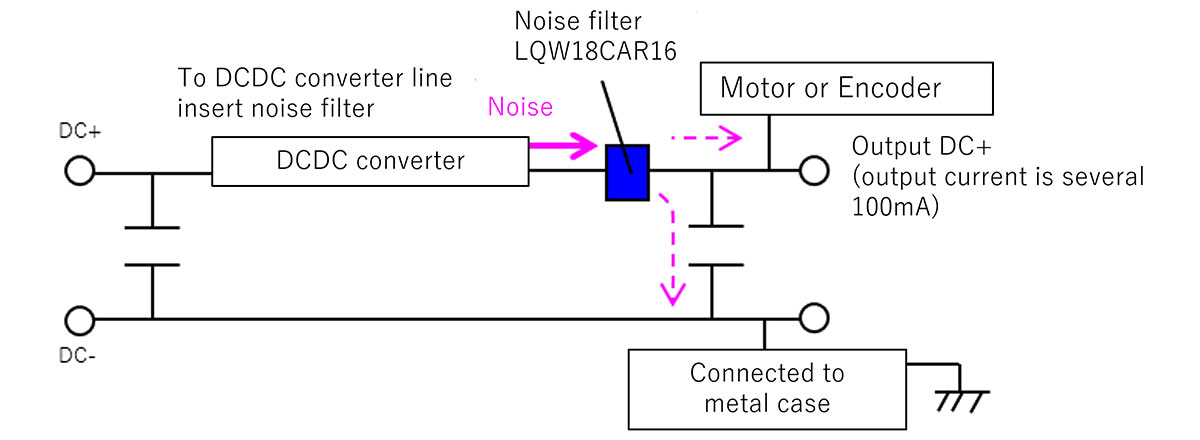
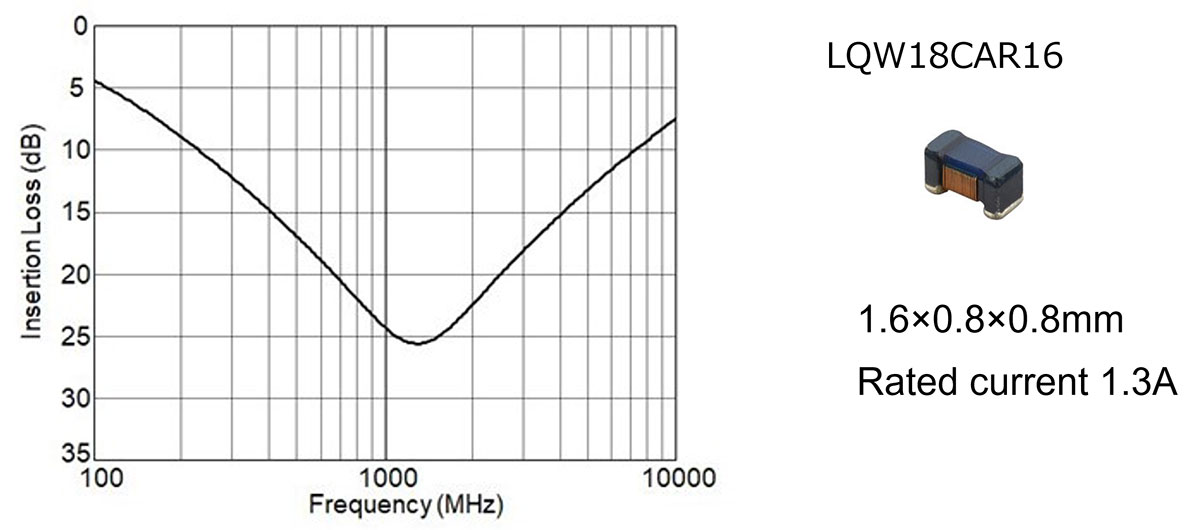
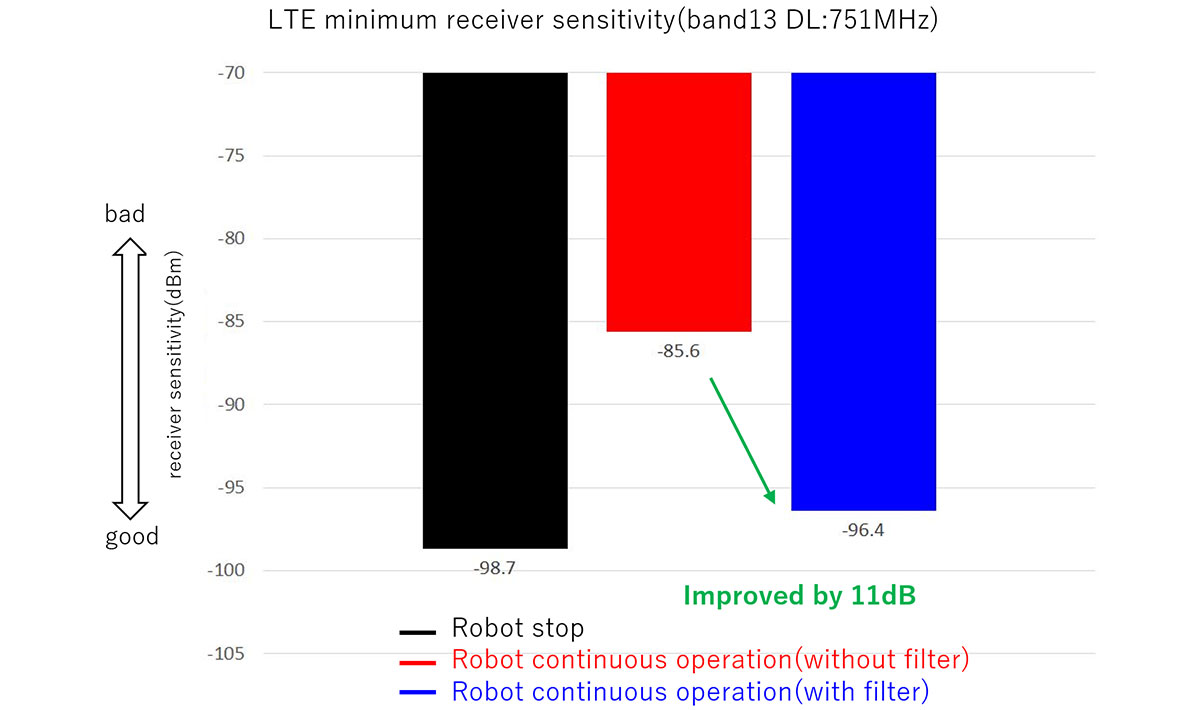
This countermeasure was effective because the high-frequency noise generated by the DC-DC converter was reflected back into the converter by the impedance characteristics of the filter, preventing it from leaking into the output side.
When selecting filters, it is important to consider their frequency characteristics and insertion loss (i.e., the attenuation of the signal caused by the filter itself).
In this case, Murata's LQW18CAR16 (1.6 × 0.8 × 0.8 mm, rated current 1.3 A) was used.
Alternative options include Murata's BLM series ferrite bead inductors, which have different current superposition characteristics compared to the LQW series. Selection should be based on the required noise suppression performance.
Summary and Practical EMC Strategies for Smart Factories
As smart factories continue to evolve, electromagnetic noise issues within production environments are expected to become increasingly prominent. Stronger EMC (Electromagnetic Compatibility) measures will therefore be essential.
To respond effectively, the following initiatives are crucial:
- Assessing the electromagnetic noise environment within the factory
- Implementing noise countermeasures at the electronic component level in industrial equipment and robots — especially for DC-DC converters, cables, and enclosures
Among these, noise countermeasures at the electronic component level are among the highest priorities, as they directly impact the stability of wireless communication and the reliability of equipment. Practical, on-site implementation of these measures is essential.
Latest Trends in EMC Standards and Future Outlook
The latest revision of the EMC standard for industrial equipment, CISPR 11 Edition 7, was released in February 2024. Compared to the previous Edition 6.2, it introduces new emission limits for the 1–6 GHz frequency range.
As a result, both design and operations teams must prepare for broader-band EMC compliance requirements. Staying informed and implementing practical countermeasures will be essential for maintaining performance and regulatory alignment.
This article has outlined practical approaches to electromagnetic noise mitigation and highlighted key updates in EMC standards. If you have questions or would like to explore specific case studies, feel free to reach out.