
Inductor for short-range wireless communication

INDEX
2. Communication Technology That Supports Digital Keys
3. What Are the New Ways to Access Cars Realized by Digital Keys?
The automotive industry is undergoing a major, once-in-a-century transformation. The emergence of services such as ride-sharing, connected cars with autonomous driving, automatic emergency calls, and other functions are rapidly changing the industry. In the midst of this evolution, digital keys have emerged as a crucial technology that facilitates car sharing and enhances security. What exactly is a digital key? In what systems are digital keys utilized? In this article, we will explore the characteristics of digital keys, how they differ from traditional keys, the communication technologies they employ, and the innovative methods of vehicle access that they enable.
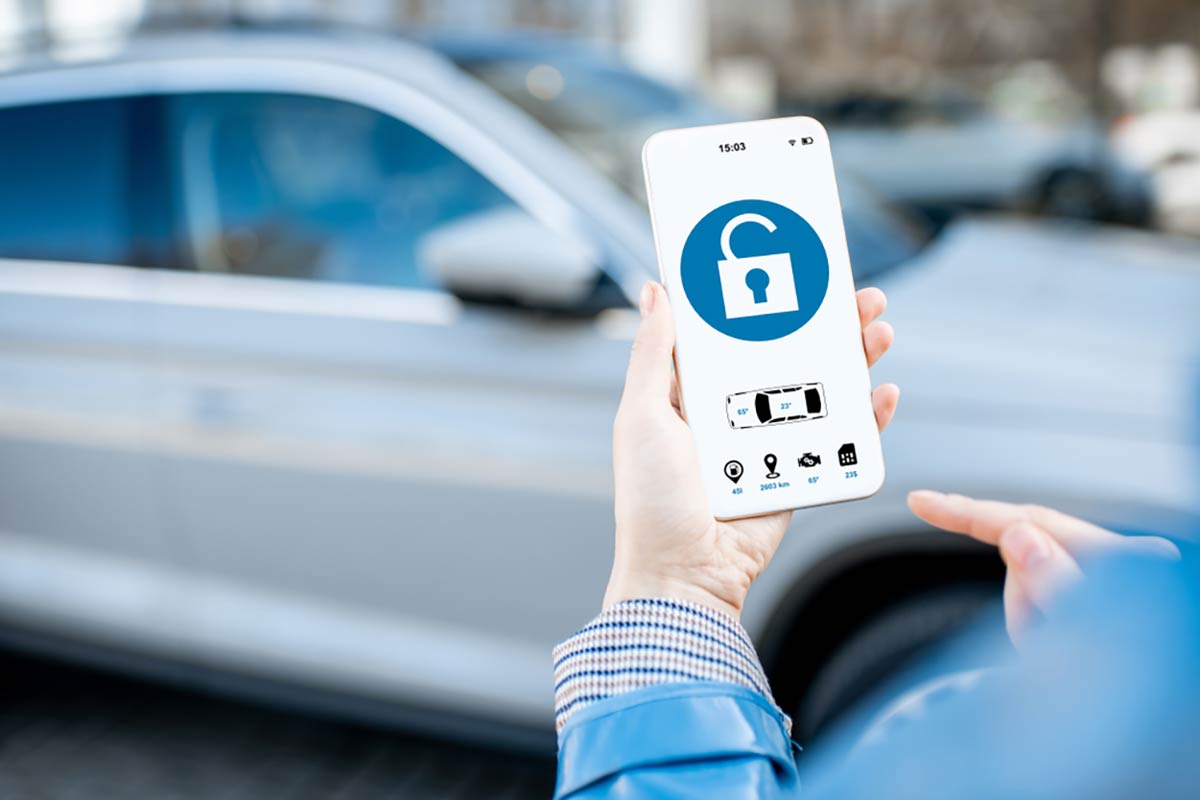
A digital key is a mechanism that uses digital data stored on a smartphone to unlock and lock doors instead of a physical key.
Digital keys are managed as electronic data. Therefore, unlike physical keys, it is possible to freely duplicate them and share them with family and friends. Additionally, it is also possible to record and manage the usage history of digital keys.
We explain here the differences between keyless entry keys and smart keys, which have conventionally been used as car keys and digital keys.
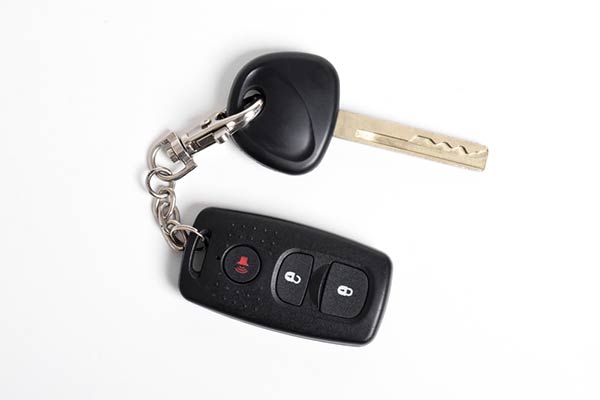
A keyless entry key allows you to unlock and lock doors by pressing the buttons on the key itself.
You insert the physical key into the keyhole and turn it to start the engine (Fig. 2).
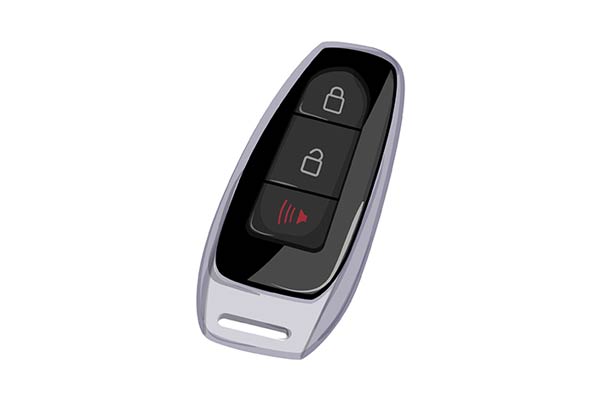
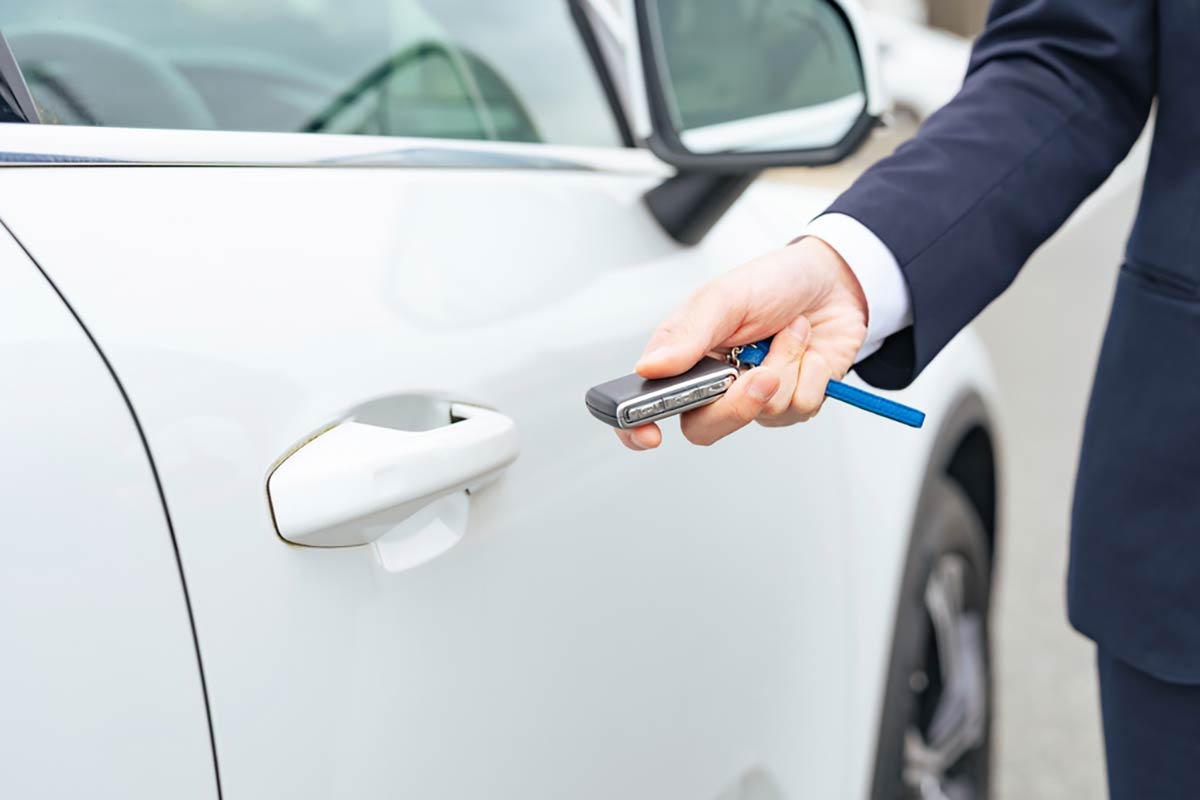
This is a key for which the car recognizes the radio waves emitted from the key when you approach the car while holding it. You can then unlock and lock the door by pressing the buttons (Fig. 3).
Even without inserting the key into the keyhole, you can perform the same operations as if it was inserted. You press the start button to start the engine.
In most cases, a function called an "immobilizer*1" is installed in the key. This function can prevent crimes including key copying, lock picking, and hot-wiring.
This is when a smartphone serves as the key in place of a physical key. When you approach the car while holding a smartphone that has been authenticated as a key, the car recognizes the smartphone as a key. In addition to starting the engine, you can then use various services such as displaying the status of the car and sharing the digital key. This key technology is expected to become important to access smart cars.
*1 Immobilizer: This is a system that prevents the engine from being started with any key other than the dedicated key by using electronic comparison. The key has a small electronic chip built into it. The ID code recorded on the chip is electronically compared with the ID code recorded in the engine computer of the car itself. You can only start the engine if these codes match.
The car owner's smartphone becomes the digital key when it is paired with the car. Pairing is performed using a dedicated tool (app) or similar provided by the automobile company.
The necessary data used as the digital key is encrypted and stored in a highly secure area on the smartphone. Accordingly, it is protected from unauthorized access. Moreover, the car owner can temporarily issue/deactivate digital keys (friend keys) to family, friends, and other people.
Information such as the car owner's usage history and issuance/deactivation of friend keys is managed on the server (cloud) of the respective smartphone manufacturer.

Digital keys use data stored on the smartphone to recognize the user as an authorized user. These keys can then operate the car's door locks and start the engine. The recognition of a user as an authorized user is performed on the cloud. Therefore, it has high security performance against unauthorized access and other forms of illegitimate use by unauthorized users.
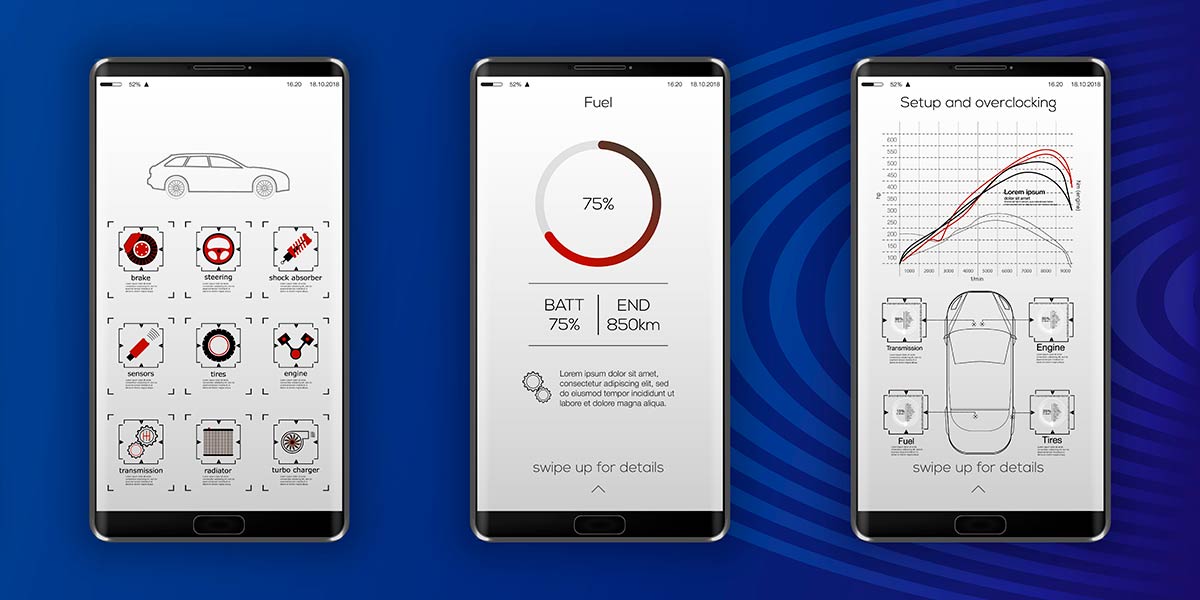
In addition, unlike with physical keys, it is possible to freely duplicate keys just by copying the data encrypted and stored on the smartphone. This enables car sharing. It is also possible to set the time when the duplicated keys can be used as you like. Moreover, you can deactivate the functions as a digital key immediately by remote operation if you lose your smartphone or if it is stolen. Furthermore, it is expected that it will also become possible in the future to monitor the condition of the car, such as the tire pressure and battery level, on the smartphone screen.
Digital keys use smartphones. This means communication is performed via 4G, 5G, Wi-Fi, or similar on the Internet. So, what technology do cars and digital keys use to communicate? We introduce here the technology that allows cars and smartphones to wirelessly communicate to realize digital keys.
Bluetooth® is a leading common standard to perform wireless communication. It is currently the most widely used communication method for smart keys. There are many versions of Bluetooth®. We can broadly divide them into version 3.0 and earlier and version 4.0 and later. The communication method called "Bluetooth® Low Energy (BLE)" is used in version 4.0 and later. This enables communication with low power consumption. BLE has been widely introduced into smart keys. It has a line-of-sight communication range of a dozen or so meters. This is sufficient for typical parking lots.
On the other hand, since doors can be unlocked and locked and the engine started simply by establishing communication, it has been pointed out that there is a risk of car theft through a relay attack*2.
*2 Relay attack: This is a method to steal a car. The weak radio waves constantly emitted by the smart key are relayed to lock or unlock doors at a distance and start the engine.
UWB is a wireless communication method that uses an ultra-wideband in the frequency bandwidth.
It is possible to identify exact distance and location through time of flight (ToF) in which the time from transmission to reception is measured. This is also attracting attention as an effective crime prevention technology against relay attacks. Its other major benefits include that it is less likely to interfere with other communications because communication with low noise is possible and that it consumes less power.
However, UWB it yet to be as widely used in cars as NFC and Bluetooth®. Only a few models of smartphones are equipped with UWB. Nevertheless, UWB is expected to spread in digital keys because it enables high-security and large-volume communication.
NFC is a short-range wireless communication technology. It has a communication distance of about 10 cm.
It is possible to unlock and lock doors by holding the key over the receiver on a door.
The receiver communicates with the IC chip using a method called "electromagnetic induction." This means there is no need for a battery or other power source on the key side. Accordingly, there is no worry about problems caused by the battery running out like with smartphones and smart keys.
However, while Bluetooth® and UWB allow hands-free car access, NFC requires the action of holding up the key to the receiver due to its short communication distance. The communication capacity is also small. Therefore, it is not suitable for exchanging a lot of information.
Using digital keys to access cars allows the handover of rental car keys via smartphone authentication. In addition, it is expected that the following new ways of accessing cars will become possible in the future.
Digital keys make it possible for users to grasp a variety of information on smartphones as a function not found in smart keys and other conventional keys. This includes the distance traveled by the car, the route it has taken, the tire pressure, the battery level, and maintenance information. Furthermore, it becomes possible to automatically configure the seat position, mirror angle, audio settings, and more just by the user approaching the car while holding the digital key.
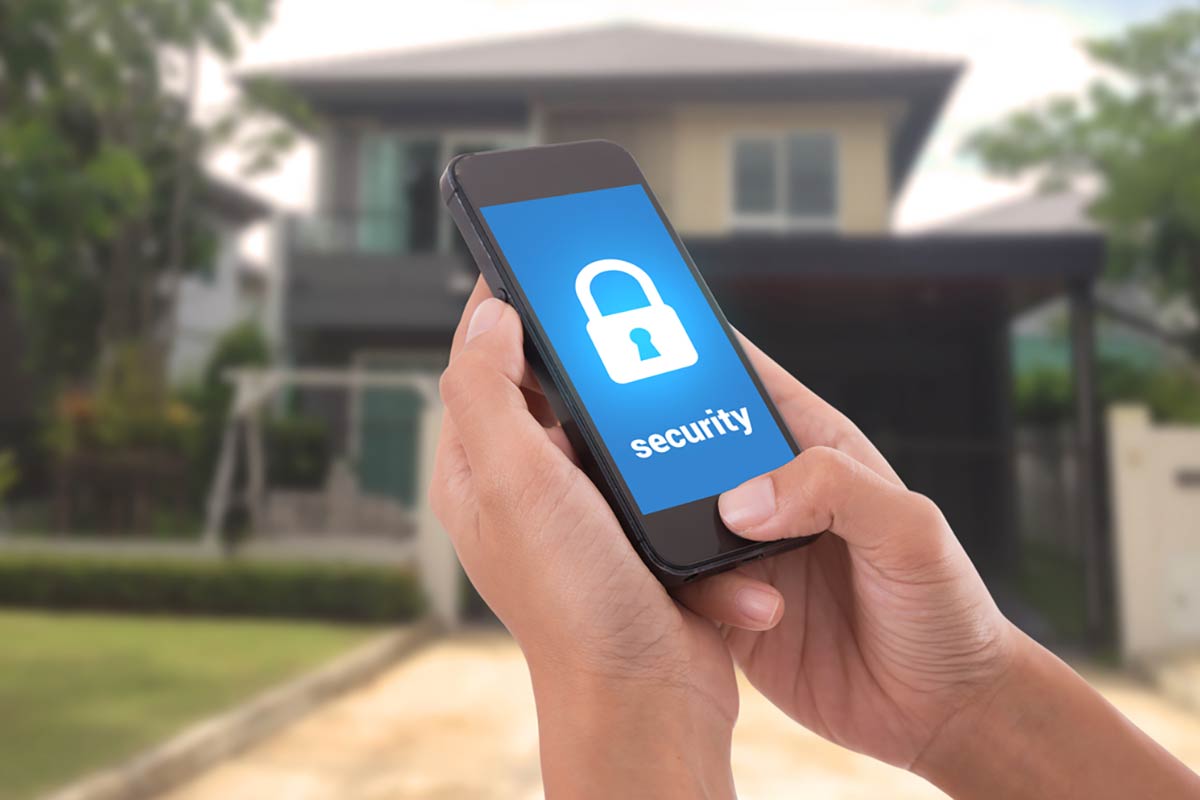
Smart locks for which front door keys are managed using smartphones are becoming more common in homes.
Integrating the functions of a digital key, the car key, and a smart lock into a smartphone means it also becomes possible to use digital keys as smart locks. It is expected that this will bring convenience to everyday life.
Digital keys have eliminated the tool of physical keys from cars and have become an essential technology for car sharing. The use of digital keys is spreading to both personal and company cars. It is thought this will bring about great convenience in sharing cars among family, friends, and employees. Furthermore, digital keys can also function as smart locks for homes and offices. This is a technology that is creating a major change in the conventional concept of keys.
Digital key technology will continue to evolve in the future. It is expected to gain support from many users as it becomes more secure and compatible.