
CAE software Femtet


Gifts Inc. (hereinafter "Gifts"), the winner of the fiscal 2024 top award at Murata Manufacturing's (hereinafter "Murata") co-creation project "KUMIHIMO Tech Camp with Murata" (hereinafter "KUMIHIMO"), is developing both the hardware and software for an automated fetal ultrasound examination system.
Dr. Ogasawara, CEO of Gifts, has a unique background as an obstetrician-gynecologist who has also conducted research in neuroscience and deep learning. We spoke with him about why he applied to KUMIHIMO, what inspired this system, the current environment and challenges of fetal ultrasound examinations, and what Gifts hopes to achieve through future co-creation with Murata.
Ogasawara earned his Ph.D. in medicine as an obstetrician-gynecologist in 2023 and has also conducted brainwave research in laboratory settings. We asked about the automated fetal ultrasound examination system he's developing and what inspired its creation.
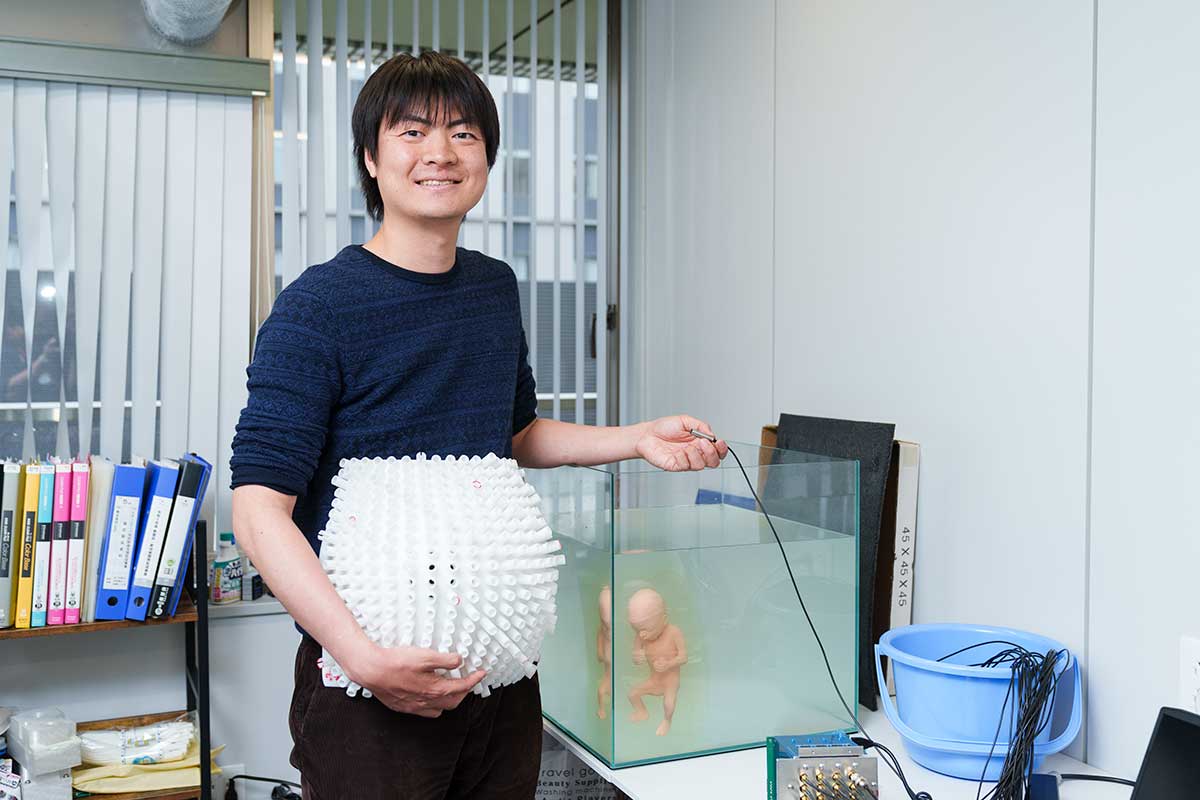
--Please give us an overview of the automated fetal ultrasound examination system that Gifts is developing.
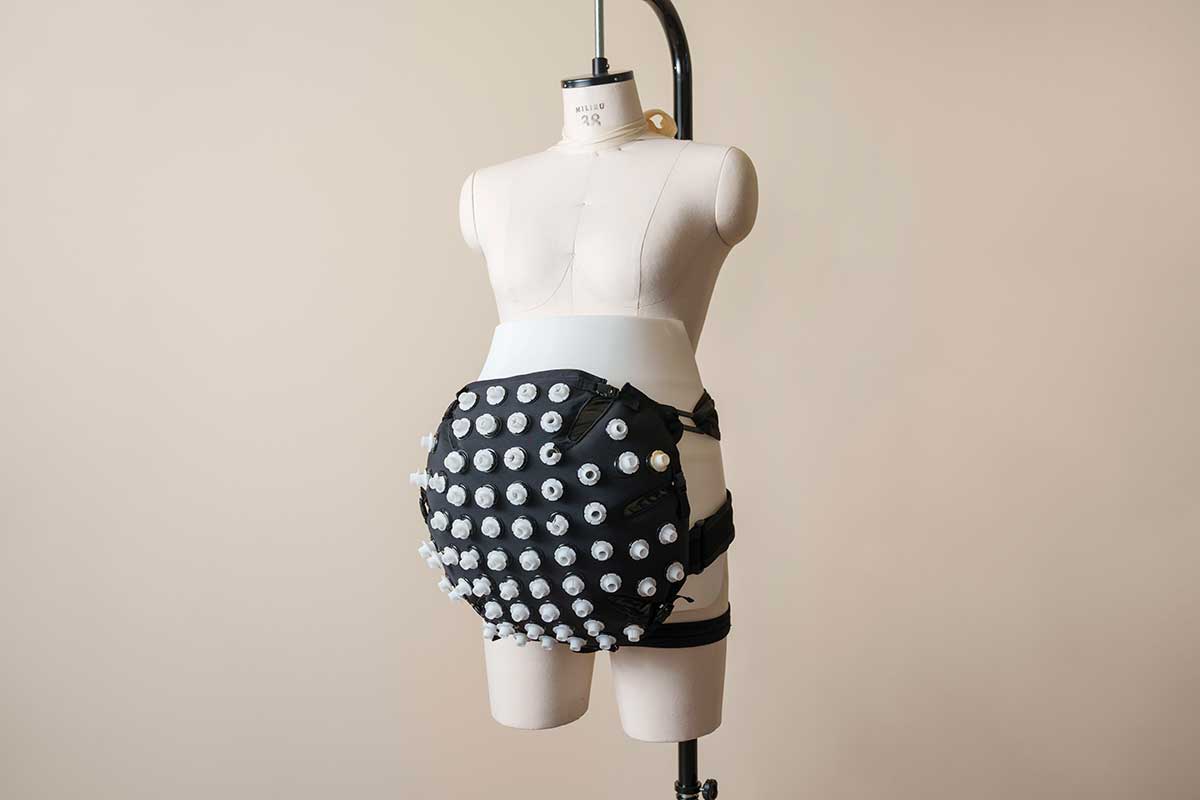
Ogasawara: This is a proprietary fetal examination system developed by Gifts. Using multiple probes arranged to cover the pregnant woman's abdomen, it can automatically examine the entire fetus. Each probe has an ultrasound sensor capable of measuring the fetus's shape, as well as movements, through reflected waves. Pregnant women can attach the device and perform measurements themselves, making ultrasound examinations easily accessible to everyone.
--How did conventional devices estimate fetal weight, wellbeing,*1 position, and orientation?
Ogasawara: Although conventional ultrasound examinations are excellent—being real-time and non-invasive—they require an examiner to manually hold a convex probe with fine acoustic elements arranged linearly against the pregnant abdomen. Moreover, the images obtained are essentially 2D cross-sections, making it impossible to assess the entire fetal body at once. For instance, to estimate weight, we measure the head, abdominal circumference, and thigh length separately, then use these measurements in a calculation formula. Evaluation of fetal limb and trunk movements depends on visual assessment. However, these methods are highly variable because their accuracy depends on the skill of doctors or technicians, and opportunities for examination are limited by geographic and economic factors. Since the frequency of fetal ultrasound examinations directly influences the quality of perinatal care, more frequent and precise examinations are highly desirable.
*1 Wellbeing: The current favorable condition of the fetus.
--What inspired you to develop this system?
Ogasawara: Inter-examiner error in fetal examinations ranges from 5–10%, with errors of several millimeters being common when measuring structures several centimeters in size, such as the fetal head or abdominal circumference. This might seem problematic at first glance. However, looking at it differently, if errors of several millimeters are acceptable in general clinical practice, higher spatial resolution is only necessary in situations requiring detailed examination. Since the vast majority of pregnancies progress normally, there's limited need to perform cutting-edge examinations on all fetuses. It would be more effective to widely deploy high-frequency screening that appropriately detects abnormal progressions. This system was developed with the idea of creating a solution that allows anyone to receive ultrasound examinations easily and at any time.
We inquired about what motivated Gifts, a medical industry company, to apply for KUMIHIMO, a co-creation project organized by electronic component manufacturer Murata, and their journey to winning the award.
--What prompted you to apply for KUMIHIMO?
Ogasawara: I knew Murata as a company with expertise in electronic components, especially compact and high-precision technologies. When I saw the KUMIHIMO open call in November 2024 and attended the project briefing, I felt that Murata's technologies—ultrasonic sensors, flexible circuit boards, connectivity modules—aligned well with what Gifts needs for social implementation. Also, the careful responses to our inquiries gave us great confidence, which led us to apply.
--What kind of interactions did you have with Murata after applying?
Ogasawara: There was a preliminary meeting before the final selection, where we aligned our presentation content with the KUMIHIMO secretariat members to ensure our ideas would be clearly communicated within the limited time. During the Q&A session with judges, including Murata executives, at the final selection, there were detailed technical questions about hardware circuits and algorithm specifics. Since I handle both software and hardware development, I believe I was able to provide appropriate answers. I also made sure to keep my responses concise to allow for more exchanges within the limited time. I was able to answer questions about the ultrasound examination system specifications with experimental data, and I feel the judges gained an objective understanding of our intellectual property portfolio.
What challenges are there in current fetal ultrasound examinations? While developing this system, Dr. Ogasawara personally interviewed 35 obstetrician-gynecologists, eight midwives, and 70 pregnant women in Japan, Australia, Indonesia, and the Philippines. We asked about the needs that surfaced from these interviews and the concerns he has as an obstetrician-gynecologist working daily with pregnant women.
--What challenges are there in current fetal examinations?
Ogasawara: First, there's the issue of regional disparities in healthcare accessibility. Compared to other regions worldwide, Japan generally has good medical access, and in urban areas, it's possible to see obstetric specialists even in the middle of the night. However, in medically underserved areas,*2 medical resources might be insufficient, preventing adequate fetal examinations.
Moreover, it's not just human resources (the number of healthcare workers) that are lacking. Today's ultrasound diagnostic equipment is highly advanced but equally costly and feature-rich, requiring expertise to operate effectively. While it's unrealistic to deploy top-tier ultrasound equipment and highly skilled medical professionals worldwide, if we can differentiate between normal pregnancy progression and abnormalities with simple, affordable examinations, we can make better use of limited medical resources.
*2 Medically underserved areas: Regions where medical supply is insufficient relative to demand. These exist widely not only in remote islands and mountainous areas but also near urban centers.
How can Gifts' ultrasound examination system solve the challenges of conventional examinations? We inquired about the problems it aims to solve, use cases, and technical innovations.
--What challenges are you aiming to solve?
Ogasawara: First, we will ease the workload on field doctors. Japan's low perinatal mortality rate*3 is due to doctors being able to monitor fetal health through ultrasound examinations. However, staffing shortages have long been a challenge in obstetrics, and ongoing medical work reform, along with the retirement of baby boomer doctors, has pushed obstetrician-gynecologists to their limit. The system Gifts is developing offers simple screening examinations that can be done anywhere and anytime, without restrictions. This will lessen the burden on obstetrician-gynecologists and allow resources to be allocated to higher-risk fetuses.
Next, we can address the insufficient frequency of ultrasound examinations for pregnant women. With our system, pregnant women can check their fetus's condition themselves, enabling more frequent monitoring and ensuring safety and peace of mind during pregnancy.
For medical facilities, introducing this system is expected to lessen physicians' workload and expand the number of pregnant women they can serve. It will enable clearer explanations to pregnant women about fetal posture and movements, which will greatly help build trust between hospitals and patients. Moreover, we believe that sharing information gained through this system can lead to more efficient use of medical resources—such as managing normal pregnancies at community-based maternity centers and clinics and coordinating with higher-level medical institutions for high-risk cases.
*3 Perinatal mortality: The total number of stillbirths after 22 weeks of pregnancy and early neonatal deaths.
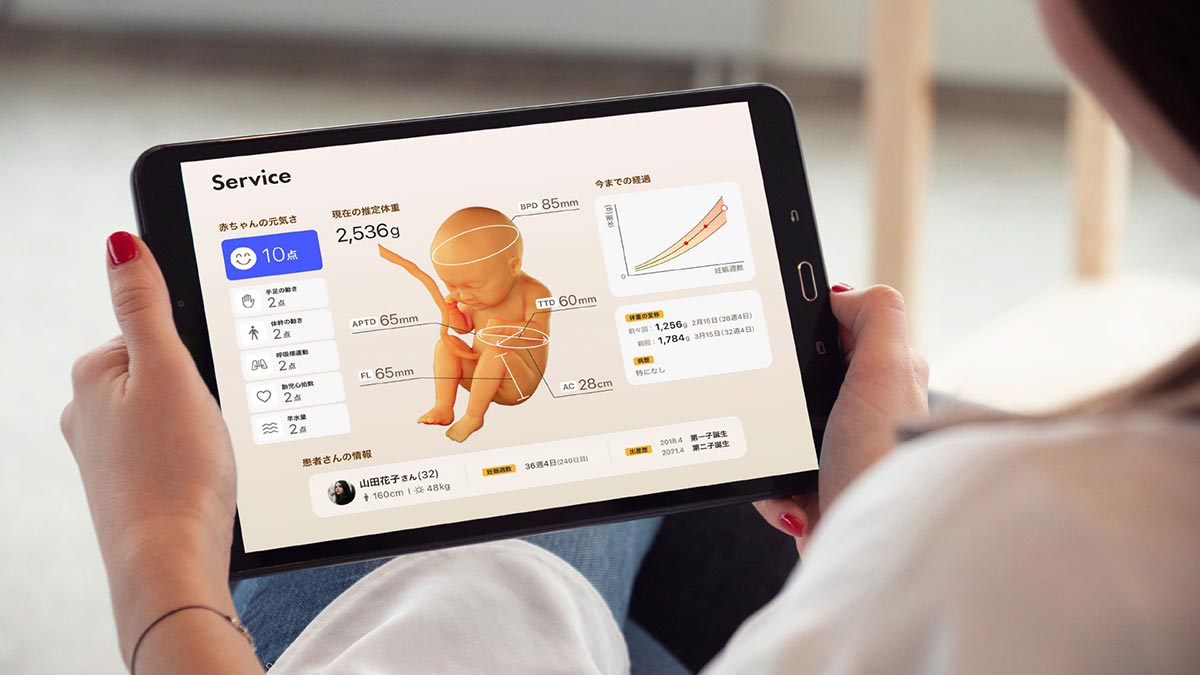
--Where specifically would these be installed, and how would examinations be conducted?
Ogasawara: I see these devices as tools anyone can easily use without specialized knowledge, similar to blood pressure monitors found in government offices or gyms. With the system Gifts is developing, pregnant women can simply wrap it around their abdomen to easily check their fetus's condition. There's no need for healthcare professionals like doctors or technicians to be present during the examination. This allows us to install them in places where pregnant women gather, making them accessible for casual use by many people. This also boosts equipment usage and lowers the cost per exam. Moreover, by sending the results to hospitals, any detected abnormalities in the fetus can be quickly shared with primary care doctors or higher-level medical facilities, ensuring prompt treatment and appropriate measures.
--Where does the technical innovation of Gifts' fetal ultrasound examination system lie?
Ogasawara: The innovation of our system is in intentionally spacing multiple probes apart and arranging them on a 2D curved surface, which allows for automatic capture of the fetus's 3D shape and movements. At first, ultrasound experts noted that this design might not produce accurate data. However, in traditional ultrasound examinations, inter-examiner error ranges from 5–10%, with errors of several millimeters when measuring structures a few centimeters long, such as the fetal head and abdominal circumference. From my view as a practicing obstetrician-gynecologist, errors of a few millimeters aren't major concerns for fetal health management, and the advantages of easier examination with this system outweigh these issues. Other specialists have widely accepted this idea, and we received the Encouragement Award in the Obstetrics and Gynecology field from the Japan Society of Ultrasonics in Medicine at its meeting in Kyoto in May 2025, demonstrating its practical relevance.
Ogasawara: Challenges in perinatal care have low social recognition, and I feel many field needs are overlooked. Beyond continuously communicating about these issues, I believe creating and implementing products in society is the key to solutions. To support this development, Murata has already provided us with their "Femtet" analysis simulation software. They have also helped by introducing business units and research labs with technologies and products that could potentially be integrated into our system. Going forward, I expect we can achieve synergy across various fields, including ultrasonic sensors, circuit design with flexible substrates, and connectivity modules.
True to the meaning behind our company name, "Gifts," we support doctors and pregnant women who work tirelessly to ensure that babies—these precious gifts—are born healthy. Murata's technology is essential for this mission. With this award as a catalyst, I hope we can continue on this path together.
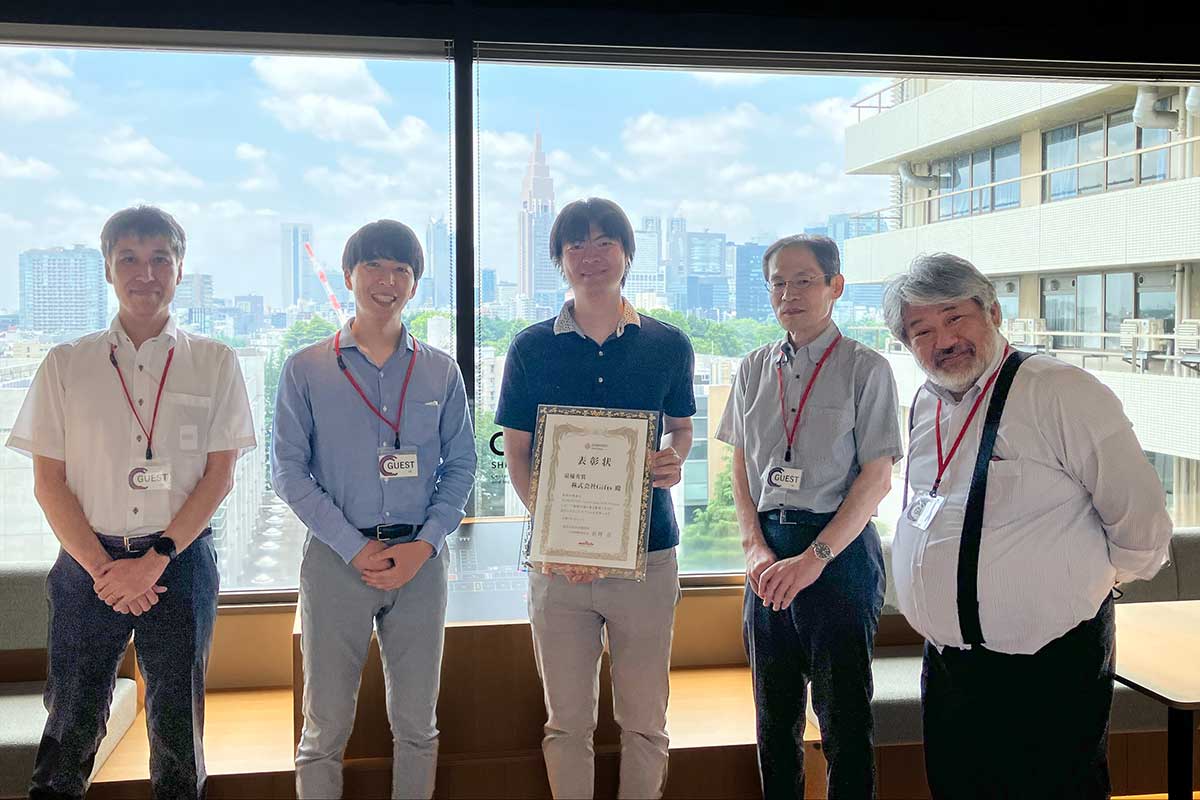
Jun Ogasawara
CEO, Gifts Inc.
Graduated from Keio University School of Medicine in 2013 and completed initial residency at Kameda General Hospital. Joined the Department of Obstetrics and Gynecology at his alma mater, obtaining specialist certification in obstetrics and gynecology in 2018. Conducted analysis and implementation related to neuroscience and deep learning (using Python, MATLAB, and C++) at the University of Tokyo's Laboratory of Chemical Pharmacology, earning his Ph.D. in 2023 (1 publication in Nature Communications, 2 in Scientific Reports).
The system described above is still under development, and the functions mentioned in this article are not connected to any particular product. These are expected functions at this stage and do not claim specific effects or efficacy.