All articles on "Wireless communication"

21 results found.
1 - 10 of 21 results

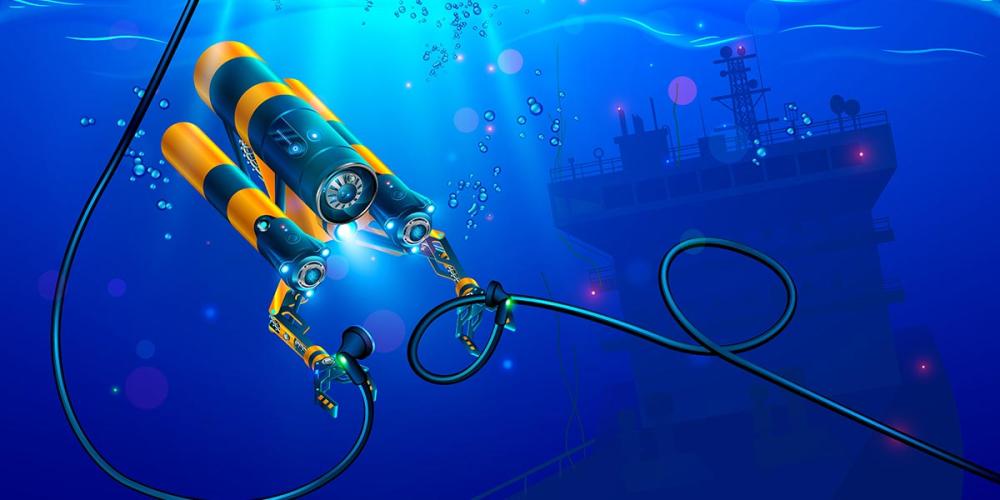
AUV (Underwater Drone) Utilization and Underwater Communication Technology

As undersea resources are attracting attention around the world, underwater drones are increasingly being used to survey those resources. In particular, there is great interest in the potential of autonomous underwater vehicles (AUVs) capable of fully autonomous navigation. How do AUVs operate underwater where radio waves cannot reach? In this article, we will explain the technology of underwater communication that is essential for AUV operation.

  • Wireless communication
  • Position Measurement
  • Distance Measurement

What Is Digital Data? The Basics of Digital Communication

The spread of PCs and the Internet has led to the rapid development of the digital society since the mid-1990s, and with the appearance of digital devices such as smartphones, it can be said that digital has become a natural part of society. Here we discuss matters related to digital technology, which can be considered the foundation of our current society and lives, such as the types, characteristics, and units of quantity of digital data.

  • Digital data
  • Wireless communication

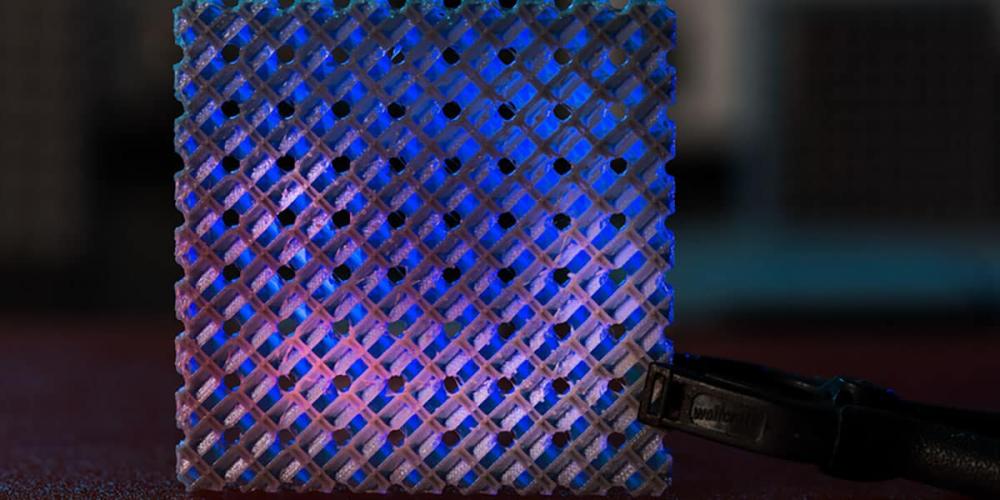
What Are Metamaterials That Expand Possibilities with Behavior Not Found in Substances in the Natural World?

Metamaterials are artificial substances that behave in ways not found in substances in the natural world. They control the reflection, transmission, and other properties of electromagnetic waves (light and radio waves), sound waves, and similar. We introduce here the types, usage examples, and prospects of metamaterials. We also look at the Ultrasound Transmission Metamaterial developed by Murata Manufacturing.

  • Material
  • Medical
  • Wireless communication
  • Automotive
  • Ultrasonic Sensors

FDMA, TDMA, and CDMA Multiple Access: Effective Utilization of Bandwidth (2)

The smartphones used by all sorts of people today are capable of transferring audio, image, and video data without interference. This is possible thanks to technologies that prevent problems such as the overlapping of different streams of data or interference from noise. This article describes two such technologies: “multiplexing,” which is aimed at enabling efficient utilization of radio signals, and “multiple access,” which makes use of multiplexing technology.

  • Wireless communication
  • Smartphone
  • Wi-Fi
  • Satellite communication
  • Multiplexing/Multiple Access
  • Radio wave
  • Bandwidth

FDMA, TDMA, and CDMA Multiple Access: Effective Utilization of Bandwidth (1)

The smartphones used by all sorts of people today are capable of transferring audio, image, and video data without interference. This is possible thanks to technologies that prevent problems such as the overlapping of different streams of data or interference from noise. This article describes two such technologies: “multiplexing,” which is aimed at enabling efficient utilization of radio signals, and “multiple access,” which makes use of multiplexing technology.

  • Wireless communication
  • Smartphone
  • Wi-Fi
  • Satellite communication
  • Multiplexing/Multiple Access
  • Radio wave
  • Bandwidth