
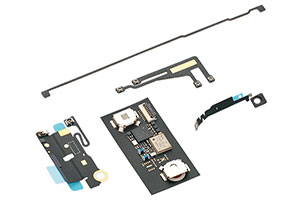
Multi-layer LCP product
DX×Murata: The future of manufacturing that is evolving through DX
At around 4:10 p.m. on January 1, 2024, an earthquake with a maximum seismic intensity of 7 on the Japanese scale struck the Noto Peninsula area, which caused severe damage to Wakura Murata Manufacturing Co., Ltd. ("Wakura Murata") located in Wakura, Ishikawa Prefecture. However, the plant was able to fully restore its production capacity to pre-earthquake levels just four months after the disaster. Behind this achievement lay the power of connection cultivated by Murata over many years. In order to take a behind-the-scenes look at the recovery from the earthquake and explore the role played by DX and Murata's strengths, we interviewed Tsubouchi, who was the Wakura Murata Plant Manager at the time, Miyamoto, Senior Manager in the Production Technology Section, and Shiko, Senior Manager in the Manufacturing Planning Section.
Murata Manufacturing has many plants, offices, and other sites located across the Hokuriku region. Wakura Murata is one such site that is responsible for the manufacturing and development of the multilayer resin substrates called multilayer LCP products. Plant Manager Tsubouchi recalls the situation immediately after the earthquake.
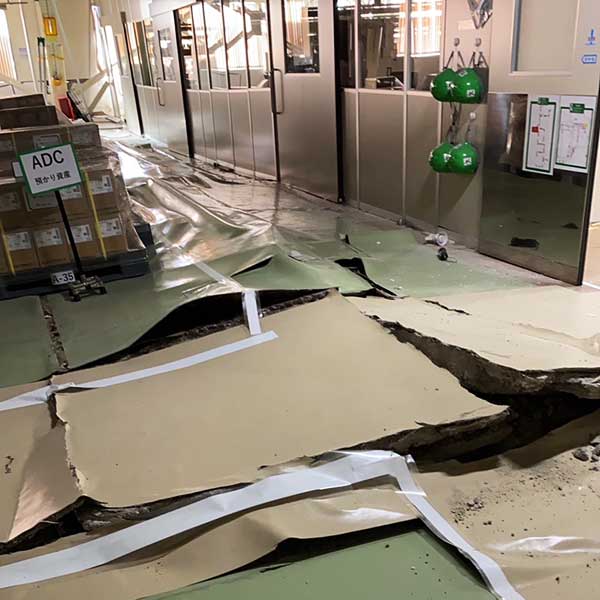
"The earthquake that struck the Noto Peninsula on January 1, 2024, also left deep scars on Wakura Murata. With damaged buildings, buckling floors, and fallen air conditioning equipment, the damage was so severe that we figured it would take several months for the plant to resume operations. Although we were fortunate enough to avoid a collapse of the main production equipment, all of the storage units for the equipment setting data and processing data were damaged. It was urgent that we recover the data and equipment to resume production." Wakura Murata is an important site that plays a part in the supply chain. The race against time to recover the site began immediately after the disaster.
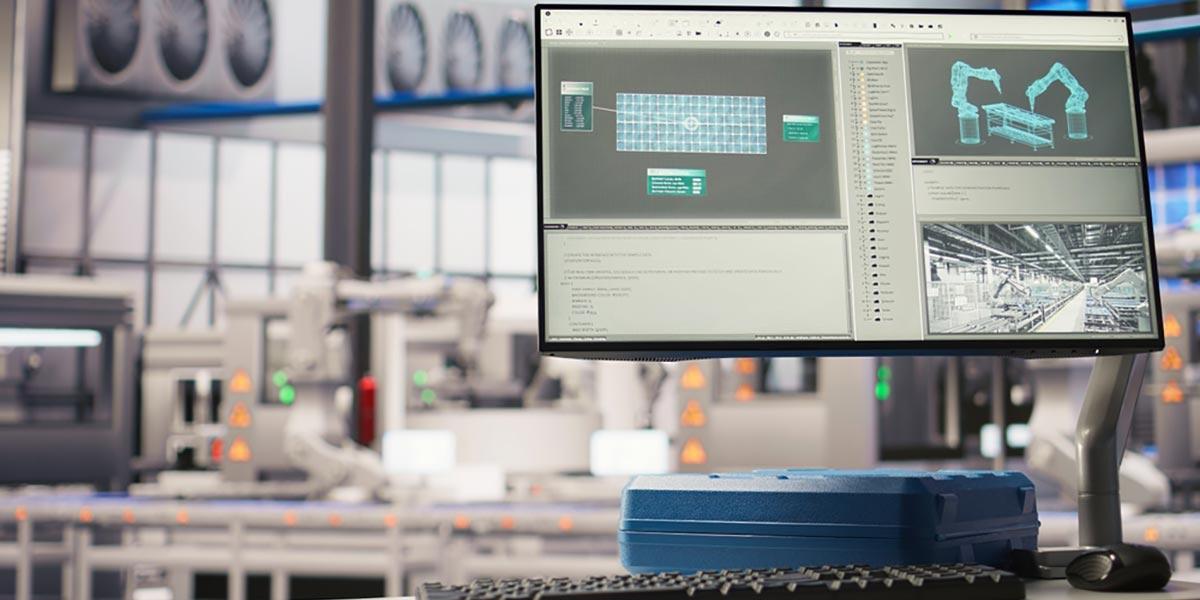
Wakura Murata actively promoted DX in manufacturing from before the earthquake. This included automation using industrial robots, sensor-based sensing, and the accumulation and utilization of processing and evaluation data. These initiatives greatly impacted the speed of recovery.
In particular, the data backup system, which directly ties into the production efficiency and precision, proved highly effective. The data from the damaged storage units was rapidly recovered from backups stored in data centers. In addition, the evaluation data saved to local servers inside the company was also intact, which greatly contributed to getting the equipment up and running. Regarding data management in DX, Tsubouchi commented, "To recover from a disaster, it is extremely important to consider where and how to store the data needed for manufacturing. This experience made me realize once again the value of DX."
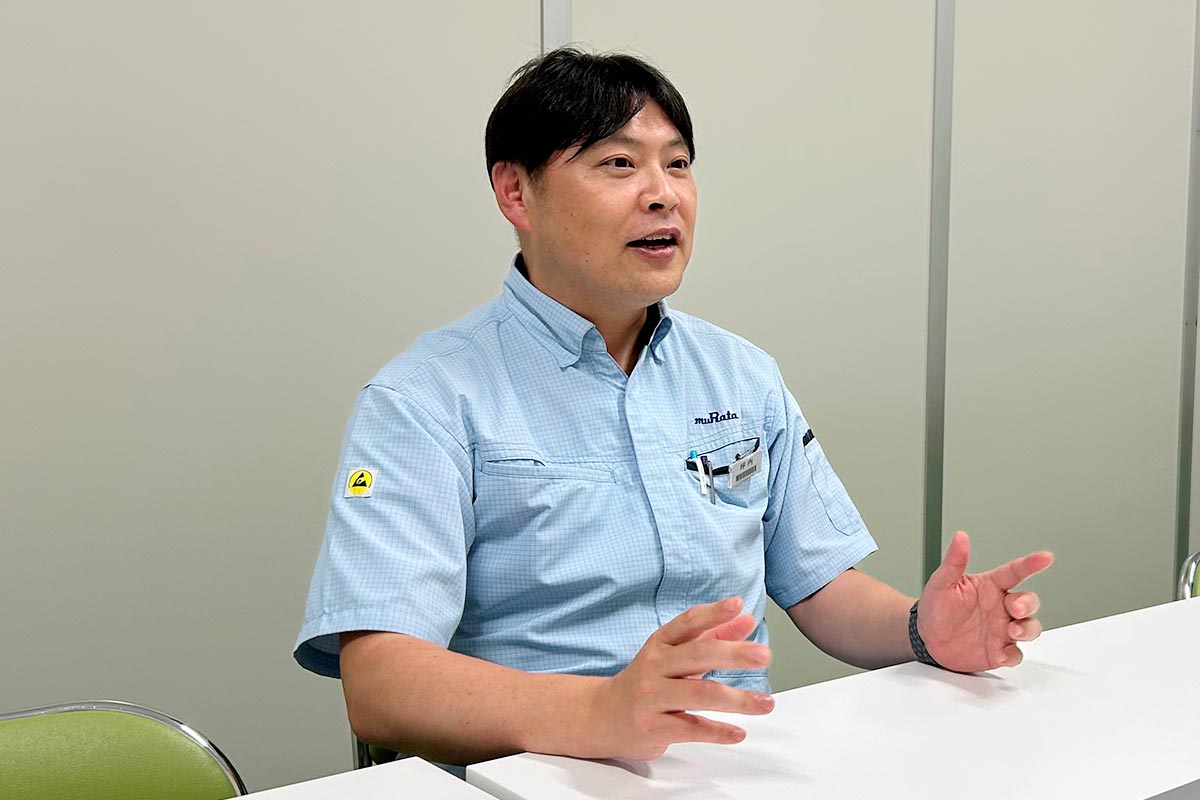
While executing the restoration project aimed at restarting operations, the company could not allow the supply of products to customers to be disrupted. The method chosen to prevent product supply disruptions during the recovery was "alternative production" spanning national borders. The decision was immediately made to shift production to a Chinese site that manufactures the same products.
Miyamoto, who was posted to China at the time, recalls how they responded to this decision.
"Immediately after the earthquake, we began making adjustments for support personnel and preparing to receive data. The team members made significant contributions during the period from the launch of the alternative production project to its execution. The provided design drawings and processing data were analyzed by the relevant departments to get the site ready for production in just two weeks. What made this smooth transition possible was the Murata concept of aiming for globally 'uniform manufacturing' which includes previously accumulated processing and evaluation data as well as problem-solving know-how."
Reflecting on that time period, Shiko adds, "Murata Manufacturing has long used the same equipment to be able to achieve the same manufacturing at our overseas plants as well. Wakura Murata and the Chinese site have closely shared their approaches to quality and design and immediately deployed any changes or modifications. Individual initiatives such as traveling to the local site to conduct equipment management or inviting engineers to Japan for training made the smooth transition to alternative production possible."
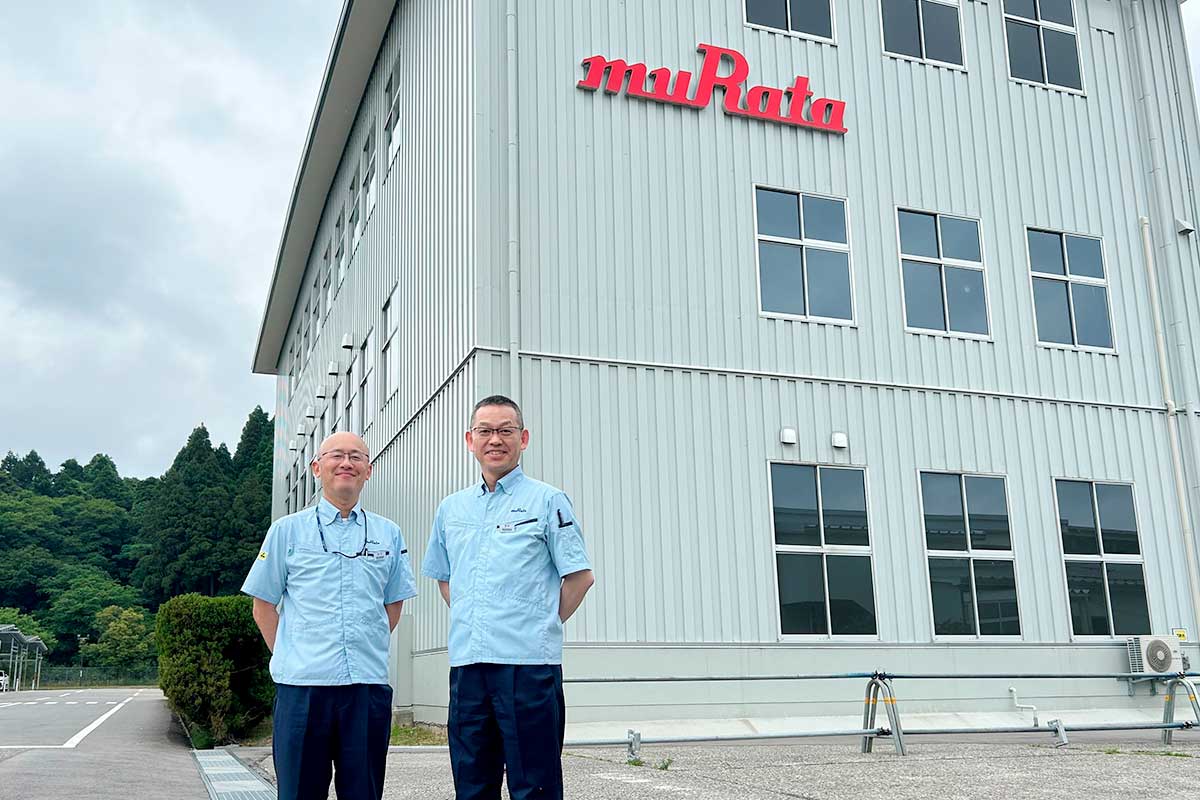
The recovery work at Wakura Murata brought many challenges to light. Tsubouchi discussed the challenges they identified through the alternative production and recovery work.
"During the recovery from the disaster, we experienced how difficult it was to identify, monitor, and manage the data needed for manufacturing. In addition, the lack of formal knowledge and verbalization of important knowledge and skills was also a challenge. Did we establish any criteria for evaluating the equipment and processing state or for providing assurance? And to what degree did we share important points related to manufacturing with other organizations? We felt that resolving such issues required the collection and analysis of highly precise data with a focus on DX."
Furthermore, Murata aims to use AI to achieve further growth in productivity improvement, which is a key issue in manufacturing. "With the limits of human trial and error now becoming apparent, we believe that optimization based on data analysis using AI is necessary. Another important issue is the promotion of human-centered DX. We hope to eliminate variations in standards, improve productivity, and lessen the burden on people by introducing AI into inspections that are key to quality control such as visual inspections and inspections for contamination and impurities, etc."
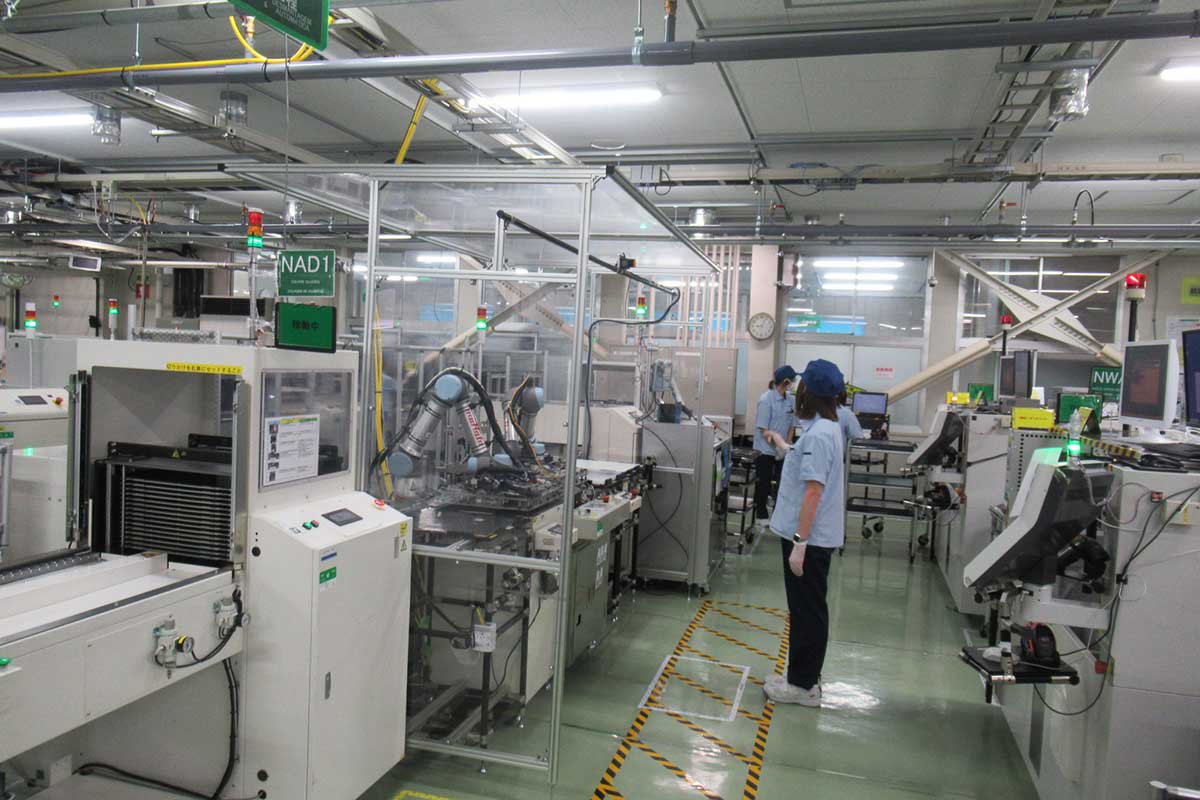
Additionally, Miyamoto also mentioned the importance of visualization through DX. "For example, in one case study, we visualized and optimized the balance between the line startup efficiency and the power consumption. To prioritize the startup efficiency at the plant, the power was left partially turned on even during the period in which plant operations were suspended. However, it was determined that the loss was greater for the standby power during the shutdown than for the power required to restart the plant. Converting the power consumption to data and visualizing it in this way enables the optimal power management. In addition, I think that visualizing the balance between the number of maintenance man-hours and the equipment scale as well as the component cycles is also an important point."
Wakura Murata was able to recover due to alternative production and with a great deal of support from the headquarters and other divisions and plants, etc. All three employees were united in saying that Wakura Murata would not have been able to care for its employees who were affected by the disaster or handle tasks outside of its daily operations on its own. We asked them about their experiences in the disaster and what they felt were Murata's strengths.
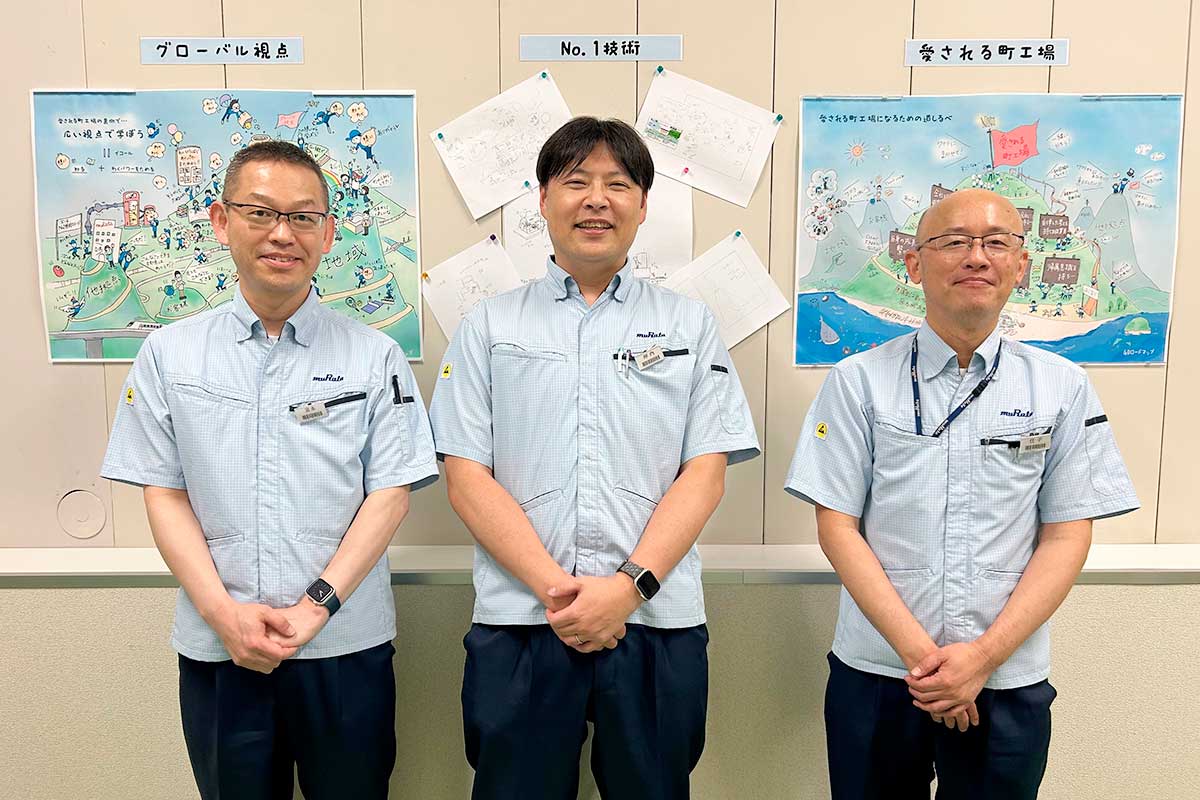
Tsubouchi: "I think it is the comprehensive strength of Murata as a company. For example, the company was able to follow up with incredible speed, whether it was implementing alternative production, transporting goods, or providing support when advanced technologies were needed. In particular, I feel that the ties between Murata plants in the Hokuriku region grew stronger due to the earthquake. I felt that such relationships will be very helpful for promoting DX and introducing AI going forward."
Miyamoto: "The entire Murata Group provided steadfast support to Wakura Murata. We were truly saved by their actions. Normally, you do not feel it, but in an emergency such as this, I strongly felt that sense of connection."
Shiko: "I strongly felt a horizontal type of connection. There was a strong sense of sharing information and helping one another among the upstream plants and equipment professionals, etc. This kind of partnership will be critical for DX in the future, and it made me feel the comprehensive strength of Murata. Certainly, we faced many challenges in reaching full recovery. However, I think that the experience of overcoming those challenges is a major asset."
Having overcome the challenges of an earthquake, the manufacturing site continues to evolve. Wakura Murata aims to engage in more robust and flexible manufacturing. That challenge is now moving into the next phase.