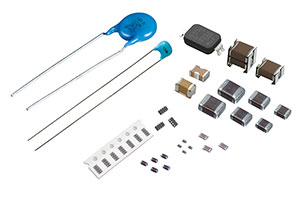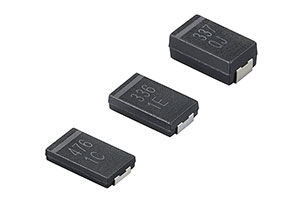
Capacitor
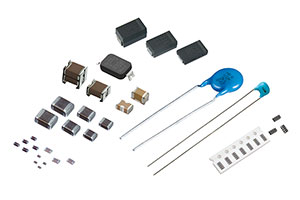
In the past, tantalum and aluminum electrolytic capacitors were commonly used in electronic devices, but in recent years they have been replaced with ceramic capacitors due to product miniaturization, reliability problems, etc.
With the shift toward multifunctionality and silencing in electronic devices, previously unnoticed "acoustic noise (sound)" caused by ceramic capacitors is becoming one major design issue in laptop PCs, smartphones (mobile phones), car navigation systems, wireless charging, and other power supply circuits.
In laptop PCs, "acoustic noise (sound)" caused by ceramic capacitors used in battery lines sometimes becomes a problem.
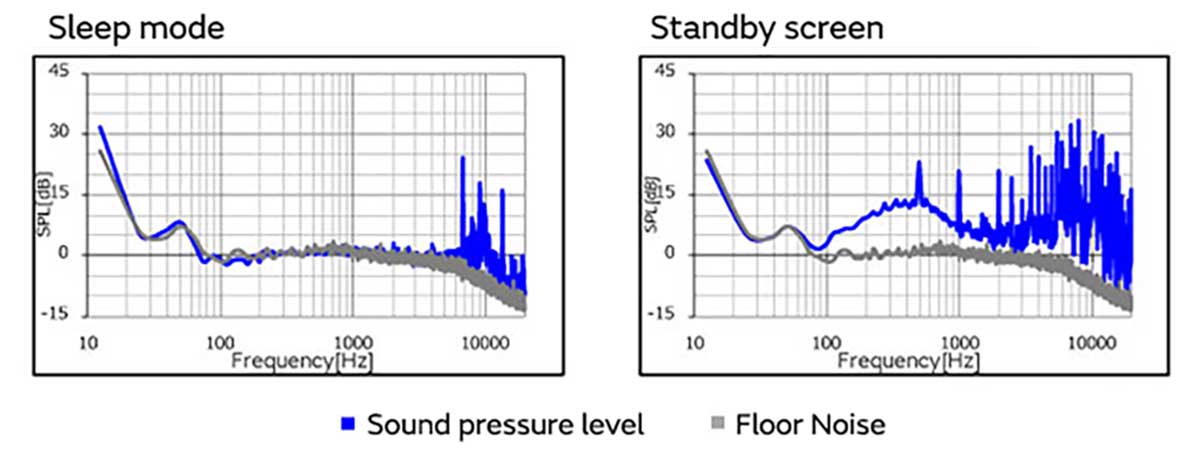
Because the internal operation of the laptop PC changes when the operation mode is changed from a sleep state/standby screen or other mode, the magnitude of the "acoustic noise (sound)" changes according to the operation mode, and the acoustic noise is also heard differently.
This document introduces measures to address "acoustic noise (sound)" due to capacitors in laptop PC battery lines, a method of evaluating acoustic noise, and the mechanism by which such noise occurs.
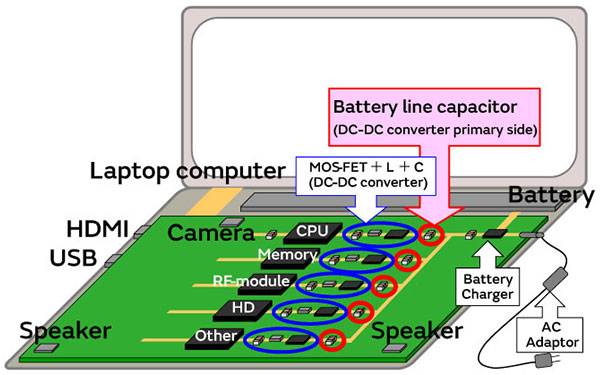
Large numbers of capacitors are used in the battery line (DC-DC converter primary side) of a laptop computer, and the use of ceramic capacitors in this battery line may produce acoustic noise.
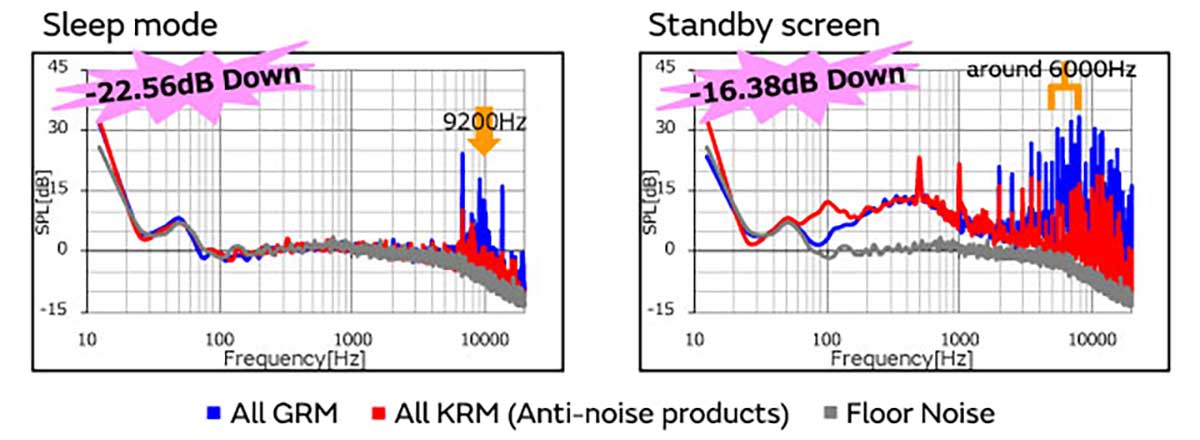
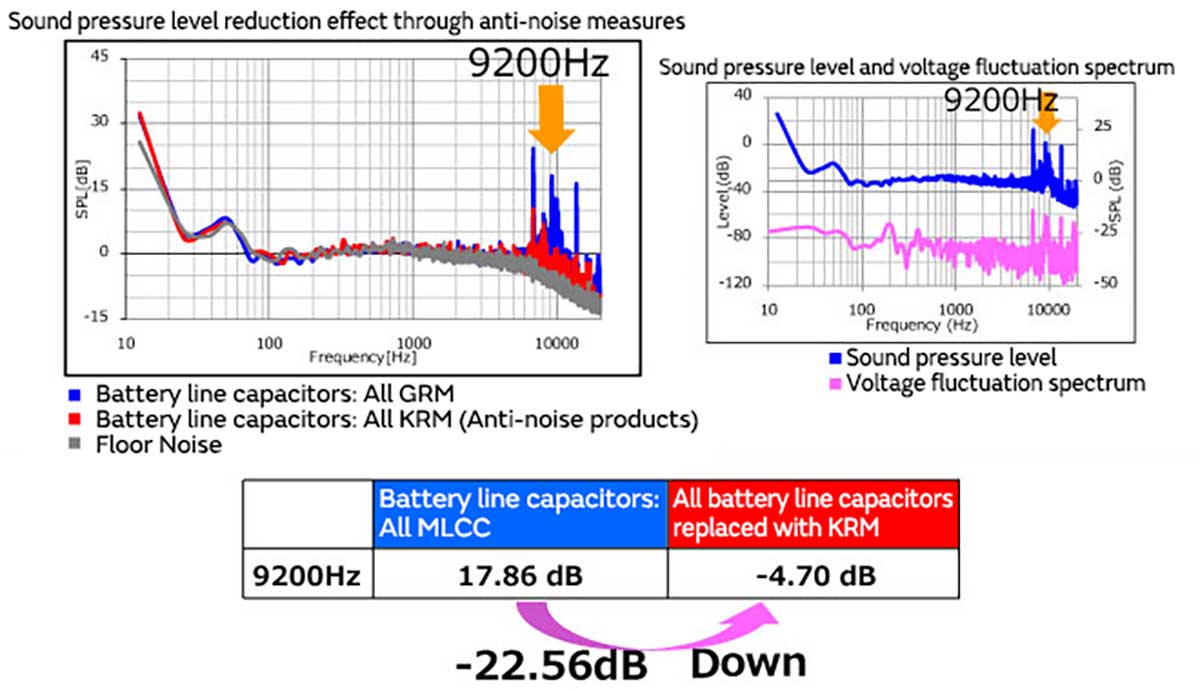
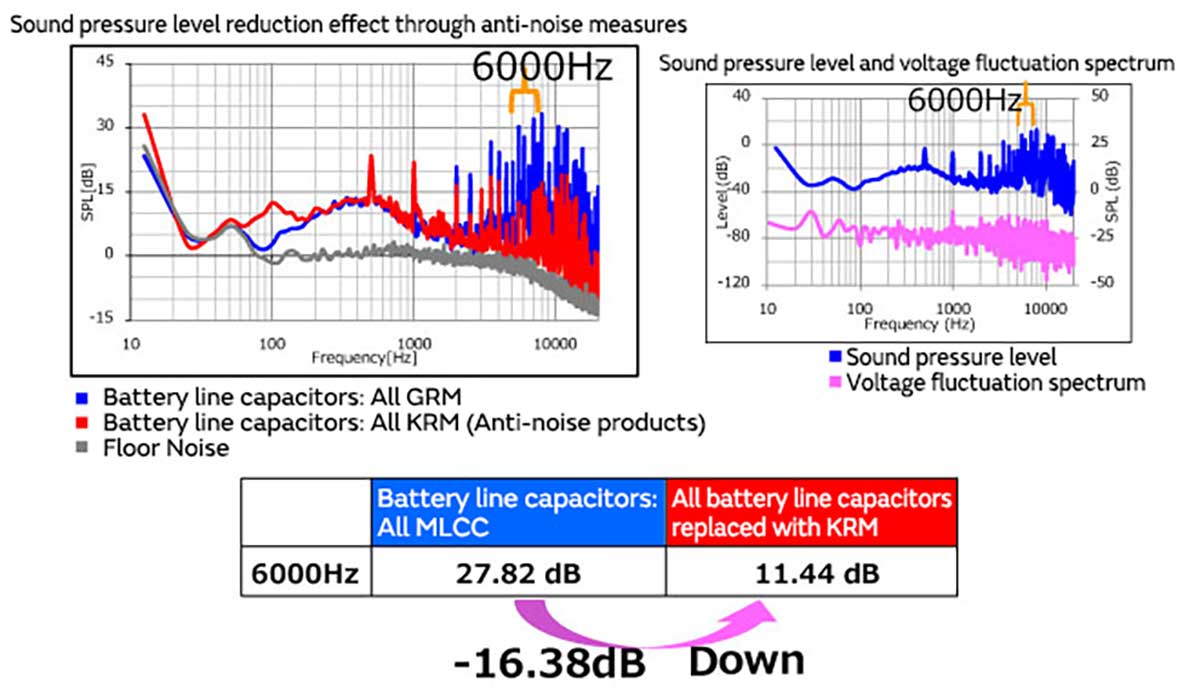
This is an example of the anti-noise effect for the sleep state/standby screen, which are operation modes that are prone to acoustic noise or have a high sound pressure level in laptop PCs.
The sound pressure level can be effectively reduced by implementing anti-noise measures for capacitors causing acoustic noise.
Why do ceramic capacitors cause acoustic noise?
The following explains the acoustic noise generation mechanism and the method of acoustic noise evaluation conducted at Murata.
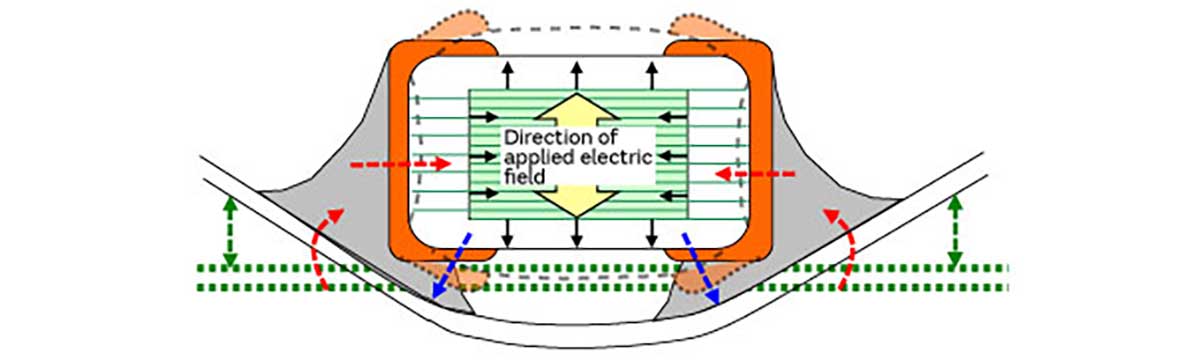
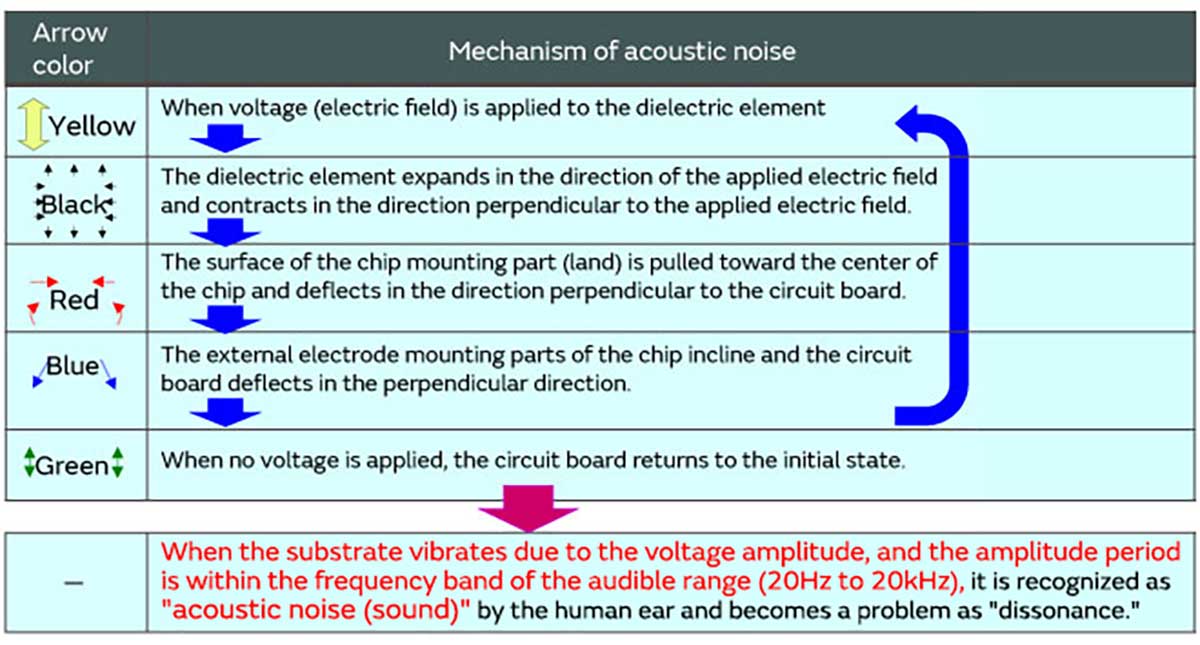
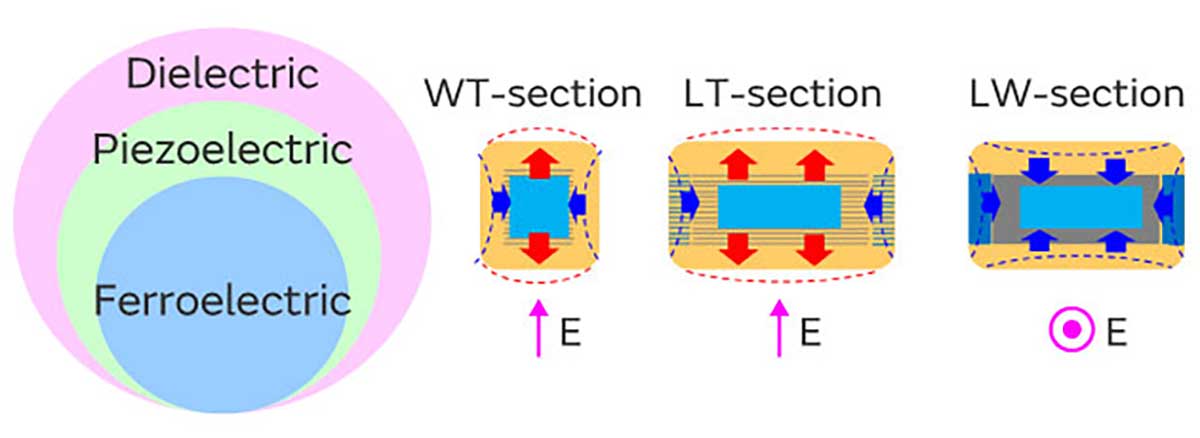
The ferroelectrics used in multilayer ceramic capacitors always have piezoelectric properties.
When an electric field is applied, deflection occurs and the chip expands and contracts, so acoustic noise is produced.
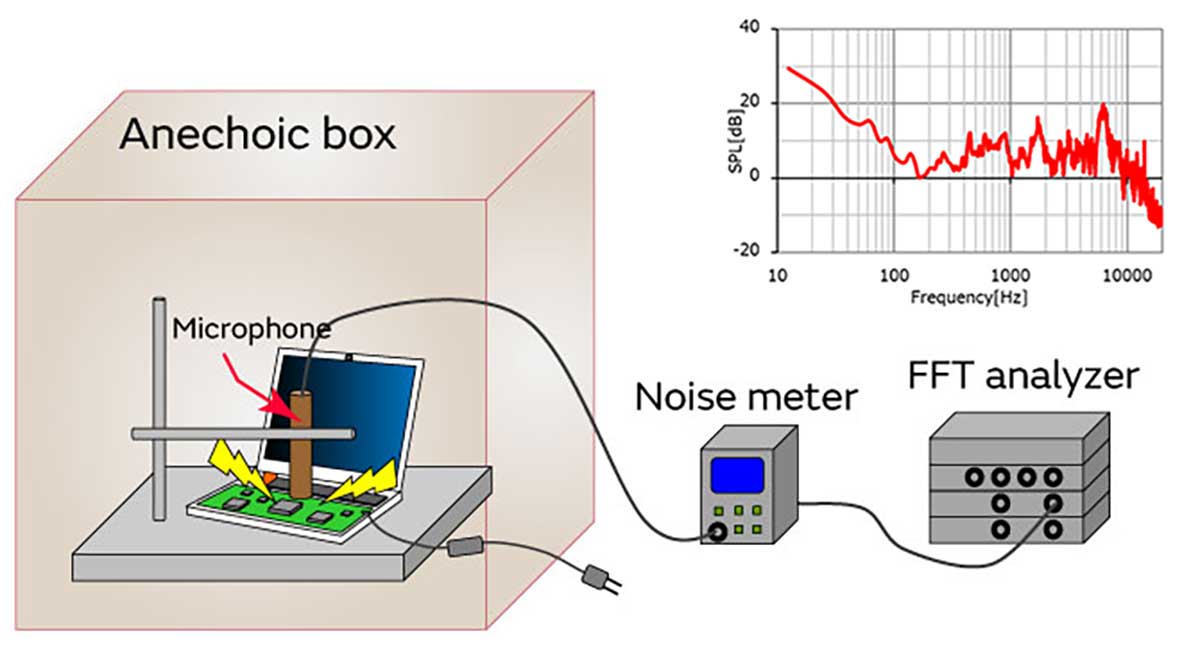
As "sound" is the problem, the "sound pressure level" becomes the primary measurement.
The measured object is set to the operating state inside an anechoic box, and a noise meter is used to measure the sound pressure level via a microphone.
In addition, the sound pressure level frequency characteristics are checked using a FFT analyzer to facilitate evaluation and solutions.
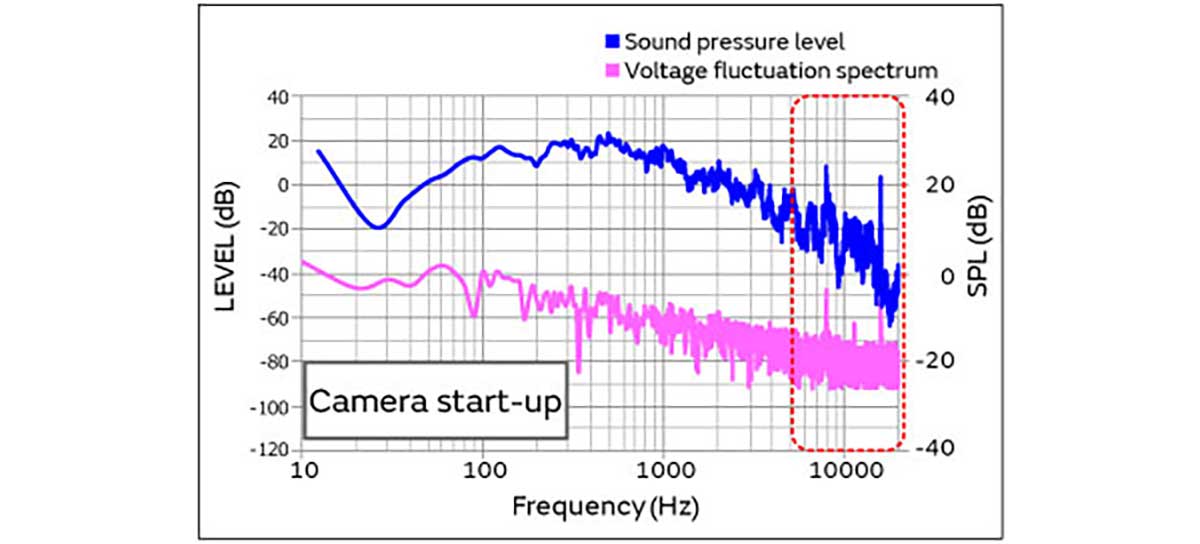
To investigate the capacitor that is causing the acoustic noise, we measure the "voltage fluctuation."
With the measured object in a running state, we check to see whether a ripple voltage in the audible frequency range (20Hz to 20kHz) is applied to the capacitor.
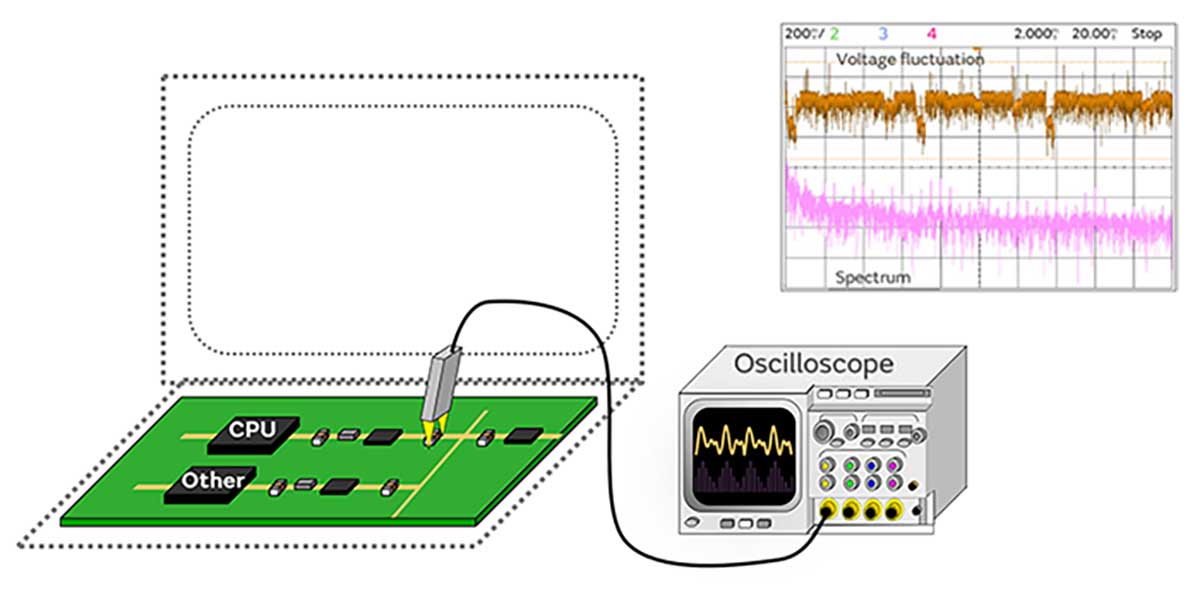
If the spectrum of the voltage fluctuation applied to the capacitor is at an equally high frequency as the frequency characteristics of the sound pressure level (area within the red dotted line), then we can conclude that the capacitor is causing the acoustic noise to occur.
Because the internal operation of the laptop PC changes when the operation mode is changed from a sleep state/standby screen or other mode, the sound pressure level and voltage fluctuation also change.
Therefore, it is necessary to conduct an evaluation in operation modes where acoustic noise occurs and operation modes that are prone to acoustic noise.
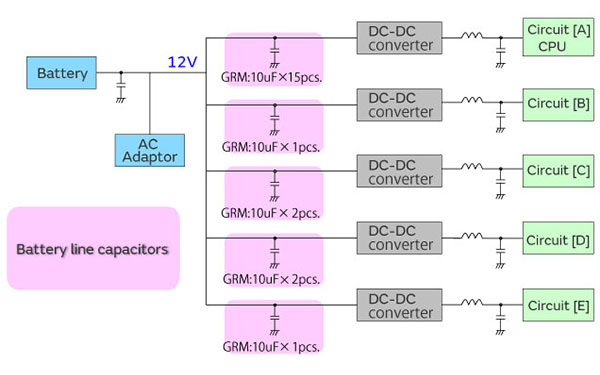
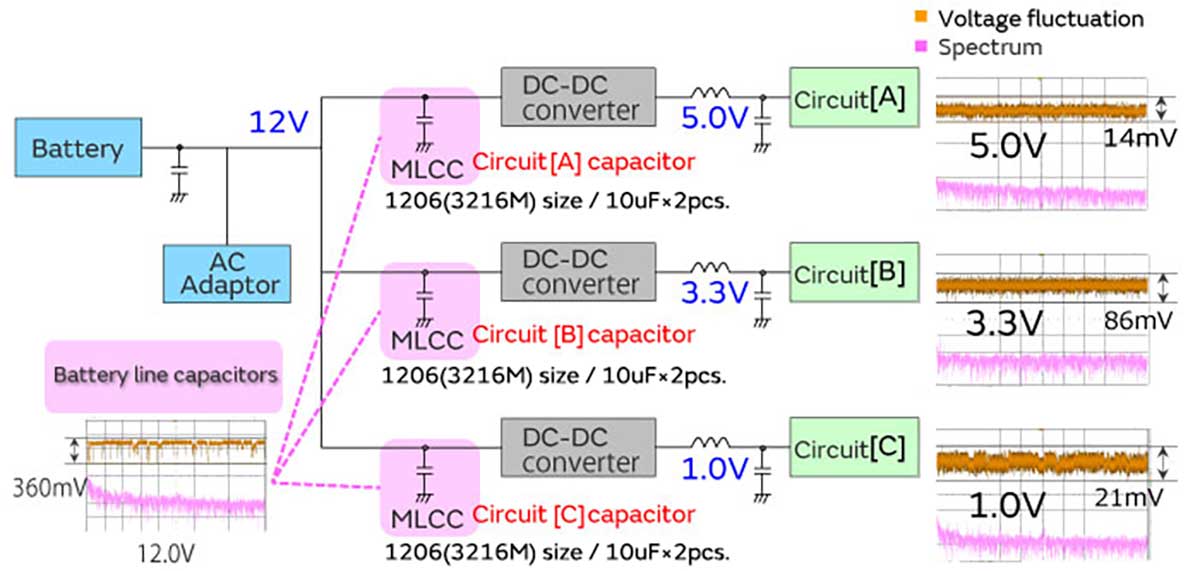
The pink-colored frames indicate the battery line capacitors that are prone to acoustic noise, and they are targeted for anti-noise measures.
Before branching off to each circuit at the DC-DC converters, they have almost the same voltage fluctuations because they are on the same power supply line.
Therefore, it is necessary to apply anti-noise measures to all of the capacitors on this battery line.
By replacing all of the capacitors with anti-noise products instead of just some of the capacitors, the battery line anti-noise measures can further reduce the sound pressure level.
We replace the typical capacitors with anti-noise products in order on circuits [A-C].
By increasing the quantity of capacitors replaced with anti-noise products, the sound pressure level gradually diminishes.
Capacitor products used in this evaluation
<Before implementation>
Typical MLCCs: GRM31MR61E106KA01
↓
<After implementation>
Anti-noise products: KRM31FR61E106KH01
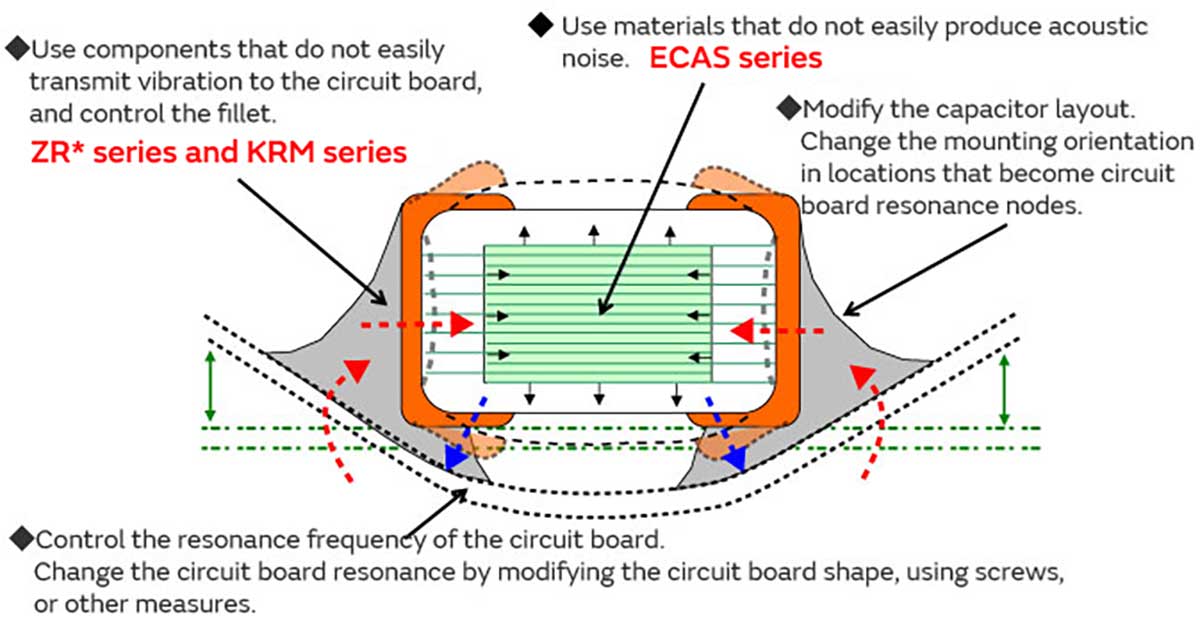
When acoustic noise due to the impact of ceramic capacitors becomes a problem, we at Murata make proposals such as the use of anti-noise products and component placement to help improve the acoustic noise problem according to factors that have an effect on acoustic noise.
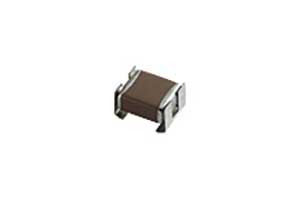
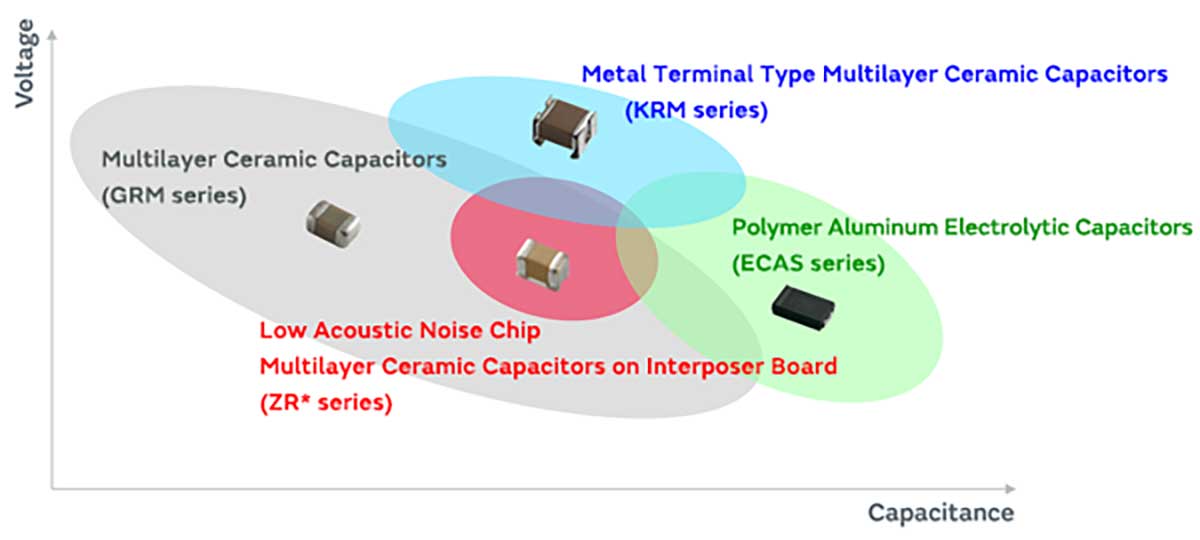
KRM series
Metal Terminal Type Multilayer Ceramic Capacitors
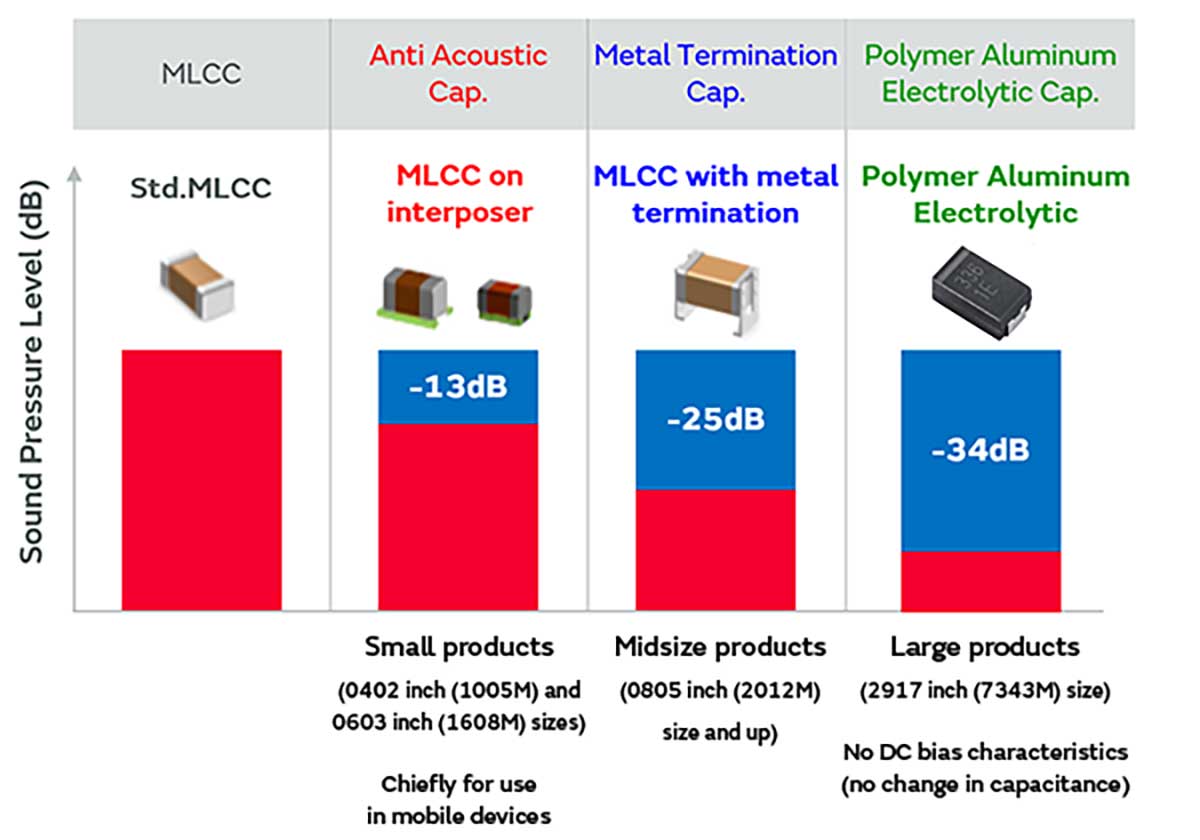
Ceramic capacitors with metal terminals suppress the transmission of vibrations to the board by mounting the chip on a terminal board, or the like, that is raised above the board.
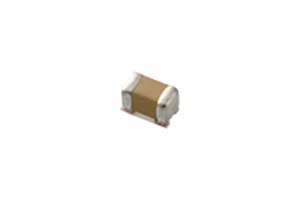
ZR* series
Low Acoustic Noise Chip Multilayer Ceramic Capacitors on Interposer Board
These types mount a ceramic capacitor on an interposer substrate to inhibit transmission of the capacitor vibration.
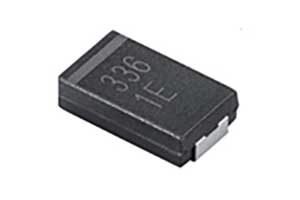
ECAS series
Polymer Aluminum Electrolytic Capacitors
Type with no distortion caused by the capacitor because the ceramic capacitors use different materials and structures.
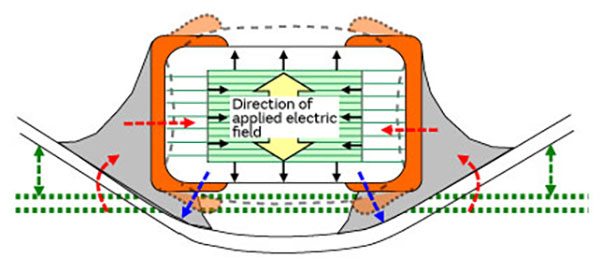
Acoustic noise due to the capacitor becomes a problem as "dissonance" when a voltage is applied to the capacitor, the substrate vibrates due to the voltage amplitude, and the amplitude period is within the frequency band of the audible range (20Hz to 20kHz).
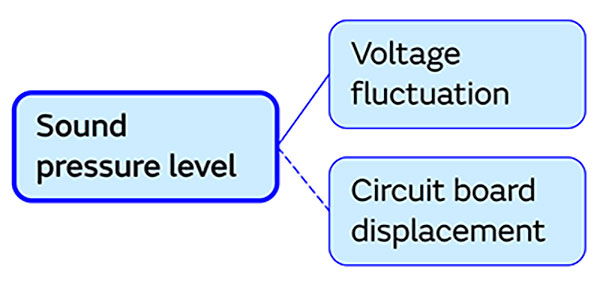
Because the problem is "sound," the sound pressure level is measured and evaluated to check the replacement effect.
Using only the sound pressure level, it is not possible to verify whether the capacitor is the cause of the acoustic noise.
To check the mechanism by which the acoustic noise occurs, the voltage fluctuation must be measured and evaluated.
(The amount of substrate displacement is also measured and evaluated as needed.)
In laptop PCs, capacitors are used in the battery lines (primary side of DC-DC converters).
Because these battery lines generally have a high voltage and supply electrical power to circuits with high power consumption, voltage fluctuations easily occur, so it is an area that is prone to generating acoustic noise.
Because the internal operation of the laptop PC changes and the sound pressure level/voltage fluctuation/amount of substrate displacement also change when the operation mode is changed, evaluations must be conducted in each operation mode that is prone to acoustic noise.
When multiple ceramic capacitors are used in a battery line (primary side of a DC-DC converter), the sound pressure level can be further reduced by implementing anti-noise measures for all of the capacitors in the same battery line instead of just some of them.