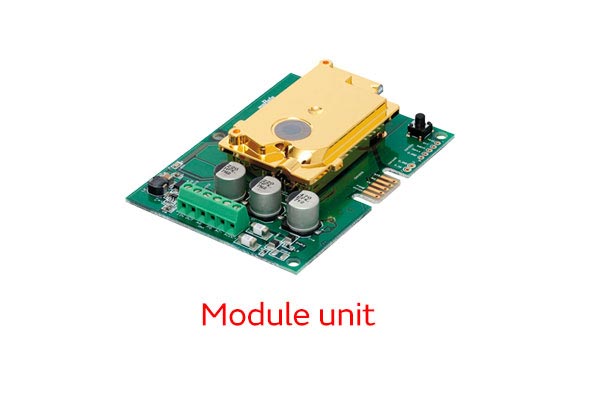
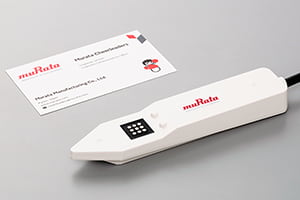
Soil sensor
The African economy is currently entering a major transition phase due to population growth, global climate change, and political influences. The deterioration in food self-sufficiency is an especially pressing issue. There are high hopes for infrastructure development and improvements in agricultural technology as solutions to those issues.
In this article, we give an account of the Tokyo International Conference on African Development (TICAD), which promotes business and cultural exchange with the aim of solving the various issues facing Africa, as well as the TICAD Business Expo and Conference (Japan Fair) event held in conjunction with it. We also explain the features and issues of agriculture in Africa, as well as the companies working to solve those issues and the role played by Murata's soil sensors in supporting the underlying technologies behind those activities.
The Tokyo International Conference on African Development (TICAD) is an international conference focused on the development of Africa. This time, the ninth time this event has been held since it first took place in Tokyo in 1993, it was called "TICAD9" (hereinafter we will refer to this event as "TICAD9"). It was held in Yokohama, Kanagawa Prefecture in August 2025.
The aim of TICAD9 was to promote high-level dialogue between the leaders of the various participating African countries and development partners, and to mobilize support for development activities driven by Africa's own efforts. Co-hosted by the United Nations Development Programme (UNDP), the World Bank, and the African Union Commission (AUC), this event also plays a role in strengthening relations between Japan, Africa, and international organizations.
In addition, the TICAD Business Expo and Conference (Japan Fair) was held in conjunction with TICAD9. Various companies exhibited devices and solutions at this event with the aim of contributing to the construction of high-quality infrastructure in Africa.

The TICAD Business Expo and Conference (Japan Fair), an event held in conjunction with TICAD9, is a platform organized by the Japan External Trade Organization (JETRO) that aims to connect Japan and Africa through business, investment, and innovation. The platform promotes the development of business relationships between Japan and Africa. It does this by allowing Japanese companies to showcase their technologies and services to various countries in Africa participating in TICAD9. It also enables Japanese companies to provide information related to business in Africa. The companies exhibiting at this platform covered a wide range of fields. They exhibited their products and services under the following categories.
Out of these categories, Murata Manufacturing exhibited soil sensors, CO2 sensors, traffic counters, and other products under Transforming Infrastructure. We aim to contribute to solving agricultural and transportation infrastructure issues that are expected to become problems in Africa as it experiences rapid population growth.
Agriculture is a major industry in Africa. Approximately 40 to 60% of the workforce is engaged in agriculture across Africa. The amount of production in the agricultural sector accounts for approximately 20 to 30% of the GDP in many countries. Agriculture is the foundation of the African economy. It plays a major role in food security and job creation in Africa.
The African continent has a vast land area. It is the second largest continent in the world. Thus, agriculture has a major economic impact. Here, we take a look at the features of this farmland that forms the foundation of agriculture in Africa and the issues facing agriculture.
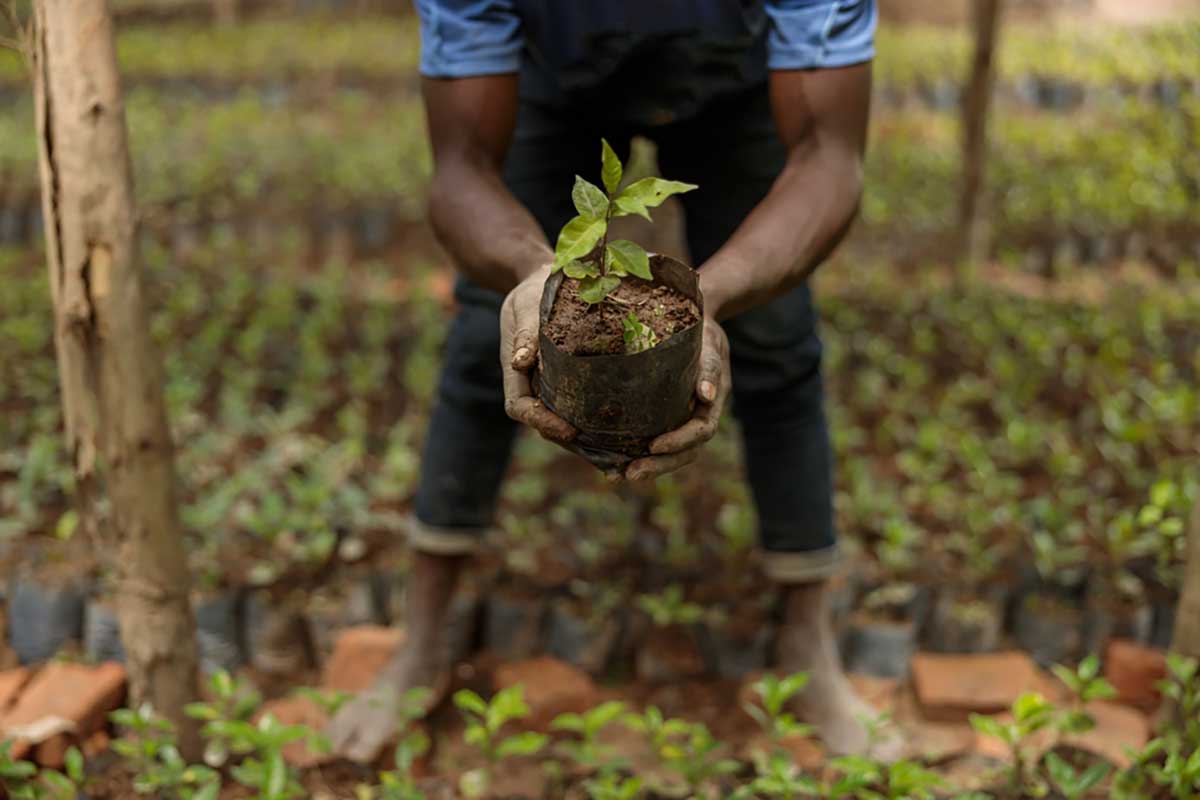
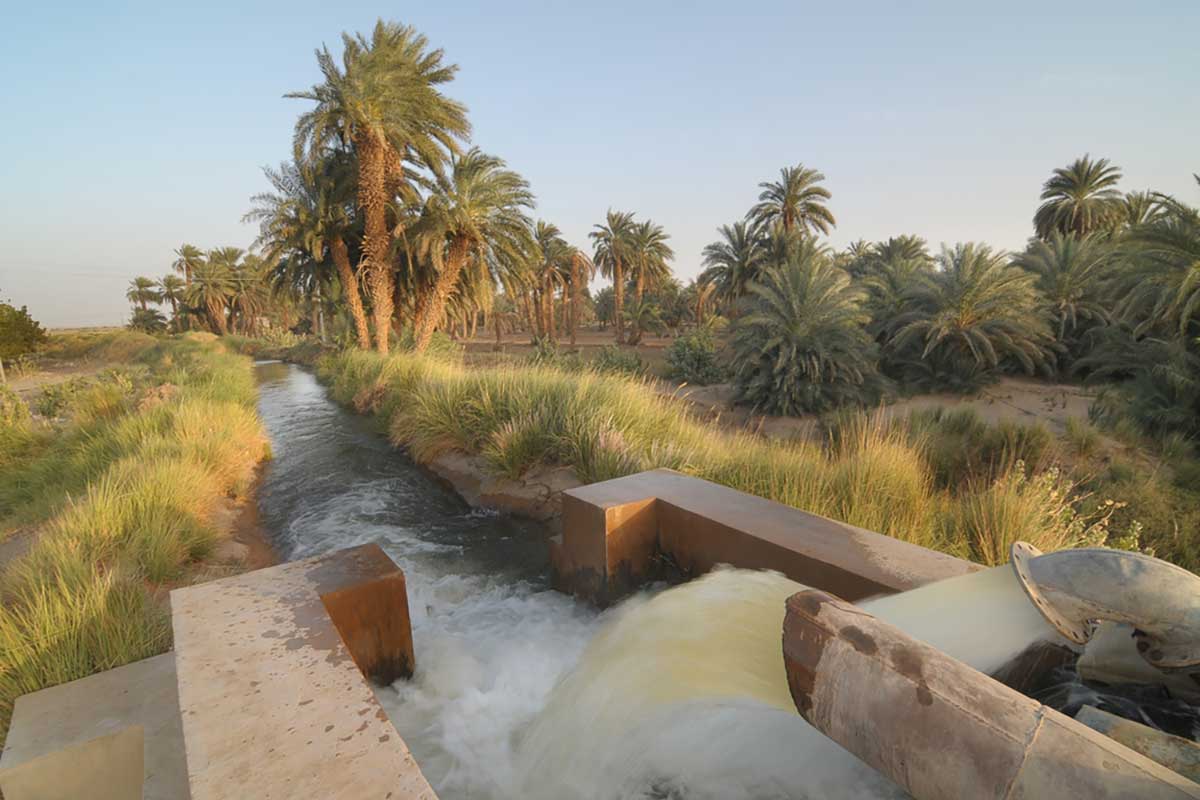
Among the farmland in Africa, northern regions such as Egypt have large-scale irrigation systems, while southern regions, particularly South Africa, have large-scale farms as a result of historical factors. Moreover, large-scale agricultural initiatives, including national projects, are underway in West Africa, such as Nigeria, and parts of East Africa, including Kenya and Ethiopia. However, small-scale farmers with limited farmland account for the majority of farms in many other regions.
The main crops grown include wheat in northern Africa and corn and cassava (a kind of tuber) in the savanna regions of southeastern Africa. Cassava is also cultivated in the tropical regions of central Africa. In addition, sorghum (a grain in the sorghum genus of the Poaceae family) is grown in arid regions such as the Sahel. Furthermore, cacao is cultivated in West Africa while coffee is grown in the highlands of East Africa.
It is expected there will be growth for agriculture in Africa practiced on farmland like that described above based on the vast land available. However, the following issues exist.
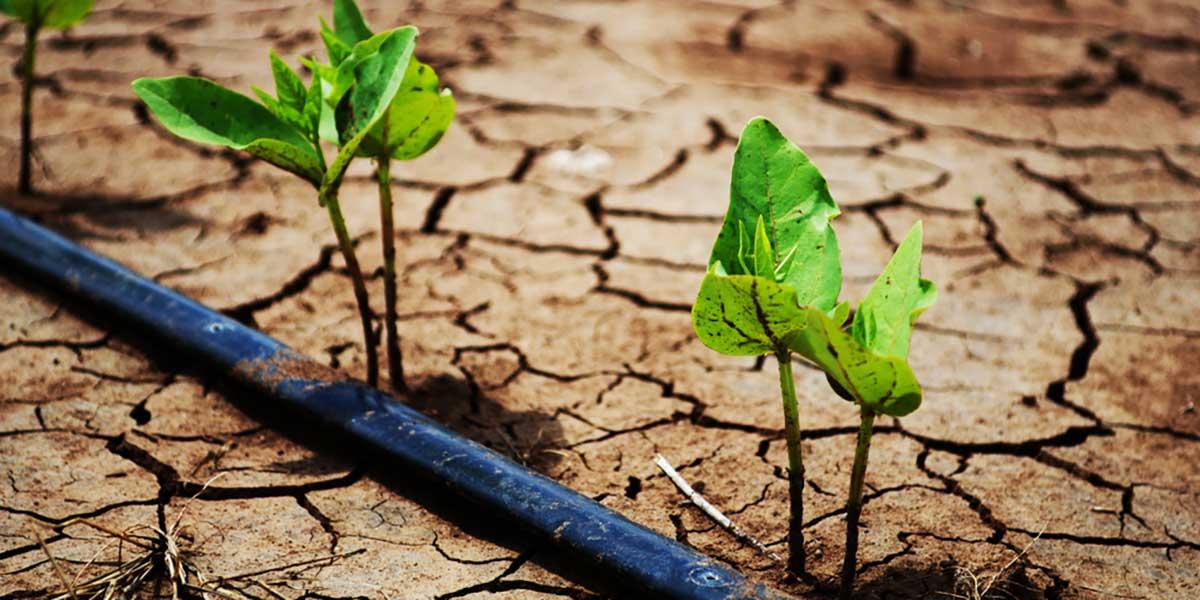
The Significant Weather & Climate Events 2024 report by the World Meteorological Organization (WMO) states that West Africa and Central Africa are experiencing extreme rainfall and devastating floods. These events are resulting in soil degradation through soil erosion, a decline in soil organic matter and nutrients, and a loss of biodiversity. Rising temperatures due to global warming have brought abnormal weather such as heat waves, droughts, and heavy rains. This has accelerated soil degradation. The report states, for example, that prolonged droughts have caused widespread crop failures and food insecurity in southern Africa.
Irrigation is a technology that supplies water in an artificial and planned manner to farmland. This enables the stable production of crops without being affected by the weather. There are expectations that irrigation will allow the arid savanna in particular, with its limited water resources, to free itself from its rainfall-dependent agriculture. However, initial investment is required to develop irrigation systems. Moreover, inadequate irrigation technologies can also create problems. For instance, over-irrigation can lead to the salinization and alkalinization of the soil. The main causes of these problems include constraints on the budget, irrigation facility maintenance and management systems, and human resources.
Fertilization technology refers to technology to spread fertilizer on the soil with the aim of promoting healthy crop growth and increased yields by supplementing nutrients lacking in the soil. Technologies that optimize fertilization management and cultivation environment management according to the characteristics of the farmland are also attracting attention in Africa. Research and technological development focused especially on nitrogen, phosphorus, and other chemical fertilizers is underway. However, the rise in international chemical fertilizer prices in recent years has placed particularly heavy burden on small-scale farmers with low purchasing power. Furthermore, there has been almost no scientific clarification of what kind of soil conditions produce high yields.
There are many landlocked countries in Africa. These countries that do not face the sea have a high need for transportation to coastal areas across borders. However, the associated transportation costs are high. This is a serious obstacle to growth. To overcome this obstacle, it is necessary to develop infrastructure such as transportation and power lines. The delays in developing key routes, called "corridors," that connect farming areas with urban areas and inland areas with coastal areas are inhibiting the equitable distribution of the fruits of Africa's growth.
Solving the issues mentioned above requires addressing climate change, utilizing the limited resource that is the soil, and improving cultivation technologies. Understanding and appropriately managing the soil are believed to be effective in achieving those tasks. It is also essential to develop transportation infrastructure that allows for harvested crops to be transported at low cost.
However, this requires the introduction of IoT, including sensors to sense soil conditions; human support, such as engineers to assist with the introduction of IoT (communication with local communities and appropriate IoT know-how); and cross-border cooperative relationships.
Agriculture in Africa faces a variety of issues. Nevertheless, there is a company tackling those difficult challenges. Greein Inc. is working to solve the issues facing agriculture in Africa with a service called "e-kakashi" that uses AI and sensing technology. Here, we introduce Greein Inc.'s activities in Mozambique and other parts of Africa, and the necessity of soil sensors.
e-kakashi is a service to assist in making decisions that lead to the optimal cultivation environment. The service can collect environmental data on farm soil, air, and other elements, regardless of the crop type or cultivation method, using temperature and humidity sensors, soil sensors, CO2 sensors, and other technologies.
The sensors have a waterproof and dustproof design. Moreover, the gateway that connects the sensors does not require an external power supply (with the exception of some sensors). They can also be used outdoors. Furthermore, it is possible to immediately start acquiring data by connecting to a mobile phone network. The acquired data is analyzed using hybrid AI that combines machine learning with rule-based AI and model-based AI. The system is built to be able to perform highly accurate analysis based on plant science knowledge even with limited information.
These functions make it possible to harvest crops at the time when the best growth conditions and yields can be expected, and to optimize the timing of prsticide application by predicting when pests and diseases will occur.
Greein Inc.'s activities in Mozambique are part of the Japanese Ministry of Economy, Trade and Industry's Global South Future-Oriented Project. As part of this project, Greein Inc. is conducting a feasibility study on improving agricultural technology and strengthening the supply chain in Mozambique. Why was Mozambique chosen? We take a look at the reasons for this below.
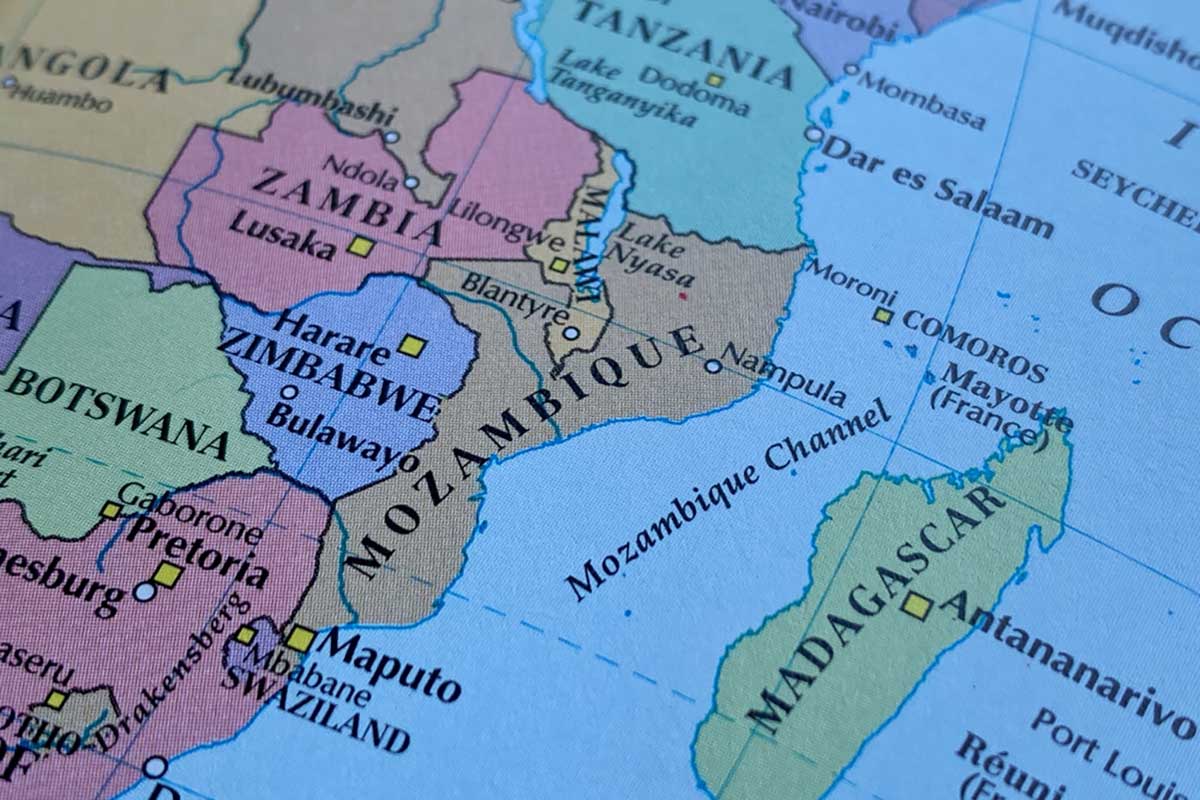
Among the agricultural products Japan imports from Africa, sesame for oil extraction (sesame oil) is imported almost exclusively from Africa. This means sesame is an important crop for strengthening Japan's supply chain. The chief producing area of sesame is Mozambique. The route from Zambia, Mozambique's neighbor, through Malawi and then on to Mozambique's Port of Nacala is known as the "Nacala Corridor." The importance of developing this corridor was also emphasized at TICAD9. Therefore, Mozambique is considered extremely important, not just as a producing area of sesame, but also as a gateway to the Nacala Corridor.
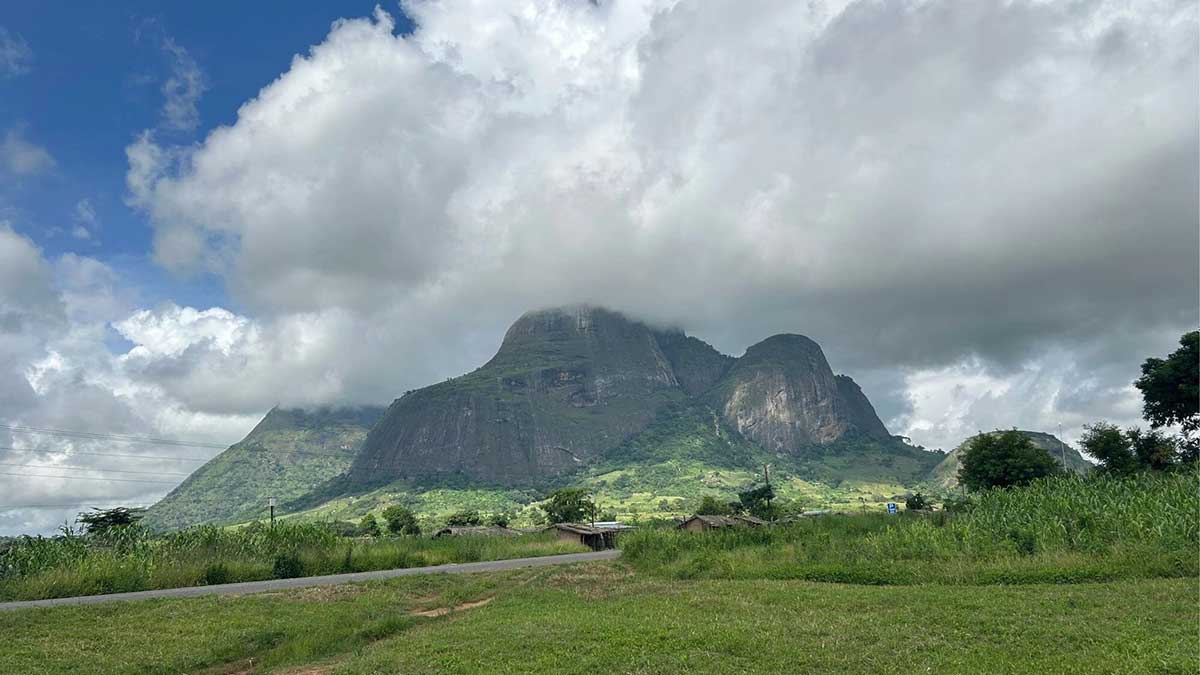
Currently, a demonstration experiment on e-kakashi is being conducted at Mozambique's Ministry of Agriculture, local offices, agricultural colleges, and other locations. It is not realistic to introduce e-kakashi at each farm, given the income of many farmers in Africa. Accordingly, a demonstration experiment is being conducted on an operational model in which e-kakashi is introduced to agricultural experiment stations and government agencies in each region, and, based on the analyzed data, disease outbreak predictions and information linked to warnings are provided to each farmer through these experiment stations and government agencies. This kind of operating method is an initiative not seen in the grain-producing regions of South America and Europe where there are many large-scale farms. We believe that e-kakashi may also be able to contribute to solving issues in the southeastern part of Africa where there are many small-scale farmers with low incomes.
Sesame is an important cash crop in Mozambique. However, there were problems with its quality. One such problem was residual pesticides. Sesame is highly susceptible to insect damage. Therefore, it is essential to spray crops with pesticides. However, the timing of spraying relied on experience. It was difficult to say that the spraying was being carried out effectively. Another problem was that the soil was not fertile. Fertilizer is essential for improving productivity and yields. However, spreading fertilizer also relies on experience. In many cases, fertilizer was being spread at inappropriate times.
Accordingly, e-kakashi has been introduced to grasp the soil conditions with sensors. This makes it possible to aim to spray pesticides and spread fertilizer when it is effective to do so.
In addition to Mozambique, Greein Inc. is participating in agricultural support projects in Ethiopia, Nigeria, Benin, and elsewhere. Its efforts are focused on rice and wheat in Ethiopia, rice and corn in Nigeria, and rice in Benin. These efforts support the cultivation of rice and other major crops tailored to the local climate and soil conditions. For example, e-kakashi has been introduced in paddy fields in Ethiopia. The climate and soil conditions differ from those in Japan. Moreover, the variety of rice grown differs from that grown in Japan. Nevertheless, a significant increase in yield has been confirmed by introducing e-kakashi. These results suggest that supporting decision-making based on environmental data may be effective even when the crop varieties and cultivation environments are different to those in Japan.
Irrigation, fertilization, and pesticide spraying are often carried out without fully understanding the soil conditions on farmland in Africa. This means soil management is being carried out inefficiently. e-kakashi uses soil sensors to sense the soil's electrical conductivity (EC), an indicator of nutrient and salt concentrations in the soil; the volumetric water content, which is the ratio of the volume of water contained in a certain volume of soil; the relationship between the temperature and the volumetric water content; and other elements. Quantifying the soil conditions and then visualizing them in an easy-to-understand manner makes it possible to propose the necessary work to improve the soil. Although the regions may differ, the optimal soil and climate conditions for each crop are fixed. The practical examples in Mozambique and other African countries demonstrated by the various sensors used in e-kakashi show the effectiveness of this system even when the crops and climate conditions vary.
Murata Manufacturing's soil sensors feature an environmental resistance and low-power consumption design. This allows for stable sensing even in harsh natural environments or places with limited power supplies. Furthermore, these features enable low maintenance. This means our sensors are capable of supporting the technological foundation of e-kakashi.
Soil is a natural resource created by the Earth over hundreds of millions of years. The development of agriculture in Africa attracted attention at TICAD9. The declaration of the necessity for soil improvement at the Africa Fertilizer and Soil Health Summit is evidence for the preciousness of soil as a resource. Soil sensors that make it possible to understand soil conditions not visible with the naked eye serve as tools that provide the information necessary to support decision-making in agricultural production. As such, there are high expectations that soil sensors will become an indispensable device for research institutes and companies aiming to develop agriculture in Africa.