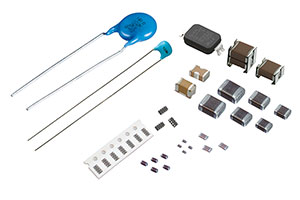
Capacitor
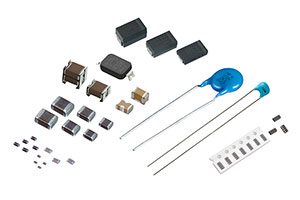
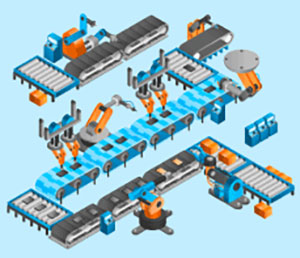
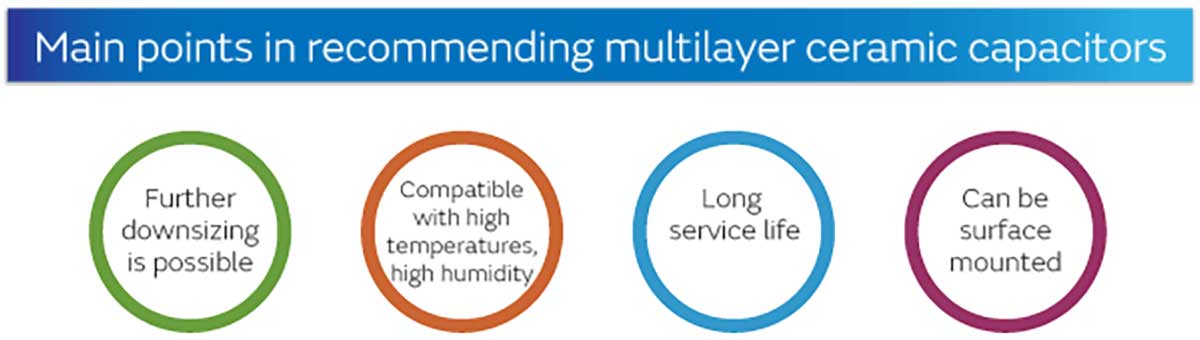
In the area of factory automation (FA*1), the smart factory trend has led to a heightened need for smaller devices, improved reliability and higher heat resistance. While in the area of ceramic capacitors, the commercialization of products that are compatible with a wider capacitance range and that support higher withstanding voltage specifications is being promoted.
Here, we introduce examples of circuits, for power supplies and inverters that are actually used in FA applications.
*1 FA: Factory Automation
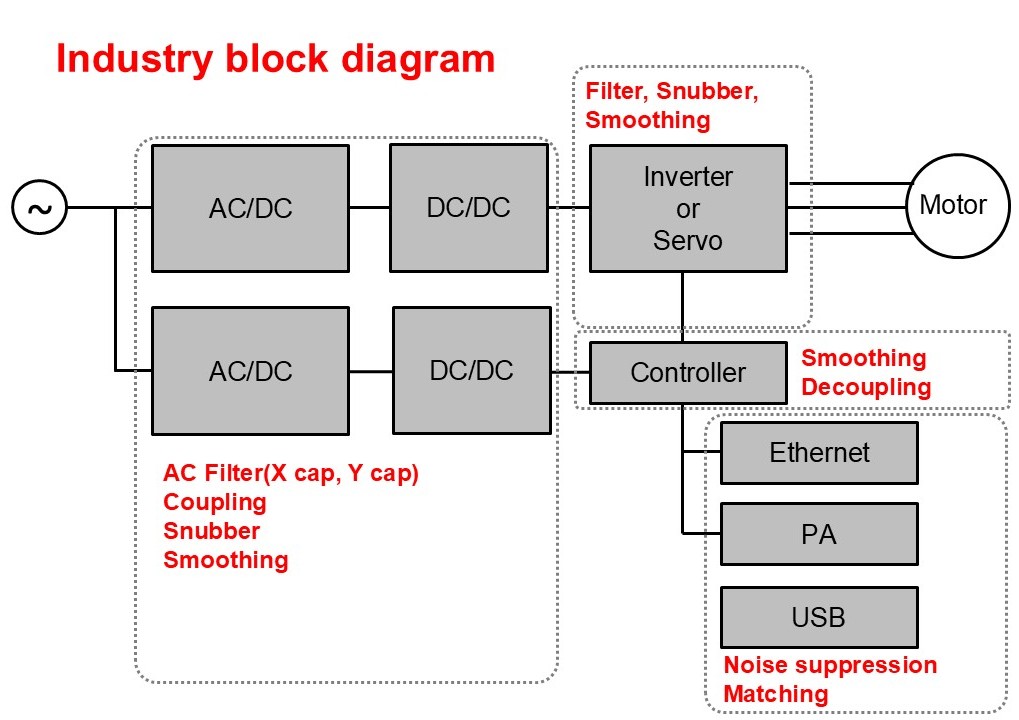
The above figure shows a general block diagram illustrating factory automation.
FA is made up of PLCs, inverter drivers, AC servomotors, various power supplies, and other devices.
This page provides circuit examples for AC/DC and DC/DC converters, and examples of inverter circuits.
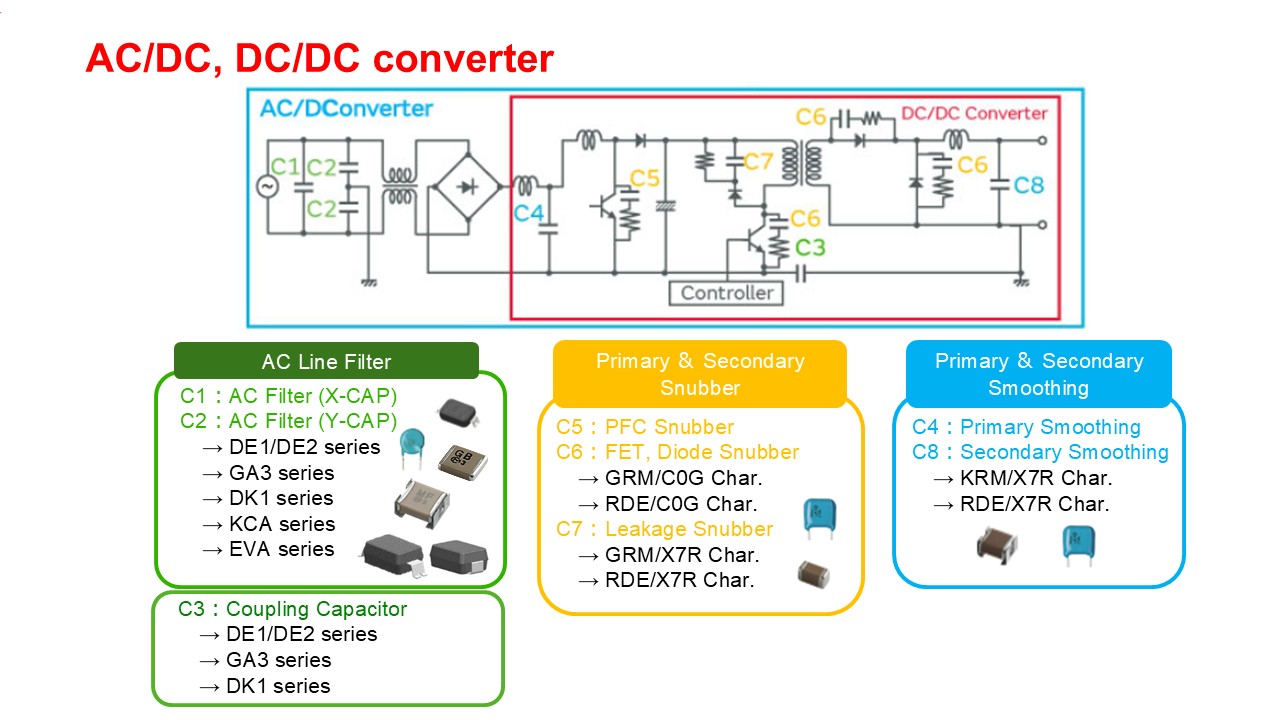
The above is an example of a general circuit for an AC/DC converter and a DC/DC converter.
(1) Safety Certified capacitors are required for AC line filters (C1, C2) and coupling capacitors (C3) in primary and secondary coupling.
Please select items according to the actual usage environment and conditions.
(2) Low-loss capacitors are required for snubber capacitors (C5, C6), since high-frequency switching is applied.
Accordingly, temperature compensation-type (Class 1) capacitors are recommended.
On the other hand, for C7, high capacity is required since high frequency noise components must be removed. For this, high dielectric constant (Class 2) capacitors are recommended.
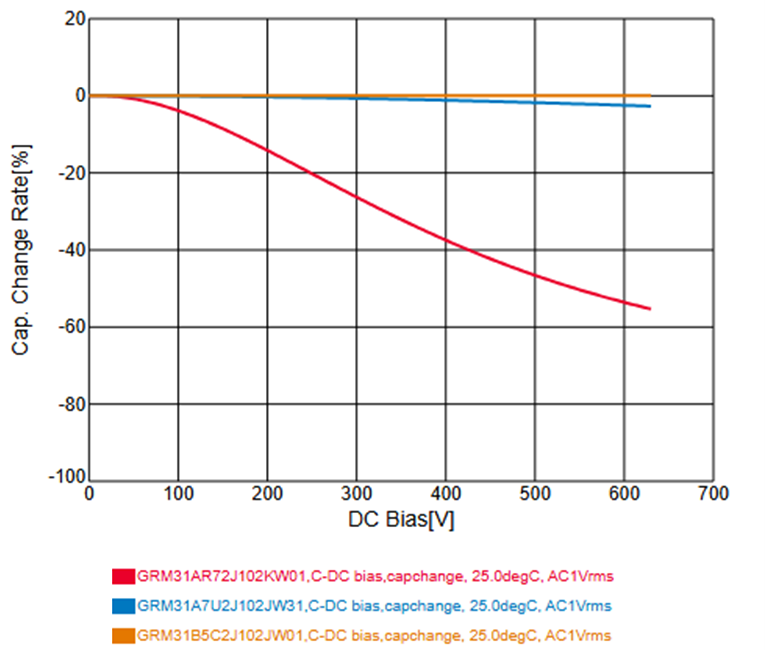
(3) Relatively large-capacity capacitors are required for smoothing capacitors (C4, C8) to remove low-frequency noise.
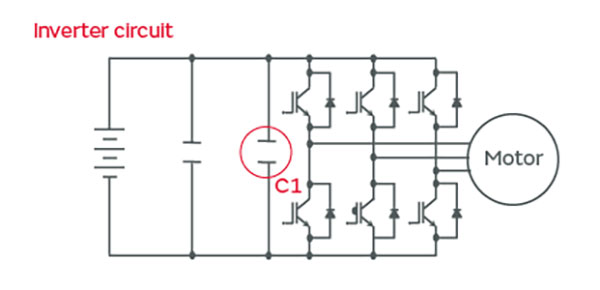
The above is an example of a general circuit for an inverter.
Removal of the high-frequency noise component is required for snubber capacitors (C1).