Osaka-Kansai Expo
Osaka-Kansai Expo Technical Article - Why Murata Sponsored the Expo - Embracing a Vision for Future Society
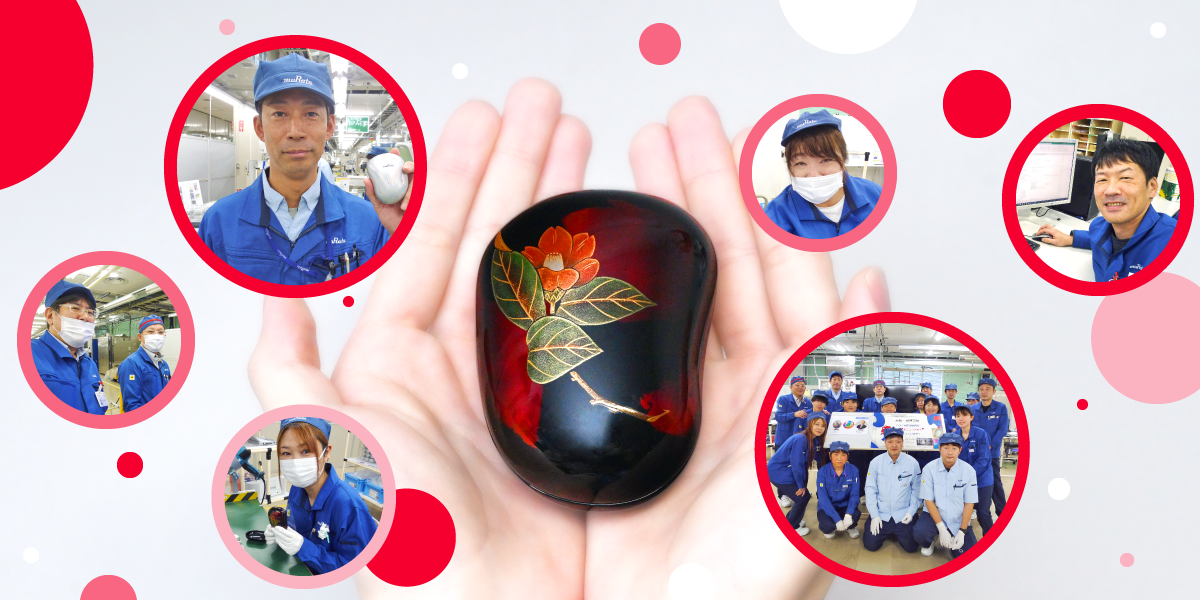
This year's Osaka-Kansai Expo marks the first time such an event has been held in Osaka in 55 years, and it has proved to be a great success that has attracted many visitors. Murata Manufacturing (hereinafter, "Murata") provided the echorb Wonder Stones to the Better Co-Being Signature Pavilion at the Osaka-Kansai Expo. Why did Murata decide to sponsor this year's Expo? This technical article focuses on interviews with members of the Murata Expo Promotion Office and introduces Murata's vision for the Expo as well as the efforts of Hakui Murata Manufacturing (Hakui, Ishikawa Prefecture) as the division in charge of producing the echorbs.
©Expo 2025
Compatibility between the future society envisioned by the Osaka-Kansai Expo and Murata's Vision 2030
Takashi Hayashida, Head of the Expo Promotion Office in charge of Murata's Expo efforts, explains the company's motivation as follows: "Through our participation in the Osaka-Kansai Expo, we hoped to encourage our employees and visitors to the Expo to ponder the ideal future society and light a fire in their hearts that inspires them to think, 'This is how I would like to change the future!'"
In addition, Hayashida explains the reasons behind Murata's decision to sponsor the Better Co-Being Signature Pavilion at the Osaka-Kansai Expo as a gold partner and provide the echorb Wonder Stones, saying, "Simply participating in the Expo by giving money was not interesting to us. Murata also wanted to be actively involved in the overall pavilion concept and hoped to utilize the Expo as 'a laboratory for a future society' to show the kind of future that we will create."
Murata is sponsoring one of the Signature Pavilions located in the center of the Osaka-Kansai Expo that were created under the direction of eight producers. Specifically, Murata is sponsoring the "Better Co-Being" Signature Pavilion produced by Hiroaki Miyata, a data scientist and professor at Keio University's School of Medicine.
Produced under the theme of "Resonance of Lives," Murata determined that the Signature Pavilion's concept of "having the visitors' data mutually resonate with the goal of creating a future society that enables each individual to shine" was highly compatible with Murata's Vision 2030 long-term direction.

Under Vision 2030, Murata aims to "enable the future" and accelerate the realization of an unrestricted, more convenient future through Murata's innovation.
The direction that Murata is pursuing and the thematic approach of the pavilion produced by Hiroaki Miyata literally "resonated" with each other, which led Murata to decide to go ahead with the Expo initiative.
Struggling to decide on the pavilion experience, and the "Wonder Stone concept" which connects to the founder of Murata
Official approval for the company's participation in the Expo was granted back in May 2022. Later, Murata held a series of internal meetings to discuss what technologies existed within the company and how they could be applied to the pavilion.
However, most of the meetings at the time were held online due to the impact of COVID-19. Hayashida explains that "nothing was decided" for almost a year.
Starting in April 2023, the team changed its approach to meetings and decided to "meet in person once a month."
This change led to a proposal to guide visitors through the pavilion using "3D haptics technology," which uses vibrations to create the sensation of being pulled.
"What if we called this guidance device the 'Wonder Stone?'"
Not a single person objected to the proposal from the Vice President and Head of the Business Incubation Center, Masamichi Ando.
This is because the "Wonder Stone" name is already very familiar within the company.
Murata's started out as a company manufacturing capacitors from ceramics, and founder Akira Murata referred to ceramics as "wonder stones" for their ability to be endowed with dielectric, magnetic, piezoelectric, and various other properties.

In addition to 3D haptics, there were lively discussions about creating "Wonder Stones" incorporating various Murata technologies for this year's Expo.
Hayashida explains, "A moon rock attracted significant attention at the 1970 Expo. We wanted to make the 'Wonder Stones' the topic of conversation in 2025." This goal accelerated the discussions regarding what kinds of technologies to incorporate.
Cross-departmental cooperation, the comprehensive strength of Murata, and a vertically-integrated business model
The group dedicated to sharing the Expo initiative has over 200 participants. What kinds of technologies could potentially be utilized in the Wonder Stones? According to the team, they often heard reports about interesting initiatives being carried out by other departments.
From there, they would issue requests for cooperation, and as Hayashida recalls, "Even though everyone was busy, every department responded positively. I was reminded once again of Murata's strength, which lies in the ability to cross departmental boundaries and come together as one team."

In addition, Hayashida says that he truly appreciated the comprehensive strength of Murata in the work relating to the production of the Wonder Stones. Given that the Wonder Stones were not readymade products, they were created with the cooperation of each department regarding various aspects such as material procurement, design, and production line construction, etc.
This could also be described as a demonstration of Murata's "vertically-integrated manufacturing." Murata has built a system over many years that integrates all of the necessary functions in-house, from materials development to the manufacturing equipment needed to create finished products. Hayashida explains, "We were able to produce high quality on a tight schedule precisely because of such manufacturing strengths."
Producing the echorbs at Hakui Murata Manufacturing and embracing new hopes at the Expo
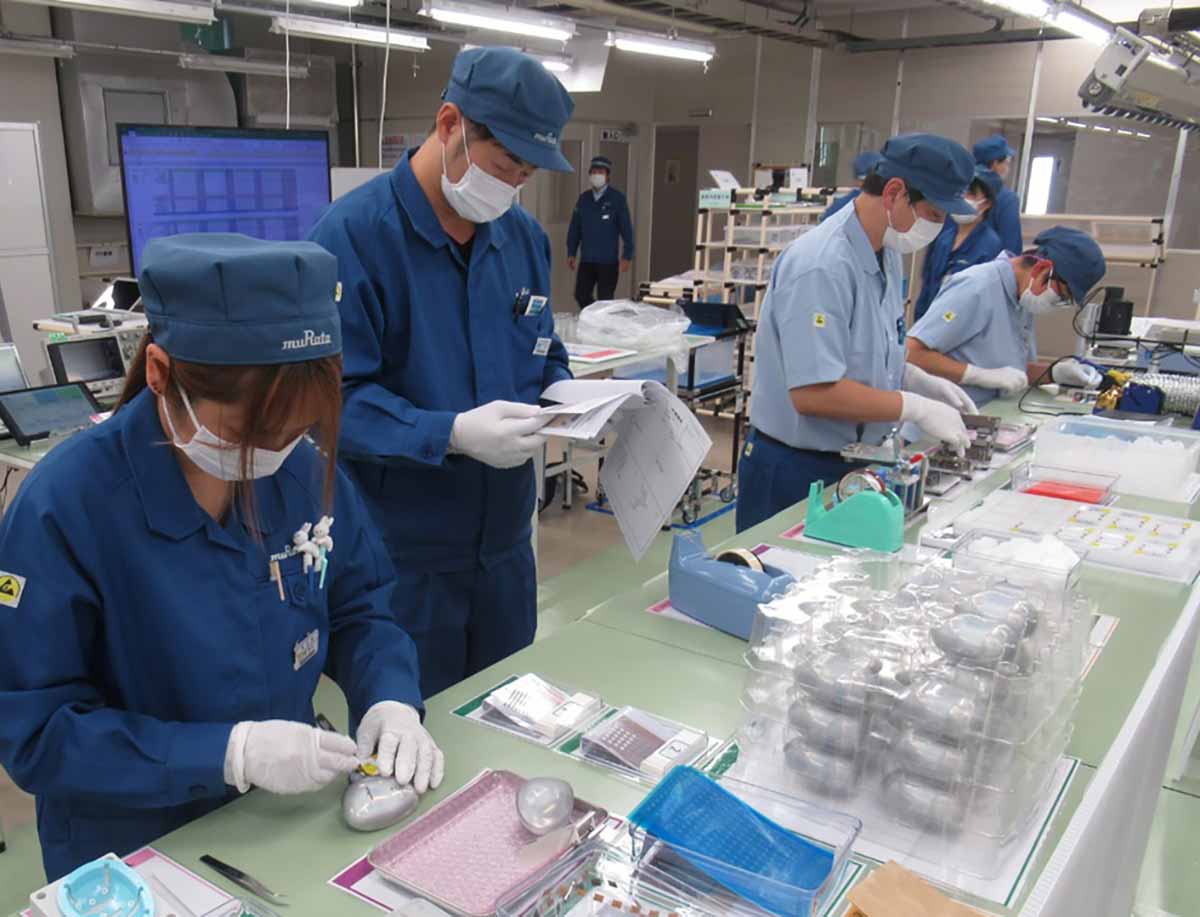
Such manufacturing strengths involving all of the team members working together as one were also demonstrated at Hakui Murata Manufacturing where the echorb Wonder Stones were produced.
Takayuki Yamada, who was in charge of the echorb Wonder Stone production line at Hakui Murata Manufacturing recalls asking, "How can we create a better product? We were able to create something great together by talking openly with the development team." He adds, "I was happy that they proactively applied the ideas of people on the production floor."
Hakui Murata Manufacturing was affected by the Noto Peninsula earthquake of January 2024 and suffered extensive damage, such as equipment toppling over and work in progress falling down, etc. Commenting on the decision to produce the echorb under such circumstances, Shigetoshi Yamamoto, who was in charge of the production of the echorb Wonder Stones at Hakui Murata Manufacturing, says, "The opening date of the Expo was set, and we buckled down to stick to this schedule."
Nevertheless, by working with the local team members to create special jigs and introduce robots in some processes, they were able to secure the required quantity of echorbs.
In February 2025, special editions of the echorb featuring gold leaf and Wajima lacquering, both traditional crafts from Ishikawa Prefecture, were presented to the media and utilized as a symbol of recovery from the earthquake disaster.
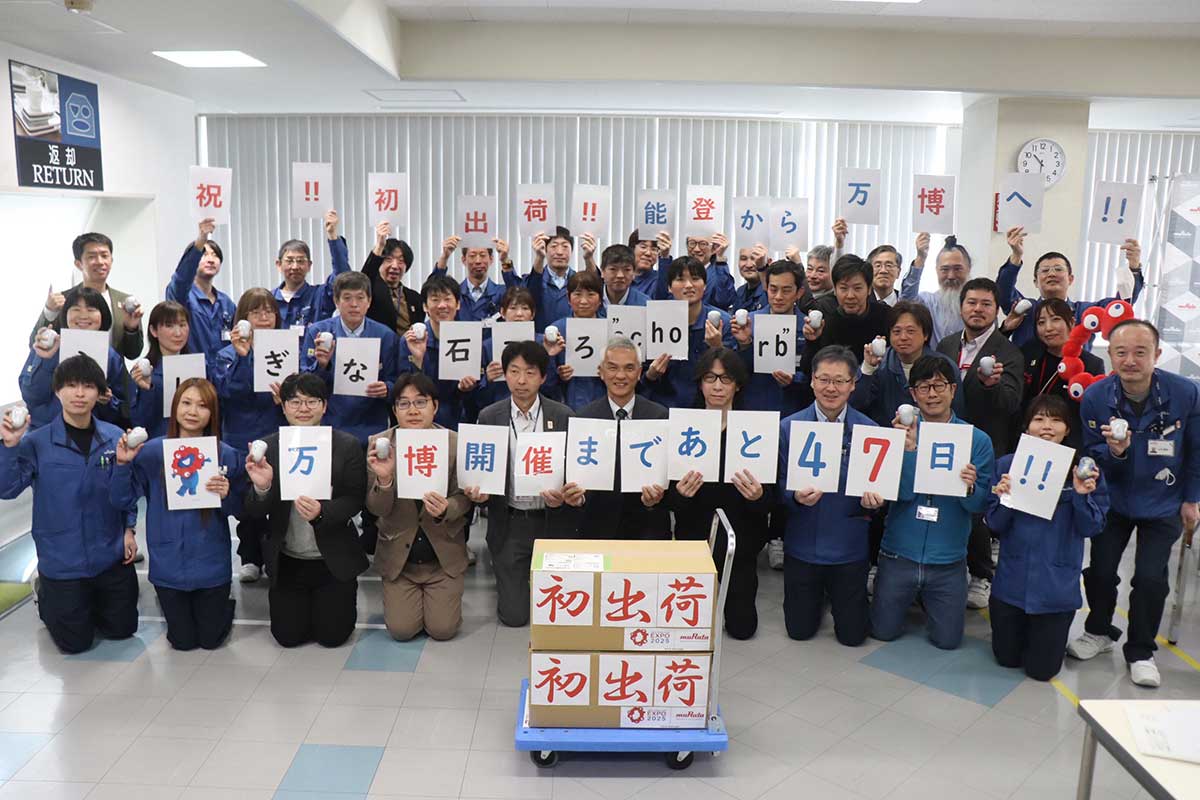

In April of this year, Yamada visited the Osaka-Kansai Expo. He had a chance to actually hold the echorb in his hands at the Expo venue. For a company such as Murata Manufacturing, which typically handles extremely small products in the form of electronic components, this was a rare opportunity to create a product that is large enough to actually hold in your hands.
Yamada says that holding the echorb in his hands at the Expo venue "made me realize that we accomplished something really amazing. I gained confidence in what I had done, which made me feel positive."
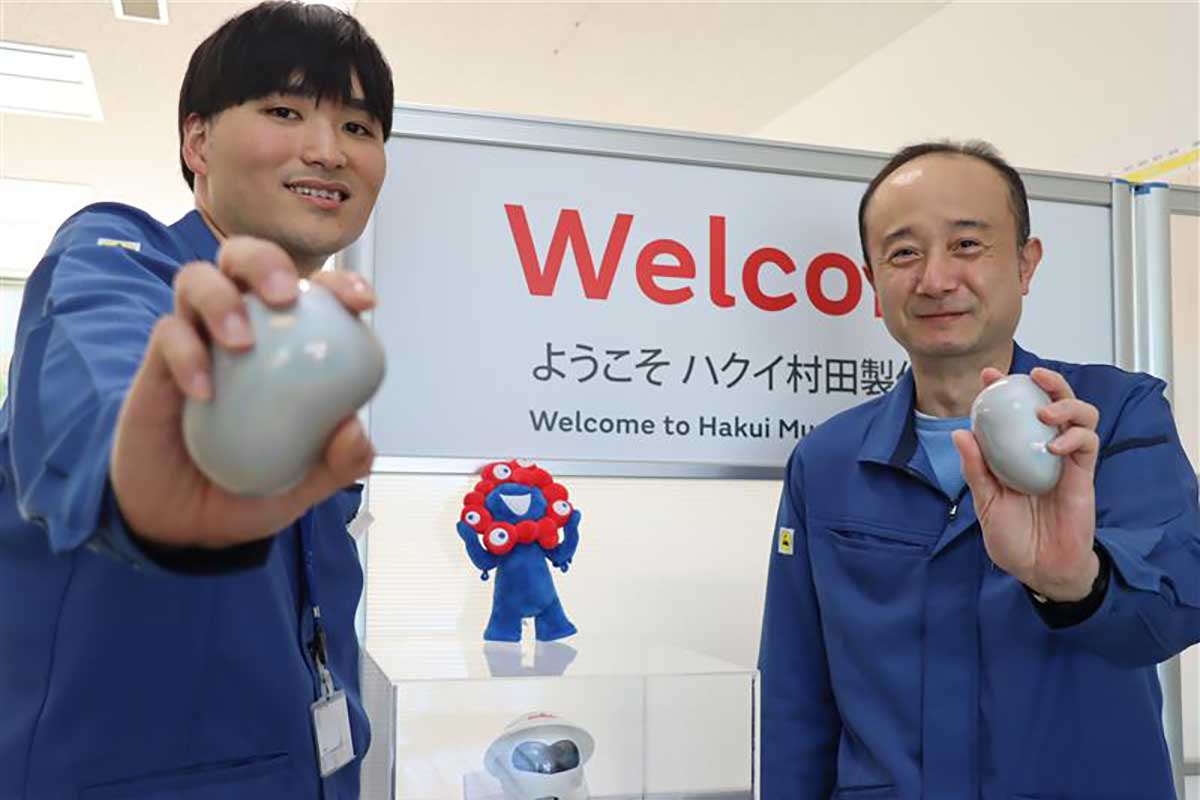
The efforts aimed at the Expo have resulted not only in changes of sentiment but also behavior. During the echorb production, Yamada was in charge of building a system to ensure the traceability of each stone in case of defects. He believes that this experience can be utilized to "apply this system to other products that the plant is working on. If the cost benefits are balanced, I would definitely like to introduce this system in other areas." He proudly adds, "Working on the Expo project has broadened my horizons and enabled me to grow as an individual."
The Expo is not the goal, realizing the ideal vision and expanding these ideas into businesses
In response to these developments, Hayashida emphasizes that, "It is important to be aware that the Expo is not the goal." The most important themes going forward will be the realization of the ideal future society and connecting that to the creation of new business models as companies.
Tetsuya Kanagawa, who is also a member of the Expo Promotion Office, said that the surprised expressions of visitors when they picked up the echorbs at the pavilion left a deep impression. He adds, "There is no greater joy than if the visitors can look to the future with hope and think 'maybe we can do something like this.' Using our experience at the Expo as a new first step, Murata will continue to tackle challenges to realize a future society that is filled with well-being."
Keep an eye on Murata as the company evolves further through the Osaka-Kansai Expo.
Other Links
Related articles
- Osaka-Kansai Expo Technical Article: The Path to a "Once-in-a-Lifetime Project" and "Pride in Being Part of Murata" (Part 2).
- Osaka-Kansai Expo Technical Article: The Path to a "Once-in-a-Lifetime Project" and "Pride in Being Part of Murata" (Part 1).
- The Forty-year Journey of Femtet, the CAE Software that Continues to Support Murata Manufacturing's Product Development with FEM Analysis